Introduction
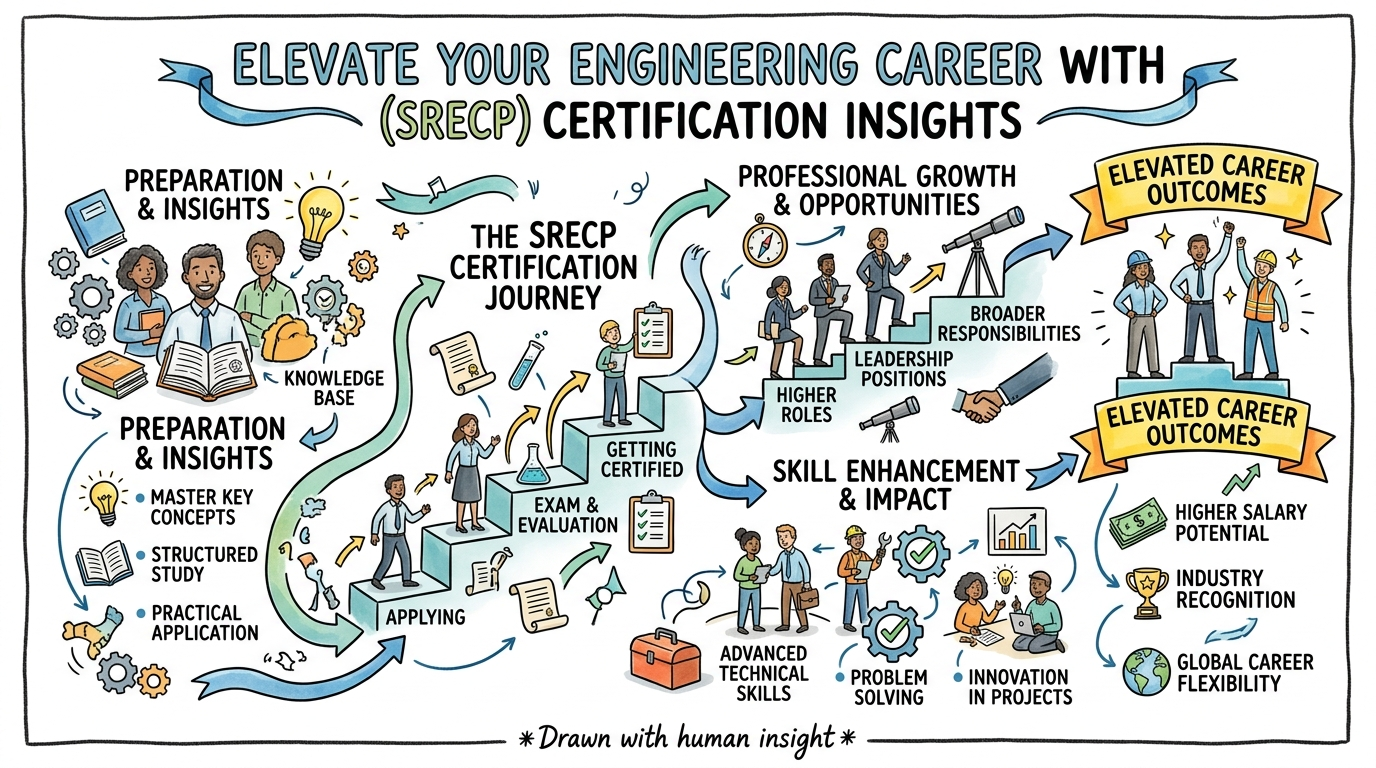
Modern technology systems are becoming more complex every day, making the role of reliability more important than ever. The Site Reliability Engineering Certified Professional (SRECP) is a specialized program designed to help engineers bridge the gap between software development and IT operations. This guide is created for professionals who want to move beyond traditional administration and embrace a culture of reliability and automation. Whether you are working in DevOps, cloud-native environments, or platform engineering, understanding SRE principles is a major step forward.
This guide helps you understand how the SRECP program fits into your career and why it is a valuable asset for the global market. You will find detailed information about the certification, the skills you will learn, and how to prepare effectively. If you are looking for top-tier training, platforms like devopsschool offer comprehensive resources to get you started. Furthermore, exploring specialized learning on aiopsschool can help you see how reliability connects with modern artificial intelligence operations. This guide is your roadmap to making an informed decision about your professional growth.
What is the Site Reliability Engineering Certified Professional (SRECP)?
The Site Reliability Engineering Certified Professional (SRECP) is a validation of an engineer’s ability to apply Google’s SRE principles in a real-world enterprise environment. It is not just about learning theory or reading a book; it focuses on the practical application of reliability engineering. The certification represents a shift from reactive firefighting to proactive system management. It teaches engineers how to build systems that are scalable, reliable, and efficient by using software engineering mindsets for operational tasks.
At its core, SRECP exists to ensure that production environments are stable while still allowing for fast feature releases. It aligns perfectly with modern engineering workflows where speed and stability must coexist. For enterprises, having an SRECP-certified professional means they have someone who can manage error budgets, define meaningful service level objectives, and automate repetitive manual tasks. It is a benchmark for quality in the world of platform engineering and cloud operations.
Who Should Pursue Site Reliability Engineering Certified Professional (SRECP)?
This certification is ideal for a wide range of technical professionals who are responsible for the health of production systems. Software engineers who want to understand the operational side of their code will find great value here. Similarly, systems administrators and DevOps engineers looking to specialize in reliability will find SRECP to be the perfect next step. Cloud architects and platform engineers who design large-scale distributed systems also benefit significantly from the structured approach to reliability that this program provides.
In addition to individual contributors, engineering managers and technical leaders should pursue this knowledge to better lead their teams. Understanding SRE allows managers to set realistic expectations for system uptime and developer velocity. This program has high relevance both in India’s growing tech hubs and across the global market. As companies worldwide move to the cloud, the need for professionals who can manage complex infrastructures with code is increasing rapidly, making this a smart move for anyone in the IT infrastructure space.
Why Site Reliability Engineering Certified Professional (SRECP)
The demand for reliability is permanent because every digital business depends on its systems being up and running. As companies adopt microservices and Kubernetes, the complexity of managing these systems grows. SRECP provides the longevity your career needs by teaching you core principles that do not change, even as specific tools come and go. It helps you stay relevant because it focuses on a mindset of automation and data-driven decision-making rather than just clicking buttons in a dashboard.
The return on your time and career investment is high because certified SREs are among the most sought-after and well-compensated professionals in the industry. Most large enterprises are now building dedicated SRE teams, and having this certification proves you have the skills to join them. It moves you away from being a “generalist” and positions you as a “specialist” in system resilience. This shift in positioning often leads to better project opportunities and more senior roles within technical organizations.
Site Reliability Engineering Certified Professional (SRECP) Certification Overview
The SRECP program is a comprehensive curriculum delivered through the devopsschool platform. It is designed to be practical, focusing on the actual tools and methodologies used in high-traffic production environments. The assessment approach is built to test your understanding of how to handle real-world failures and how to design systems that can recover automatically. The certification structure is organized to take a learner from the basic concepts of reliability to advanced architectural designs.
The program ownership and structure ensure that the content is always aligned with industry standards. It covers everything from monitoring and alerting to incident response and post-mortem analysis. Instead of just focusing on one cloud provider, it teaches principles that can be applied to AWS, Azure, Google Cloud, or even on-premise data centers. This practical focus makes it one of the most respected programs for those who are serious about pursuing a career in site reliability engineering.
Site Reliability Engineering Certified Professional (SRECP) Certification Tracks & Levels
The program is divided into logical steps to help professionals at different stages of their careers. The Foundation level introduces the core vocabulary and concepts, such as Service Level Indicators (SLIs) and Service Level Objectives (SLOs). It is perfect for those new to the concept of SRE who need a solid base to build upon. This level ensures that everyone on a team speaks the same language when it comes to system performance and reliability.
The Professional level, which is the heart of the SRECP, dives deep into technical implementation. This is where you learn about automation, toil reduction, and incident management frameworks. Finally, the Advanced levels and specialization tracks allow you to focus on specific areas like SRE for FinOps or SRE in an AIOps environment. These levels align with your career progression, moving you from an implementation role to an architectural or leadership position over time.
Complete Site Reliability Engineering Certified Professional (SRECP) Certification Table
| Track | Level | Who it’s for | Prerequisites | Skills Covered | Recommended Order |
| Core SRE | Foundation | Beginners, Junior Engineers | Basic Linux & Networking | SLI/SLO, Error Budgets, SRE Culture | 1 |
| Core SRE | Professional | DevOps & Systems Engineers | 2+ years IT experience | Automation, Incident Response, Monitoring | 2 |
| SRE Lead | Advanced | Senior Engineers, Architects | Professional SRECP | Scalability, Distributed Systems, Chaos Engineering | 3 |
| SRE Ops | Specialist | Platform Engineers | Container knowledge | Kubernetes Reliability, Service Mesh | 4 |
| SRE Management | Leadership | Managers, Team Leads | General Technical Background | Team Building, Metrics, Strategic Reliability | 5 |
Detailed Guide for Each Site Reliability Engineering Certified Professional (SRECP) Certification
Site Reliability Engineering Certified Professional (SRECP) – Foundation
What it is
This level validates your understanding of the basic principles of Site Reliability Engineering. It confirms that you know the difference between DevOps and SRE and understand the core metrics used to measure reliability.
Who should take it
This is suitable for junior developers, entry-level systems administrators, and any IT professional who wants to understand the fundamentals of SRE without diving too deep into complex coding initially.
Skills you’ll gain
- Understanding the SRE mindset and culture.
- Defining SLIs, SLOs, and Service Level Agreements (SLAs).
- Calculating and managing error budgets.
- Identifying “toil” and understanding its impact on productivity.
Real-world projects you should be able to do
- Create a basic reliability dashboard for a simple application.
- Draft a sample Service Level Objective document for a web service.
- Calculate the allowed downtime based on a 99.9% availability target.
Preparation plan
- 7–14 days: Read the official SRE handbooks and familiarize yourself with the core terminology.
- 30 days: Attend a foundational workshop and participate in group discussions about SRE culture.
- 60 days: Implement basic monitoring on a personal project and map out its reliability metrics.
Common mistakes
- Confusing SRE with traditional IT support roles.
- Thinking that SRE is only about using specific tools rather than a mindset.
- Overcomplicating the initial SLI/SLO definitions for simple services.
Best next certification after this
- Same-track option: SRECP Professional
- Cross-track option: DevOps Foundation
- Leadership option: SRE Lead Practitioner
Site Reliability Engineering Certified Professional (SRECP) – Professional
What it is
This is the core certification that validates your ability to manage and scale production systems. It proves you can handle incidents, automate manual tasks, and improve system performance.
Who should take it
This is for engineers with a few years of experience who are working in production environments. It is perfect for those who want to be recognized as high-level individual contributors.
Skills you’ll gain
- Implementing advanced monitoring and observability stacks.
- Designing automated incident response workflows.
- Managing large-scale distributed systems.
- Conducting effective blameless post-mortems.
Real-world projects you should be able to do
- Set up a full observability pipeline using tools like Prometheus and Grafana.
- Automate a manual recovery process using scripting or orchestration tools.
- Lead an incident response drill and document the findings.
Preparation plan
- 7–14 days: Review deep technical topics like distributed system design and advanced Linux internals.
- 30 days: Engage in hands-on labs focusing on automation and incident management.
- 60 days: Work on a production-grade project that requires scaling an application under high load.
Common mistakes
- Focusing too much on automation without understanding the underlying manual process.
- Ignoring the cultural aspect of “blamelessness” during incident reviews.
- Failing to connect reliability metrics to actual business outcomes.
Best next certification after this
- Same-track option: SRECP Advanced Architect
- Cross-track option: DevSecOps Professional
- Leadership option: Engineering Manager (SRE focus)
Choose Your Learning Path
DevOps Path
This path focuses on the integration of development and operations with a heavy emphasis on CI/CD pipelines. It is perfect for those who want to ensure that software is not only built quickly but is also deployable at any time. You will learn how to integrate SRE principles into the deployment cycle to prevent failures before they reach production.
DevSecOps Path
In this path, security becomes a primary component of the reliability equation. You will learn how to automate security checks and ensure that the infrastructure is resilient against both technical failures and security threats. It is ideal for those who want to work in highly regulated industries where uptime and security are equally critical.
SRE Path
The pure SRE path is for those who want to specialize deeply in system internals and reliability engineering. This focuses on observability, performance tuning, and capacity planning. You will spend most of your time looking at how systems fail and designing clever ways to make them self-healing and robust.
AIOps Path
This path explores how artificial intelligence and machine learning can be used to improve IT operations. You will learn how to use data-driven insights to predict failures before they happen. It is a forward-looking path for engineers who want to manage massive amounts of telemetry data using automated intelligence.
MLOps Path
This path is specifically for managing the lifecycle of machine learning models in production. Since ML models behave differently than traditional software, this path teaches you how to maintain the reliability of data pipelines and model inference services. It is essential for data-heavy organizations.
DataOps Path
DataOps focuses on the reliability and quality of data delivery across the organization. This path applies SRE principles to data engineering and database management. You will learn how to ensure that data is always available, accurate, and accessible for business intelligence and applications.
FinOps Path
FinOps is about the financial management of cloud resources. This path teaches you how to balance system reliability with cost efficiency. You will learn how to optimize cloud spending without sacrificing the performance or availability of your applications, which is a key skill for modern technical leaders.
Role → Recommended Site Reliability Engineering Certified Professional (SRECP) Certifications
| Role | Recommended Certifications |
| DevOps Engineer | SRECP Professional, DevOps Master |
| SRE | SRECP Foundation, Professional, and Advanced |
| Platform Engineer | SRECP Professional, Kubernetes Specialist |
| Cloud Engineer | SRECP Foundation, Cloud Architect Certs |
| Security Engineer | SRECP Foundation, DevSecOps Professional |
| Data Engineer | SRECP Foundation, DataOps Specialist |
| FinOps Practitioner | SRECP Foundation, FinOps Certified |
| Engineering Manager | SRECP Foundation, SRE Leadership |
Next Certifications to Take After Site Reliability Engineering Certified Professional (SRECP)
Same Track Progression
Once you have mastered the professional level, you should look toward advanced architectural certifications. These focus on high-level system design and the ability to manage multiple SRE teams. Deepening your knowledge in specific areas like chaos engineering or performance engineering will make you a subject matter expert in the field.
Cross-Track Expansion
Broadening your skills is just as important as deepening them. After SRECP, many professionals look toward DevSecOps to add a security layer to their profile. Alternatively, moving into AIOps or DataOps allows you to apply your reliability knowledge to different domains, making you a more versatile engineer in a complex enterprise environment.
Leadership & Management Track
For those who want to move away from day-to-day coding and into leadership, a management track is the way to go. This involves learning about team dynamics, strategic planning, and how to represent technical reliability to business stakeholders. Transitioning into an SRE Manager or Director role requires a blend of technical depth and people skills.
Training & Certification Support Providers for Site Reliability Engineering Certified Professional (SRECP)
DevOpsSchool
This provider offers a massive range of resources specifically for the SRECP program. They focus on providing a structured environment where learners can access videos, documentation, and live sessions. Their approach is very practical, ensuring that students spend as much time on labs as they do on theory. This makes them a strong choice for those who prefer a guided learning experience with expert support.
Cotocus
This organization is known for its high-quality technical consulting and training services. They provide deep-dive sessions into reliability engineering and help professionals understand the nuances of modern cloud infrastructure. Their trainers often have significant real-world experience, which adds a layer of practical wisdom to their teaching. They are excellent for engineers looking for a professional and technical environment.
Scmgalaxy
This is a popular community-driven platform that offers a wealth of information on software configuration management and DevOps. They provide excellent support for SRECP by hosting forums, blogs, and tutorials that cover a wide variety of tools and methodologies. It is a great place for self-starters who want to supplement their learning with community insights and shared knowledge.
BestDevOps
As the name suggests, this provider focuses on the best practices within the DevOps and SRE domains. They offer specialized training modules that are easy to digest and follow. Their curriculum is often updated to reflect the latest changes in the industry, making them a reliable source for current information. They focus on helping students clear their certifications with confidence.
devsecopsschool
This platform bridges the gap between security and operations. For someone pursuing SRECP, this provider offers great context on how to maintain reliability while keeping systems secure. Their training programs are highly technical and focus on the “Sec” part of the pipeline, which is increasingly important for any site reliability professional working in the modern enterprise.
sreschool
This is a dedicated platform for everything related to site reliability engineering. It is one of the best places to find deep dives into SRECP-specific topics. Because they focus exclusively on SRE, their content is highly specialized and goes into much more detail than generalist training sites. It is a primary resource for anyone serious about this specific career path.
aiopsschool
This provider focuses on the intersection of artificial intelligence and operations. They help SRECP candidates understand how the future of reliability will be driven by data and machine learning. Their programs are excellent for those who want to be on the cutting edge of technology and learn how to manage systems that are becoming increasingly autonomous.
dataopsschool
For those who are interested in the reliability of data, this provider is the go-to resource. They apply SRE principles to data pipelines and big data environments. Their training helps you understand how to ensure data availability and quality, which is a critical part of the modern digital business. It provides a unique perspective for SRECP professionals.
finopsschool
This platform focuses on the financial side of cloud operations. They provide training on how to manage cloud costs while maintaining high performance and reliability. For an SRECP professional, understanding FinOps is vital for career growth into management, as it connects technical performance with the company’s bottom line and overall financial health.
Frequently Asked Questions (General)
- What is the typical difficulty level of the SRECP certification?The difficulty is moderate to high because it requires a solid understanding of both software development and systems operations. It is not just about memorization; you must be able to apply concepts to real-world scenarios.
- How much time should I dedicate to studying for the SRECP?Most professionals find that 30 to 60 days of consistent study is sufficient. This allows time to read the materials, participate in labs, and understand the core principles thoroughly.
- Are there any mandatory prerequisites for taking the SRECP exam?While there are no strict legal requirements, having a basic understanding of Linux, networking, and at least one cloud platform is highly recommended to succeed.
- What is the expected ROI of obtaining an SRECP certification?The ROI is significant, as SRE roles often command higher salaries than general DevOps or SysAdmin roles. It also opens doors to major tech companies that prioritize system reliability.
- In what order should I take the SRE certifications?It is usually best to start with the Foundation level to get the terminology right, then move to the Professional (SRECP) level, and finally pursue Advanced or Specialist tracks.
- How does SRECP differ from a standard DevOps certification?DevOps certifications often focus on the “how” of delivery (CI/CD, automation), while SRECP focuses on the “how” of running a reliable service in production (monitoring, incident response, SLOs).
- Is the SRECP certification recognized globally?Yes, the principles taught in the SRECP program are based on industry standards used by major global tech firms, making it highly valuable in India and abroad.
- Does this certification expire after a certain period?Most certifications recommend a refresher every few years to stay up to date with the latest tools and practices, although the core principles of SRE remain fairly constant.
- Can an engineering manager benefit from SRECP?Absolutely. It helps managers understand the technical constraints of their teams and how to set realistic goals for uptime and developer performance.
- Do I need to be an expert coder to pass the SRECP?You don’t need to be a senior software developer, but you should be comfortable with scripting and understanding how code interacts with infrastructure.
- Are there hands-on labs included in the training?Yes, the best training providers for SRECP include extensive hands-on labs where you can practice incident response and automation in a safe environment.
- What kind of career support is available after certification?Many training providers offer community access, resume reviews, and job boards to help certified professionals find the right roles in the industry.
FAQs on Site Reliability Engineering Certified Professional (SRECP)
- How does SRECP help in managing error budgets effectively?It teaches you the mathematical and cultural framework to balance new feature releases with the need for system stability, ensuring a data-driven approach.
- What are the key tools covered in the SRECP curriculum?The focus is on observability tools like Prometheus, orchestration tools like Kubernetes, and automation platforms that help reduce manual toil in production.
- Can I transition from a traditional SysAdmin role to SRE using this cert?Yes, SRECP provides the bridge by teaching you how to use software engineering skills to solve the operational problems you face as a SysAdmin.
- Why is the concept of “blamelessness” so important in SRECP?It is a core cultural pillar that ensures teams focus on fixing the system rather than pointing fingers, leading to faster recovery and better long-term reliability.
- Does SRECP cover multi-cloud reliability strategies?Yes, the principles are designed to be cloud-agnostic, meaning you can apply the same reliability logic whether you are on AWS, Azure, or Google Cloud.
- What role does automation play in the SRECP professional level?Automation is central to SRECP, focusing on eliminating repetitive manual tasks (toil) so that engineers can focus on higher-value work that improves the system.
- How does SRECP address incident management?It provides a structured framework for responding to failures, including roles, communication protocols, and the process for conducting post-mortem reviews to prevent recurrence.
- Is SRECP suitable for small startups or just large enterprises?While born in large enterprises, the principles of reliability and automation are valuable for any size company that wants to scale without increasing operational headaches.
Final Thoughts: Is Site Reliability Engineering Certified Professional (SRECP) Worth It?
If you are looking for a way to future-proof your career in IT operations, the SRECP is one of the most practical investments you can make. The shift toward reliability is not a temporary trend; it is a fundamental change in how software is managed and scaled. By earning this certification, you are proving that you have the mindset and the technical skills to handle the most difficult challenges in modern production environments.
This is not just about a certificate to hang on your wall; it is about gaining a new perspective on how to build and maintain systems. The focus on automation, data-driven decisions, and a healthy culture of blamelessness makes you a better engineer and a more valuable team member. If you are ready to move beyond the basics and become a specialist in one of the most critical areas of technology today, pursuing the SRECP is a very wise choice.
