Introduction
When most people think of Goa, their minds drift to flash-frozen snapshots of crowded Baga beach, throbbing neon signs, and generic commercial shacks blaring pop remixes. But if you step away from the chaotic tourist corridors, you will find a completely different rhythm altogether. Away from the package tours lies a subculture rooted in deep, unhurried authenticity, where heritage Portuguese bungalows and dense palm canopies shield an entirely modern migration.
Over the last few years, Goa has quietly transformed into India’s capital for remote workers, creatives, and independent travelers. The soul of this movement thrives within its spectacular café culture. These spaces are not just places to grab a morning flat white; they are active neighborhood ecosystems. Here, slow coastal living seamlessly blends with cutting-edge culinary arts, superfast fiber-optic networks, and an inclusive community of global nomads who came for a weekend and chose to stay for months.
Why Goa is a must visit city
Goa represents a completely unique geographical and cultural chapter within the Indian subcontinent. Shaped by over 450 years of Portuguese colonial rule layered over centuries of indigenous Konkani heritage, the region possesses a distinct socio-cultural identity known locally as Susegad—a relaxed, joyful, and deeply mindful approach to life. This slower tempo, combined with a striking topography of tidal estuaries, lush Western Ghats foothills, and the vast Arabian Sea, makes it a geographic sanctuary for long-term travelers.
For the contemporary remote worker, Goa bridges the gap between raw natural beauty and modern utility. The state is comprehensively connected via two functional airports—Manohar International Airport (Mopa) in the north and Dabolim Airport in the center—complemented by major rail lifelines like the Madgaon and Thivim stations. The comprehensive network of smooth NH-66 highways ensures that you can effortlessly move between remote jungle hideaways and coastal towns. Whether you are a solo digital nomad seeking high-speed Wi-Fi, a couple looking for slow food, or a backpacker searching for an affordable, inspiring community, Goa’s multi-layered hospitality circuit offers an infrastructure that supports both hard-hitting productivity and deep coastal recovery.
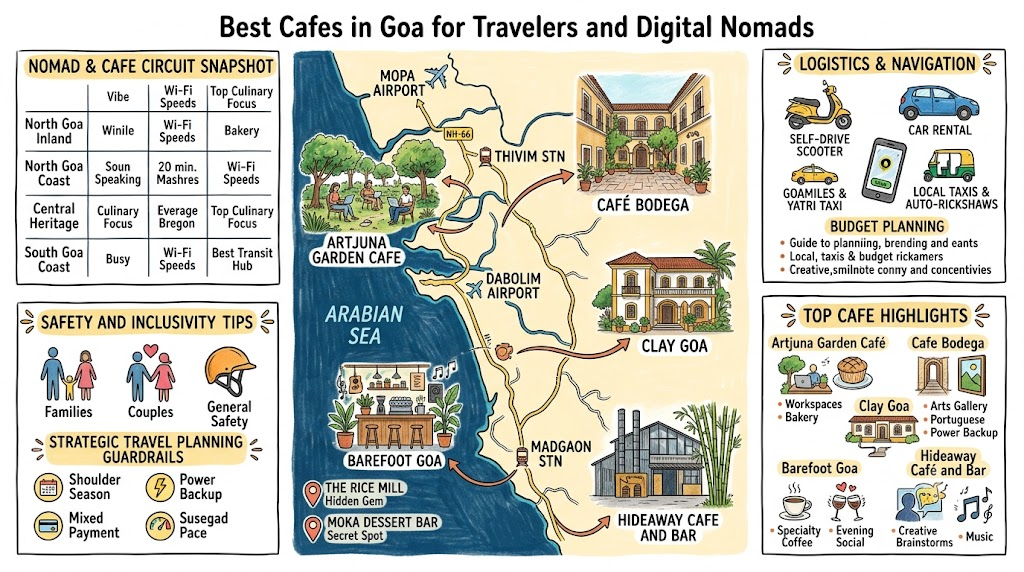
Goa Nomad & Cafe Circuit Snapshot
| Region | Primary Vibe | Average Wi-Fi Speeds | Top Culinary Focus | Best Transit Hub Nearby |
| North Goa Inland (Assagao, Siolim) | Design-forward, bohemian, leafy residential | 100 – 300 Mbps | Artisanal sourdough, specialty single-origin coffee, global fusion | Thivim Railway Station / Mopa Airport |
| North Goa Coast (Anjuna, Vagator) | Social, high-energy, community-driven | 50 – 150 Mbps | Mediterranean bowls, Israeli plates, vegan desserts | Thivim Railway Station |
| Central Heritage (Panjim, Fontainhas) | Historic, artistic, architectural, urban | 150 – 300 Mbps | Traditional Goan-Portuguese bakes, classic espresso, poee sandwiches | Karmali Railway Station / Dabolim Airport |
| South Goa Coast (Palolem, Agonda) | Silent, raw, wellness-oriented, slow | 30 – 100 Mbps | Fresh smoothie bowls, organic catch-of-the-day, wellness teas | Madgaon Railway Station |
Best Places or Experiences
Artjuna Garden Cafe (Anjuna)
Artjuna is widely considered the undisputed spiritual headquarters of the North Goa remote working community. Set within a massive, breeze-swept Mediterranean-style garden shaded by ancient mango trees, this lifestyle cafe manages to balance a highly social atmosphere with pockets of deep, focused quietude. The design is explicitly open-air, featuring comfortable wooden workstations, a lifestyle boutique, and an outdoor library that encourages patrons to linger for hours.
The culinary identity here is heavily influenced by Middle Eastern and clean Mediterranean flavors. Every morning, the open kitchen turns out incredible, fluffy house-made pita bread, velvety hummus plates, and a signature shakshuka that pairs brilliantly with their locally roasted specialty cold brews. It opens precisely at 8:00 AM, making it one of the rare spaces in the area where early risers can secure an active, distraction-free morning work session before the afternoon heat rolls in.
- Location: Anjuna-Vagator Main Road, North Goa district; roughly 20 kilometers from the capital city of Panjim.
- Why it is worth visiting: It is the quintessential open-air workspace that features incredibly reliable Wi-Fi, abundant charging docks, and a vibrant community of long-stay international nomads.
- Best things to do: Work from the central shaded garden tables, try the artisanal almond croissants from their in-house bakery, and attend their weekly open-air sunset community markets.
- Best time to visit: Between 8:30 AM and 1:00 PM for the most serene working atmosphere and optimal morning natural light.
- Ideal for whom: Solo digital nomads, creative freelancers, and health-conscious travelers.
- Travel tip: Tables near the rear lifestyle boutique have the most consistent access to dedicated wall power outlets.
Cafe Bodega (Panjim)
Tucked away atop the elegant Altinho hill within the historic heart of Panjim, Cafe Bodega is housed inside the courtyard of the Sunaparanta Centre for the Arts. This cafe is a masterclass in quiet, sophisticated revival architecture. The space features a tranquil central open-sky courtyard surrounded by deep, tiled verandas where local artists, writers, and digital professionals sit side-by-side with their laptops.
The menu at Bodega celebrates slow, comforting continental classics with an uncompromising commitment to scratch cooking. From their wildly popular custom eggs benedict served on freshly baked brioche to an array of seasonal fruit tarts, everything is made fresh daily. The quiet rustle of tree leaves and the lack of commercial street noise make it an incredibly productive sanctuary for anyone looking to complete intensive creative or analytical projects.
- Location: Altinho hill, Panjim, Central Goa; located right within the heart of the capital city.
- Why it is worth visiting: It offers an intellectual, deeply peaceful art-gallery setting that remains completely insulated from the heavy tourist traffic of the main coastal highways.
- Best things to do: Sit along the shaded courtyard corridors, browse the rotating contemporary art exhibitions inside the Sunaparanta galleries, and order the fresh carrot cake.
- Best time to visit: Late mornings around 11:00 AM when the light filters beautifully into the central open courtyard.
- Ideal for whom: Writers, artists, couples seeking a quiet afternoon date, and professional nomads needing a corporate-grade quiet zone.
- Travel tip: Park your vehicle at the base of the hill or use the designated slots outside the gallery gates, as the narrow historic lanes of Altinho are highly monitored.
Clay Goa (Anjuna)
Clay Goa is an explicitly designed co-working café operating out of a spectacularly preserved, 90-year-old traditional Portuguese heritage villa. The creators of this space have masterfully retrofitted the ancestral property to include high-speed corporate fiber lines, dedicated indoor quiet rooms for video calls, and a breezy, wrap-around balcão (porch) optimized for casual working. The interior design honors its heritage roots, matching exposed laterite stone walls with sleek, minimalist wooden desks.
The kitchen focuses heavily on clean, functional fuel for the modern worker. Think refreshing cold-pressed juices, high-protein wellness bowls, and artisanal open-faced sandwiches served on locally sourced sourdough. Because it functions structurally as a workspace first and a diner second, the environment hums with a focused, professional drive that is highly infectious for anyone struggling with procrastination.
- Location: Montero Vaddo, Anjuna, North Goa; roughly 19 kilometers from Panjim.
- Why it is worth visiting: It is one of the very few spaces in North Goa that provides an absolute guarantee of full power backup, enterprise-grade Wi-Fi, and a distraction-free environment specifically tailored for intense work hours.
- Best things to do: Reserve a desk on the historic breezy front porch, network with resident tech founders in the common lounge, and sample their signature iced matchas.
- Best time to visit: Across the main standard working hours from 9:30 AM to 5:00 PM for maximum utility.
- Ideal for whom: Remote software developers, startup teams, and remote corporate professionals.
- Travel tip: If you have back-to-back video conferences, ask the host for access to their indoor acoustic-paneled calling zones.
Barefoot Goa (Parra)
Located along the iconic, coconut-tree-lined roads of Parra, Barefoot Goa is a beautifully fluid concept space that transitions effortlessly from a sunlit specialty coffee bar by day to an intimate acoustic music and cocktail venue by night. The property features a striking layout with a hyper-focused indoor workspace loaded with power strips, surrounded by a lush tropical garden filled with low-slung cane furniture.
The primary draw for coffee connoisseurs here is their uncompromising approach to extraction. Barefoot serves some of the finest single-origin Indian arabica pour-overs and velvety flat whites in the state, sourcing beans directly from sustainable estates in Chikmagalur. The culinary program matches this quality with an array of vibrant, clean macro-bowls and locally inspired fusion bites.
- Location: Parra, North Goa; approximately 8 kilometers inland from Anjuna Beach and 14 kilometers from Panjim.
- Why it is worth visiting: It offers the perfect marriage of top-tier specialty coffee mixology and an abundance of accessible power points at almost every single seating station.
- Best things to do: Work under the shade of the back garden palms, experience their manual V60 filter coffee flights, and stay late for their curated indie acoustic live sessions.
- Best time to visit: 9:00 AM for an uninterrupted specialty caffeine calibration session or Friday evenings for community gatherings.
- Ideal for whom: Coffee nerds, digital nomads who love a seamless post-work social transition, and solo travelers.
- Travel tip: The interior air-conditioned room fills up incredibly fast by 10:00 AM, so arrive early if you prefer climate-controlled seating.
Hideaway Café and Bar (Vagator)
Tucked into a quiet, winding bypass lane in Vagator, Hideaway is an exceptionally designed industrial-chic venue that celebrates the intersection of work, underground music, and modern culinary design. Built using dark iron frames, warm local timber, and polished concrete, the space boasts massive floor-to-ceiling glass windows that look out into a wall of wild bamboo. It feels hyper-modern yet distinctly integrated into the Goan jungle.
By day, the deep wooden long-tables are filled with laptop users capitalizing on the stable internet and excellent indoor air conditioning. The menu features an impressive selection of creative continental plates, alongside a stellar evening bar program known for infusing local Goan ingredients into craft cocktails. It is an inspiring, slightly edgy space that attracts the upper tier of Goa’s creative, design, and tech communities.
- Location: Chapora Road, Vagator, North Goa; roughly 22 kilometers north of Panjim.
- Why it is worth visiting: It features an inspiring industrial architectural layout combined with exceptional acoustics, making it an incredible space for both focused laptop work and deep creative brainstorms.
- Best things to do: Set up at the massive communal wooden workbench, order their artisanal pork belly or vegan Buddha bowls, and browse their curated collection of vinyl records.
- Best time to visit: 12:00 PM to 4:00 PM to beat the heat of the day in a cool, highly air-conditioned environment.
- Ideal for whom: Digital creatives, copywriters, music lovers, and remote teams looking for collaborative workspaces.
- Travel tip: Check their digital notice board upon entry—Hideaway frequently hosts excellent niche networking mixers for remote founders over the weekends.
Offbeat Exploration: Hidden Gems Tourists Miss
The Rice Mill (Morjim)
While most travelers drive straight through Morjim to get to the commercial beach strips, the true cultural vanguard stops at The Rice Mill. Housed in an expertly repurposed, historical village grain mill, this stunning cafe has retained its raw structural bones, including vintage corrugated roofing accents and old mechanical pulleys. It functions as a hyper-local café by day and a sophisticated jazz bar by night, serving exceptional local single-origin pour-overs alongside small-batch pastries infused with local pye (Goan jaggery). It is an incredible, silent workspace completely hidden from the standard coastal crowds.
Moka Dessert & Coffee Bar (Siolim)
Tucked away deep inside the residential inland lanes of Siolim, Moka feels less like a commercial enterprise and more like stumbling into an architect’s private forest greenhouse. Surrounded by a dense wall of wild ferns, old teak trees, and tropical broadleaf plants, this tiny, design-forward espresso bar serves some of the most complex, multi-layered French pastries and artisanal eclairs in Western India. The Wi-Fi is blazing fast, the atmosphere is dictated entirely by birdsong, and it remains a well-guarded secret among long-term resident expat writers who require complete, unadulterated silence for their prose.
Detailed Practical Guidance for Travelers
The following matrix provides an authoritative logistical breakdown for planning your daily routes across Goa’s primary café and remote-work circuits:
| Destination | Standard Entry Fee | General Timings | Best Local Food Options Nearby | Recommended Nearby Attractions |
| Artjuna Garden Cafe | Free entry (Pay per order) | 8:00 AM – 10:00 PM | House-made Hummus & Pita, Shakshuka, Avocado Toast | Historic Anjuna Flea Market Grounds, Starco Junction |
| Cafe Bodega | Free entry (Gallery exhibits vary) | 10:00 AM – 7:00 PM | Eggs Benedict on Brioche, Seasonal Quiche, Carrot Cake | Fontainhas Latin Quarter, Maruti Temple, Panjim Church |
| Clay Goa | Free entry (Co-working plans available) | 9:00 AM – 8:00 PM | Sourdough Tartines, High-Protein Grain Bowls, Iced Matcha | Vagator Cliffside, Chapora Fort Ruins |
| Barefoot Goa | Free entry (Pay per order) | 8:00 AM – Midnight | Single-Origin Pour-overs, Chickpea Bowls, Craft Cocktails | St. Diogo Church, Iconic Parra Coconut Tree Road |
| Hideaway Café and Bar | Free entry (Pay per order) | 11:00 AM – 1:00 AM | Smoked Pork Belly, Vegan Buddha Bowls, Artisanal Cold Brew | Chapora Fishing Jetty, Ozran Beach |
| The Rice Mill | Free entry (Pay per order) | 9:30 AM – Midnight | Jaggery-infused pastries, Local Poi Sandwiches, Cold Brew | Morjim River Estuary, Olive Ridley Turtle Nesting Sites |
| Moka Dessert Bar | Free entry (Pay per order) | 10:00 AM – 8:00 PM | Artisanal Chocolate Eclairs, Mille-Feuille, Flat Whites | Siolim Church, Chapora River Backwater Viewpoints |
Logistics & On-Ground Navigation
Local Transport Options
- Self-Drive Scooter / Motorcycle Rental: This is the absolute lifeline of Goan transit. You can easily rent reliable automatic scooters (like a Honda Activa) or geared motorcycles (like a Royal Enfield) across any major village hub. Ensure your rental bike has a black license plate with yellow lettering, which indicates a legally registered commercial self-drive vehicle.
- Self-Drive Car Rental: Ideal if you are traveling as a couple or family, or need to transport heavy workstation gear between North and South Goa. These are rented on a 24-hour cycle and offer protection from the intense midday tropical sun.
- App-Based Taxis (Goamiles & Yatri Taxi): Traditional ride-hailing services do not operate openly here due to powerful local taxi unions. Instead, you must download the state-backed Goamiles app or Yatri Taxi app to book metered rides at regulated rates.
- Local Taxis & Auto-Rickshaws: Available at designated village stands. Always negotiate and fix the final fare firmly with the driver before stepping into the vehicle, as local meters are rarely used.
Budget Planning
Backpacker & Budget Tier: ₹1,800 – ₹3,200 per day ($22 – $40 USD)
This safely covers a clean dorm bed or a basic private room in a heritage hostel, a daily scooter rental with fuel, local street-level or cafe meals, and a couple of specialty coffees.
Mid-Range & Comfort Tier: ₹5,500 – ₹9,500 per day ($65 – $115 USD)
This easily covers a premium boutique Airbnb or private pool villa room, a self-drive rental car, two meals at high-end artisanal cafes or fine-dining fusion restaurants, and full day-pass usage at dedicated co-working hubs.
Safety and Inclusivity Tips
- For Families: Stick to the calmer, shade-blessed inland cafes like Cafe Bodega or the expansive gardens of Artjuna where children have space to move safely without disrupting working professionals. Avoid the high-energy coastal party shacks late at night.
- For Couples: Take advantage of the incredibly romantic evening transformations of places like Barefoot or Hideaway, where the workspace vibes give way to dim candlelight, exceptional craft cocktails, and intimate live acoustic sets.
- General Safety: Goa is generally one of the safest and most socially progressive states in India for solo travelers and digital nomads. However, always exercise standard travel caution: avoid driving scooters along unlit rural village roads late at night, wear a helmet consistently (local police strictly enforce this), and respect local village dress codes when stepping away from the immediate beach perimeters.
Strategic Travel Planning Guardrails
Travel Planning Tips for Goa
- Target the Shoulder Season: The absolute prime weather window runs from October through March. However, if you want lower accommodation rates and less crowded cafes while retaining high-speed internet, target the shoulder months of October or late March.
- Secure Accommodation with Power Backup: While internet infrastructure has improved dramatically, temporary grid power cuts are common during tropical storms. Always explicitly verify that your long-stay rental has a functioning generator or a dedicated inverter backup.
- Carry a Mixed Payment Strategy: Almost all modern cafes accept digital UPI payments and credit cards seamlessly. However, if you are transacting with local scooter rentals, street-side fruit vendors, or rural fuel stalls, you will absolutely need hard cash.
- Respect the Susegad Pace: Do not expect hyper-accelerated, corporate city-style service at local village cafes. The food is often made from scratch, and the service is intentionally unhurried. Lean into the slower tempo.
- Invest in a Local SIM Card Backup: For critical remote meetings, do not rely solely on cafe Wi-Fi. Keep a local Airtel or Jio SIM card active on your phone; both offer excellent 4G/5G hotspot coverage across the major nomad triangles.
Common Mistakes to Avoid
- Booking Accommodation Without Mapping the Triangle: Do not book a cheap house deep in the far south if your primary goal is to network and work out of the design cafes of Assagao and Anjuna. The commute will drain your energy and budget.
- Assuming Every Beach Shack Has Working Wi-Fi: Beachfront shacks are designed for leisure, cold beers, and loud music. Their Wi-Fi is notoriously spotty and unreliable. For serious work hours, always target inland, dedicated café spaces.
- Ignoring the Hidden Inland Villages: Many travelers spend their entire trip within 500 meters of the ocean, completely missing the gorgeous, silent heritage lanes of Saligao, Aldona, and Parra where the true soul of Goa resides.
- Renting Unlicensed Scooters: Never rent a vehicle with a standard white license plate (private registration). Local traffic police frequently stop tourists riding white-plated vehicles, resulting in hefty fines.
- Overpacking Your Daily Work-Travel Itinerary: Trying to squeeze a morning beach run, a four-hour deep-work block, an afternoon fort exploration, and a late-night party into a single day will quickly lead to burnout. Pick one zone per day and explore it slowly.
Suggested Itinerary Blueprints
1. Day Quick Dash (The Coastal Nomad Route)
Targeted explicitly at short-term travelers who want to maximize their productivity while absorbing North Goa’s premium café energy in a single day.
- 08:00 AM: Start your morning with a wholesome breakfast and pour-over coffee at Artjuna Anjuna while tackling your first deep-work block.
- 12:30 PM: Ride inland to Clay Goa for a light, healthy sourdough lunch and take your afternoon client calls from their quiet, air-conditioned workspace.
- 04:30 PM: Wrap up your laptop tasks and head down to the Vagator Cliffside to watch the sunset over the Arabian Sea.
- 07:30 PM: Conclude your day with craft cocktails and wood-fired small plates at Hideaway Vagator.
2. Day Deep-Dive (The Cultural & Heritage Split)
An explicit two-day route designed to showcase the contrast between Goa’s historic urban center and its modern, artistic inland villages.
- Day 1 (The Heritage Chapter): Spend your entire morning working within the sunlit courtyard of Cafe Bodega atop Altinho Hill in Panjim. At 3:30 PM, close your laptop and take a slow, guided architectural walking tour through the colorful, tiled Portuguese streets of the Fontainhas Latin Quarter. Finish with a traditional dinner at a local Goan tavern.
- Day 2 (The Jungle & Design Chapter): Head inland to the lush village of Siolim and set up your workspace at Moka Dessert Bar surrounded by dense tropical plants. In the afternoon, cruise down the scenic, palm-lined Parra Road and transition to Barefoot Goa for an evening of specialty coffee flights and live acoustic music.
3. Complete Weekend Travel Plan (The Ultimate Susegad Loop)
A comprehensive Friday-to-Sunday loop balancing high-octane remote work, culinary exploration, and deep coastal relaxation.
- Friday (The North Coast Loop): Set up your remote office early at Artjuna. Spend the afternoon working from the communal tables at Hideaway Vagator. Celebrate the start of the weekend with an ambient evening dinner at the nearby Chapora jetty.
- Saturday (The Inland Hidden Trail): Dive deep into the quiet interior villages. Spend your morning answering emails from the historic grain mill structure of The Rice Mill in Morjim. In the afternoon, take a slow kayak trip through the serene Morjim River Estuary backwaters to watch the local birdlife.
- Sunday (The Urban Art & Slow Food Recovery): Start with a lazy, indulgent Sunday brunch at Cafe Bodega in Panjim. Spend your afternoon browsing the independent art boutiques and local designer wear labels in the capital city before catching your evening flight or train back home.
Common Tourist Mistakes to Avoid
- Geographic Blunders: One of the most exhausting errors a traveler can make is trying to visit a café in South Goa (like Palolem) and a workspace in North Goa (like Assagao) on the exact same afternoon. Goa is a long, vertically expansive state; driving between the north and south districts takes anywhere from two to three hours through heavy city traffic. Pick a district and stay within its boundary for the day.
- Commercial Traps: Spending your limited travel hours stuck in the highly commercialized, neon-lit concrete corridors of Calangute or central Baga will leave you feeling drained. These zones have been heavily modernized into noisy shopping hubs that lack the authentic, atmospheric local magic found in the interior heritage villages.
- Neglecting Modern/Alternative Zones: Many visitors completely forget to explore the quieter, residential, and highly artistic modern expansions of Goa. Villages like Saligao, Aldona, and Siolim have become the premier creative capitals of the region, housing the most innovative, quiet, and inspiring cafe-centric spaces.
- Transport Overpayment: Taxi price gouging is a very real issue for unsuspecting travelers. Avoid blindly agreeing to exorbitant flat rates quoted at popular tourist junctions. Always cross-reference your trip pricing on the official Goamiles app or use the pre-fixed government prepaid taxi counters available at the airports.
- Luxury Dining Bias: Relying exclusively on high-end, heavily marketed luxury resorts or corporate dining rooms completely deprives you of Goa’s true culinary soul. The true flavors of the land exist within the small-scale, street-level vendors, the historic village bakeries turning out fresh poee bread twice a day, and the local family-run ros-omelette carts.
Frequently Asked Questions
1. Which cafe in North Goa offers the most reliable Wi-Fi for international video calls?
Clay Goa in Anjuna offers the most stable corporate-grade fiber network. They have explicit, high-speed lines backed by a full commercial power generator, ensuring your connection never drops during critical client presentations or video streams.
2. Is it acceptable to sit and work out of Goan cafes for 4 to 5 hours with just a single coffee order?
While most nomad-friendly cafes like Artjuna are incredibly accommodating, the polite local etiquette is to order something small—a fresh juice, a snack, or another coffee—every 2 hours to support the local business for utilizing their space, power, and high-speed infrastructure.
3. Do most of these work-friendly cafes stay fully open during the heavy monsoon season?
While temporary seasonal beach shacks close completely by late April, prominent inland brick-and-mortar cafes like Cafe Bodega, Hideaway, and Artjuna remain fully operational year-round, serving as cozy sanctuaries for remote workers during the beautiful rainy months.
4. What are the average upload and download speeds available across the primary nomad cafes in Assagao and Anjuna?
You can consistently expect download speeds ranging between 100 Mbps to 300 Mbps in established inland cafes that run on dedicated broadband fiber lines, which is more than sufficient for heavy software deployment or data transfers.
5. Are there any dedicated co-working entry passes required to work out of spaces like Clay Goa?
Clay Goa allows you to walk in and order directly from the café menu for casual seating. However, they also offer premium daily, weekly, and monthly dedicated co-working memberships that unlock access to quiet calling zones and private desks.
6. Which cafe should I choose if I want a completely silent workspace with absolutely zero tourist music?
Moka Dessert & Coffee Bar in Siolim is your best option. It is located deep within a silent residential forest lane, completely insulated from commercial traffic, making it the premier hideout for long-form writers and programmers.
7. Can I access these hidden village cafes easily using public buses or auto-rickshaws?
Public buses primarily connect the major urban towns and do not run frequently into the inner village lanes of Assagao or Parra. To access these spaces efficiently, you will absolutely need a rented scooter or a self-drive car.
8. What is the average cost of a specialty flat white or pour-over coffee across these top-tier spaces?
A high-quality, single-origin artisanal coffee generally costs between ₹180 to ₹280 ($2.20 to $3.50 USD), depending on the specific brewing methodology (such as V60 pour-over, Aeropress, or standard espresso).
9. Are these cafes pet-friendly for long-term travelers moving with their domestic animals?
Yes, the vast majority of open-air garden cafes in Goa, most notably Artjuna, maintain an exceptionally warm and welcoming pet-friendly policy, provided your pet remains comfortably leashed by your workstation.
10. What unique local Goan ingredients should I look out for on these modern café menus?
Keep an eye out for dishes incorporating Goan jaggery (dark, smoky coconut palm sugar), fresh local toddy vinegar, local choriz (spiced pork sausages), and artisanal bakes utilizing traditional poee or pye breads.
11. Is there a strict dress code I need to follow when transitioning from the beach to an inland heritage café?
While casual beachwear is perfectly fine on the immediate sand strips, it is considered highly disrespectful to enter interior village cafes, heritage properties, or capital city spaces in just swimwear. Throw on a light linen shirt or a casual sarong before stepping inside.
12. Do I need to carry a heavy universal travel adapter to charge my laptop at these local venues?
Most modern, nomad-centric cafes in Goa have retrofitted their charging docks to accommodate multi-pin universal plugs. However, carrying a compact three-pin Indian adapter in your tech kit is always recommended to ensure seamless connectivity in older heritage structures.
Conclusion
Choosing to map your journey through Goa’s exceptional café and remote working culture is far more than a simple alternative to a standard beach vacation. It is an invitation to slow down and participate in a lifestyle where work and wonder exist in perfect equilibrium. By stepping away from the commercial tourist traps and embedding yourself within these thoughtful, sun-dappled neighborhood spaces, you gain access to the true living heart of the state. The intellectual reward of exchanging ideas with a global community under a canopy of mango trees, paired with the quiet peace of ancestral villages, will leave you deeply restored long after you have closed your laptop and packed your bags.
