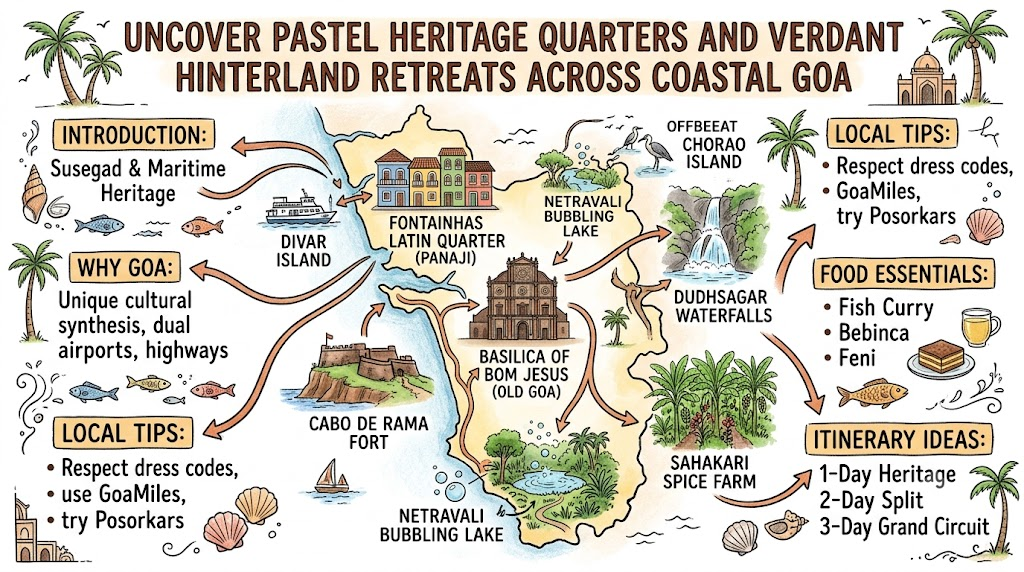
Introduction
Step beyond the neon lights of commercial party strips, and you will uncover a coastline anchored by centuries of maritime heritage, quiet inland backwaters, and an unhurried cadence known locally as susegad. While most travelers rush to identical crowded beach shacks, authentic Goa thrives in ancient Portuguese-influenced quarters, aromatic spice plantations nestled along the Western Ghats, and riverside villages where life moves to the rhythm of the evening tide.
This coastal enclave is a canvas of cultural synthesis, where Konkani traditions intertw seamlessly with Iberian architectural elegance. Exploring its true core means slow-traveling through sun-dappled cobblestone alleys, savoring fiery coconut-based fish curry at a local taverna, and listening to the soft notes of a fado guitar echo across the Mandovi River.
Why Goa is a must-visit city
Goa occupies a uniquely compelling place in South Asia’s travel tapestry. Its 450 years under Portuguese rule left behind a distinct architectural, culinary, and social legacy found nowhere else in India. Geographically anchored between the Arabian Sea and the lush, biodiversity-rich Western Ghats, the state offers everything from coastal ecosystems to dense monsoon rainforests. Modern infrastructure makes navigating seamless, featuring dual airport connectivity (Dabolim Airport in South Goa and Manohar International Airport at Mopa in North Goa), robust national highways, and well-connected rail lines like Madgaon and Thivim.
The classic Goa travel circuit is logically split into two distinct realms: North Goa, celebrated for historic forts, vibrant culinary hubs, and bustling shoreline towns; and South Goa, prized for serene white-sand stretches, eco-resorts, and heritage mansions. In between lies Central Goa, home to the state capital of Panaji and the grand monumental heritage of Old Goa.
| Feature | Details |
|---|---|
| Geographic Coordinates | 15.2993° N, 74.1240° E (Western India) |
| Primary Transit Hubs | Dabolim Airport (GOI), Mopa Airport (GOX), Madgaon Junction (MAO) |
| Peak Season | November to February (Pleasant weather, cultural festivals) |
| Monsoon Season | June to September (Lush wilderness, lush hinterland waterfalls) |
| Local Languages | Konkani (Official), Marathi, English, Hindi |
| Signature Cuisine | Goan Fish Curry Rice, Bebinca, Xacuti, Pork Vindaloo, Feni |
Best Places or Experiences
Fontainhas Latin Quarter in Panaji.
Fontainhas Latin Quarter
Fontainhas is the vibrant cultural heart of Panaji, where history comes alive through narrow winding lanes lined with classic Portuguese-style heritage homes. Declared a UNESCO protected zone, this quarter transports visitors back to the late 19th century with its pastel-colored villas painted in pale yellow, mint green, and terracotta red. Walk past wrought-iron balconies, red-tiled roofs, and traditional azulejo ceramic hand-painted street signs while catching the rich aroma of freshly baked bread floating from traditional Goan bakeries.
The quarter was established by a wealthy Portuguese expatriate, Antonio Joao de Sequeira, who converted his coconut plantation into a residential district. Today, it remains an active residential area where locals maintain strict ancestral traditions, including the mandatory painting of house exteriors following the annual monsoon rains. The neighborhood houses art galleries, cozy espresso bars, and historic heritage hotels.
- Location: Central Panaji district, roughly 28 km from Dabolim Airport and 33 km from Mopa Airport.
- Why it is worth visiting: It is the largest surviving Latin Quarter in Asia, offering unprecedented architectural photography and historic immersion.
- Best things to do: Join a heritage walking tour, sample freshly baked Poee bread at Confeitaria 31 De Janeiro, and admire contemporary Goan art at local gallery spaces.
- Best time to visit: Early morning (7:00 AM – 9:00 AM) for tranquil photography before crowds arrive, or late evening for atmospheric dining.
- Ideal for whom: Architecture enthusiasts, culture buffs, solo travelers, and portrait photographers.
- Travel tip: Respect local privacy by avoiding intrusive photography of residents inside their private courtyard windows.
Basilica of Bom Jesus, Old Goa.
Basilica of Bom Jesus
The Basilica of Bom Jesus stands as a towering monument of Mannerist architecture and sacred heritage in Old Goa. Built between 1594 and 1605, this UNESCO World Heritage Site is world-renowned for housing the mortal remains of St. Francis Xavier inside a silver casket crafted by Florentine sculptors. Its unplastered dark laterite stone exterior creates a dramatic visual presence that contrasts strikingly against the manicured green lawns surrounding the complex.
Inside, the basilica displays rich Baroque interior detailing, gilded altars, and intricate wood carvings that depict key scenes from the life of the saint. The main altar features a massive statue of St. Ignatius Loyola standing guard over an infant Jesus. The spiritual atmosphere attracts millions of pilgrims and history enthusiasts from across the globe every year.
- Location: Bainguinim, Old Goa, approximately 9 km east of the state capital, Panaji.
- Why it is worth visiting: Exemplifies early Jesuit architecture in Asia and holds unmatched historical and religious significance.
- Best things to do: Examine the detailed silver reliquary of St. Francis Xavier, explore the attached Art Gallery, and admire the gilded main altar.
- Best time to visit: Weekday mornings between 9:00 AM and 11:00 AM to beat tourist buses and group tours.
- Ideal for whom: History lovers, spiritual travelers, families, and lovers of classical architecture.
- Travel tip: Ensure modest dress covering shoulders and knees out of respect for active worship practices inside the basilica.
Cabo de Rama Fort
Positioned high atop a dramatic limestone cliff overlooking the southern coastline, Cabo de Rama Fort offers one of the most magnificent sea panoramas in Western India. Named after Lord Rama, who according to local legend resided here with Sita during their exile, the fort was later captured, reconstructed, and fortified by Portuguese colonizers in 1763. Today, its weathered laterite ramparts house historic iron cannons pointing silently toward the turquoise ocean below.
The fort grounds contain a small, whitewashed, functioning chapel dedicated to St. Anthony, which creates a picturesque contrast against the ancient, moss-draped fortress walls. Walking along the peripheral parapets rewards visitors with sweeping breezes, untouched natural coastline views, and hidden pathways leading down to secluded pebble beaches below the promontory.
- Location: Canacona district, South Goa, about 30 km south of Madgaon railway hub.
- Why it is worth visiting: Delivers dramatic panoramic sea views, rich cross-cultural history, and uncrowded coastal exploration.
- Best things to do: Walk the western fortification walls for sunset, visit the historic St. Anthony Church, and hike down to Cabo de Rama cliff beach.
- Best time to visit: Late afternoon (4:00 PM – 6:30 PM) to catch golden hour light and sunset.
- Ideal for whom: Photographers, couples, adventure hikers, and road-trippers.
- Travel tip: Wear sturdy footwear as walking paths along the cliff edges are unpaved and uneven.
Dudhsagar Waterfalls
Cascading dramatically down a sheer 310-meter cliff face within the Bhagwan Mahavir Wildlife Sanctuary, Dudhsagar is one of India’s tallest and most spectacular four-tiered waterfalls. The name translates directly to “Sea of Milk,” inspired by the white foam created as the roaring waters of the Mandovi River plunge into deep emerald pools below. The iconic railway bridge passing right across the middle of the cascades adds an engineering marvel to the raw wilderness background.
Accessing Dudhsagar is an adventure in itself, involving an off-road 4×4 jeep safari crossing rustic jungle streams followed by a short forest trek. Surrounded by dense deciduous forests inhabited by rich flora and fauna, the waterfall zone provides a captivating retreat into Goa’s unblemished interior eco-system.
- Location: Sanguem district, East Goa along the Karnataka border, roughly 60 km from Panaji.
- Why it is worth visiting: Offers an exhilarating wildlife safari experience combined with breathtaking natural scenery.
- Best things to do: Ride a 4×4 jeep through the forest reserve, swim in the natural pool at the waterfall base with mandatory life jackets, and spot wildlife.
- Best time to visit: October through March for clear access, or monsoon season (viewed safely via train) for peak water volume.
- Ideal for whom: Thrill-seekers, nature enthusiasts, eco-tourists, and photography groups.
- Travel tip: Pre-book official forest department jeep passes online or arrive at the Kolem taxi stand before 8:00 AM to avoid multi-hour queues.
Sahakari Spice Farm
Nestled in Curti, Ponda, the Sahakari Spice Farm offers an authentic sensory journey into the hinterland agriculture that initially attracted global traders to Indian shores. Spanning over 130 acres of lush green plantations, the farm cultivates organic spices including cardamom, black pepper, vanilla, nutmeg, cinnamon, and clove alongside tropical fruits like papaya and betel nut.
Visitors receive traditional Goan welcomes complete with floral garlands and herbal teas before embarking on guided botanical walks led by local experts. The experience culminates in a traditional buffet lunch served on fresh banana leaves, prepared using spices freshly harvested right from the surrounding fields.
- Location: Ponda region, Central Goa, approximately 29 km from the capital city of Panaji.
- Why it is worth visiting: Connects travelers directly with agricultural roots, traditional culinary practices, and natural Goan hospitality.
- Best things to do: Take a guided spice plantation walk, learn about medicinal herbs, and enjoy an authentic buffet lunch.
- Best time to visit: 10:30 AM to 2:30 PM to combine the guided tour with the afternoon lunch service.
- Ideal for whom: Culinary enthusiasts, families, senior travelers, and botanists.
- Travel tip: Wear light cotton clothing and bug spray; purchase fresh, unadulterated spice packages directly from the farm shop.
Offbeat Exploration: Hidden Gems Tourists Miss
Scenic vistas of Divar Island.
Divar Island
Accessible only by free government car ferries departing from Old Goa or Ribandar, Divar Island is a time capsule of rural peace. Devoid of commercial resorts, this island features pristine paddy fields, centuries-old Portuguese villas, and quiet roads ideal for cycling tours. Visit the hilltop Church of Our Lady of Compassion in Piedade village for expansive views across the Mandovi River backwaters.
Netravali Bubbling Lake & Wildlife Sanctuary
Tucked away in deep South Goa, Netravali Lake (also known as Budbudyachi Tali) is a sacred temple tank where methane gas bubbles continuously rise to the surface in response to acoustic vibrations like clapping. Nearby, the surrounding sanctuary hides scenic trekking trails leading to the hidden Savari and Mainapi Waterfalls, offering raw wilderness without tourist crowds.
Chorao Island & Salim Ali Bird Sanctuary
Located along the Mandovi river delta, Chorao Island houses the state’s premier mangrove ecosystem. A quiet boat ride through narrow natural mangrove canals reveals exotic migratory birds, mudskippers, and swimming fruit bats. Walking through the sleepy heritage hamlets of Chorao provides an authentic glance into slow-paced Goan village life.
Detailed Practical Guidance for Travelers
| Destination | Standard Entry Fee | General Timings | Best Local Food Options Nearby | Recommended Nearby Attractions |
|---|---|---|---|---|
| Fontainhas Latin Quarter | Free (Public Access) | 24 Hours (Best 7 AM – 7 PM) | Viva Panjim (Fish Curry), Viva Maria | Reis Magos Fort, Miramar Beach |
| Basilica of Bom Jesus | Free | Mon-Sat: 9 AM-6:30 PM, Sun: 10:30 AM-6:30 PM | Café Real (Bhaji Puri), Ritz Classic | Se Cathedral, Archaeological Museum |
| Cabo de Rama Fort | Free | 9:00 AM – 5:30 PM Daily | Cabo de Rama Beach Shack, The Fisherman’s Wharf | Agonda Beach, Palolem Beach |
| Dudhsagar Waterfalls | INR 50 entry + INR 500 Jeep share | 6:00 AM – 5:00 PM Daily | Kolem Local Dhabas, Hotel Dudhsagar | Tambdi Surla Temple, Mollem National Park |
| Sahakari Spice Farm | INR 500 (Includes lunch tour) | 9:00 AM – 4:30 PM Daily | On-site Farm Restaurant (Banana Leaf Buffet) | Safa Shahouri Mosque, Tropical Spice Plantation |
| Divar Island | Free (Ferry is free for pedestrians/vehicles) | 24 Hours (Ferries run 6 AM – midnight) | Rock & Raaga, Island Local Taverns | Vanxim Island, Old Goa River Banks |
Logistics & On-Ground Navigation
Local Transport Options
- Self-Drive Scooters & Cars: The most flexible option for independent travelers. Scooter rentals range between INR 300–500 per day, while cars cost INR 1,200–2,500 depending on the model. Ensure you carry a valid driving license and wear helmets strictly (mandatory for both rider and pillion).
- Goa Miles & App Taxis: Traditional ride-hailing services are restricted in Goa. Use the state-backed app GoaMiles or local taxi stands. Always negotiate and confirm prices before stepping inside unmetered private taxis.
- Pilot Taxis (Motorcycle Taxis): A unique local transport phenomenon where registered motorcycle riders carry a single passenger for short distances at very affordable rates. Look for bikes with yellow front mudguards.
- Local Passenger Buses: Blue government-run (KTCL) and private buses connect major bus stands (Panaji, Mapusa, Madgaon). Highly economical (INR 10–40 per ride), though frequency drops significantly after 8:00 PM.
Budget Planning
- Backpacker / Budget Tier (INR 1,500 – INR 2,500 per day): Stay in hostel dormitories (Anjuna, Vagator, Palolem), rent a basic scooter, dine at local thali eateries or beach shacks, and stick to free-entry landmarks and beaches.
- Mid-Range / Comfort Tier (INR 4,500 – INR 8,500 per day): Stay in boutique heritage hotels or 3-star beach resorts, hire a self-drive hatchback, dine at upscale Konkani seafood restaurants, and opt for paid experiences like spice farm lunches and wildlife jeep safaris.
Safety and Inclusivity Tips
- For Families: Stick to gentle beach stretches like Benaulim, Majorda, or Morjim which feature soft slopes and shallow swimming zones. Maintain high vigilance around rip currents and follow lifeguard flags strictly.
- For Couples: Respect local conservative norms in rural inland villages; refrain from public displays of affection outside tourist beach zones. South Goa offers quieter romantic settings compared to high-volume northern nightlife strips.
- General Safety: Do not swim after consuming alcohol or after sunset when lifeguards are off duty. Keep emergency digital copies of IDs stored securely on your smartphone.
Strategic Travel Planning Guardrails
Travel Planning Tips for Goa
- Book Monsoon vs. Winter Wisely: Visit between November and February for bustling beach shacks and water sports. Choose July to September for serene greenery, dramatic waterfalls, and lower accommodation tariffs.
- Carry Cash for Local Vendors: While UPI and credit cards work seamless in city centers and established cafes, beach shacks, ferry vendors, and rural markets frequently experience poor network connectivity and demand cash.
- Respect Religious Dress Codes: Remove footwear before entering temple premises and cover shoulders and knees when visiting interior churches and basilicas.
- Hydration & Sun Protection: Coastal humidity causes rapid dehydration. Carry reusable water bottles, broad-spectrum SPF 50+ sunscreen, and UV-blocking sunglasses.
- Pre-Book Peak Season Transit: Flight rates and self-drive vehicle availability spike exponentially around Christmas and New Year. Secure accommodations and rentals at least 2–3 months in advance.
Common Mistakes to Avoid
- Overpacking the Daily Itinerary: Expecting to cover North and South Goa in a single afternoon leads to exhaustion; limit explorations to one geographic sub-region per day.
- Assuming Public Ferries are Expensive: Paying private boat operators steep fees for backwater crossings when free government ferries run continuously across major river points.
- Skipping Inland Konkani Cuisine: Sticking exclusively to generic continental cafe menus and missing authentic regional dishes like Rava Fried Fish, Sol Kadi, and Pork Sorpotel.
- Ignoring Lifeguard Warnings: Disregarding red flags on beaches during heavy swell conditions, which puts travelers at severe risk of strong undertows.
- Renting Vehicles Without Checks: Taking possession of rental scooters or cars without shooting a continuous timestamped video highlighting existing scratches and dent damage.
Suggested Itinerary Blueprints
1-Day Quick Dash (The Heritage & Capital Express)
Target Audience: Short-stay business travelers or regional stopover tourists seeking a high-impact overview of Goan culture.
Start early at 8:30 AM with an authentic breakfast of Pao Bhaji at Panaji’s historic Café Real. Spend the morning walking through the colorful lanes of the Fontainhas Latin Quarter. At 11:30 AM, drive east to Old Goa to tour the Basilica of Bom Jesus and Se Cathedral. Enjoy a traditional fish curry thali lunch at Ritz Classic. Spend the late afternoon relaxing on Miramar Beach, and finish the day with a 1-hour sunset cruise along the Mandovi River.
2-Day Deep-Dive (Coastal & Cultural Dual-Zone Split)
Target Audience: Weekend getaway travelers looking for a balanced mix of historical highlights and coastal relaxation.
- Day 1 (Historical Core & North Beaches): Begin in Panaji with a walk through Fontainhas. Head north to explore Aguada Fort and enjoy lunch in Candolim. Spend your afternoon unwinding at Anjuna Beach, and wrap up with dinner at an atmospheric cliffside bistro in Vagator.
- Day 2 (Hinterland & Central Heritage): Head east to Ponda for a morning tour and lunch at Sahakari Spice Farm. In the afternoon, explore the grand churches of Old Goa. End your journey watching the sunset from the quiet riverbanks of Ribandar.
3-Day Complete Weekend Travel Plan (North to South Grand Circuit)
Target Audience: First-time travelers desiring a definitive, stress-free overview of the entire state.
- Friday (The Bohemian North): Arrive and check into your stay around Vagator or Morjim. Visit Chapora Fort for morning views, spend the afternoon relaxing at Ashwem Beach, and explore the bustling Anjuna Night Market (if visiting on operating days) or a seaside eatery.
- Saturday (Panaji & Latin Heritage): Dedicate the day to Central Goa. Explore Fontainhas, shop for handmade azulejo tiles, visit the historic Church of Our Lady of the Immaculate Conception, and take a evening boat trip along the backwaters.
- Sunday (Serene South Escape): Drive down south toward Canacona. Spend your morning exploring Cabo de Rama Fort, enjoy a seafood lunch overlooking the ocean, and relax on the crescent bay of Palolem Beach before heading to the airport.
Common Tourist Mistakes to Avoid
Geographic Blunders
The most frequent mistake travelers make is attempting to combine geographically distant zones—such as visiting Arambol Beach in the far north and Palolem Beach in the far south—on the same day. The driving distance between these points exceeds 90 km and takes upwards of 3 hours through traffic. Group your daily activities strictly within specific hubs: North Goa, Central Panaji/Ponda, or South Goa.
Commercial Traps
Spending excessive time in modernized, congested souvenir strips right along commercial beach entrances often leads to inflated prices and generic products. Skip mass-produced trinkets sold near overcrowded beach paths. Instead, seek out government-run handicraft emporiums, local village markets in Mapusa, or independent artisan workshops in Panaji for authentic azulejo ceramics and handwoven crafts.
Neglecting Modern/Alternative Zones
Many visitors focus exclusively on the ocean shoreline, missing out on Goa’s inland village hubs. Emerging creative pockets in villages like Assagao, Aldona, and Saligao host beautifully restored Indo-Portuguese villas, contemporary art spaces, craft bakeries, and specialty coffee roasters that showcase the state’s modern cultural landscape.
Transport Overpayment
Hailing unmetered street taxis at night without prior price negotiation often results in heavily inflated fares. Avoid this trap by using state-backed ride apps like GoaMiles, checking standard fare boards posted outside major railway stations, or opting for transparent daily self-drive rentals.
Luxury Dining Bias
Relying entirely on high-end resort restaurants deprives your palate of the true soul of Goan cooking. The most authentic Xacuti curries, fried kingfish, and Sol Kadi are served in humble, family-run roadside eateries known locally as posorkars or simple beach shacks frequented by local residents.
Frequently Asked Questions
1. What is the absolute best time of year to visit Goa for pleasant weather?
The period between November and February offers the most comfortable weather, characterized by clear skies, low humidity, and evening temperatures ranging between 20°C and 28°C. This period is ideal for sightseeing, beach activities, and cultural festivals.
2. Is Goa safe for solo female travelers?
Goa is widely considered one of the safest travel destinations in India for solo female travelers due to its relaxed social environment and welcoming local culture. Standard safety precautions—such as avoiding isolated beach stretches after dark and utilizing verified transport—should still be practiced.
3. What is the difference between North Goa and South Goa?
North Goa is characterized by higher tourist density, bustling beach hubs, active nightlife, craft markets, and vibrant dining spots. South Goa is much quieter, featuring pristine white-sand beaches, eco-resorts, luxury heritage properties, and tranquil nature reserves ideal for relaxation.
4. Do I need an international driving permit to rent a scooter in Goa?
Foreign nationals require a valid International Driving Permit (IDP) alongside their home country’s driver’s license to legally rent and operate motorized vehicles in India. Indian citizens must present a valid national driving license.
5. Which airport should I fly into for my trip to Goa?
Dabolim Airport (GOI) is more convenient if your itinerary is focused on South or Central Goa. Manohar International Airport at Mopa (GOX) is located in the far north and provides faster access to northern beach towns like Arambol, Mandrem, and Vagator.
6. What is the local currency and are digital payments widely accepted?
The official currency is the Indian Rupee (INR). While UPI digital payments and credit cards are widely accepted across hotels, cafes, and established stores, carrying cash is essential for rural transport, small roadside vendors, and beach shacks.
7. How many days are ideal for a complete trip to Goa?
A 5 to 7-day stay is ideal to explore both the lively northern districts and quiet southern beach stretches, along with inland heritage sites and spice plantations, without feeling rushed.
8. Is monsoon season a good time to travel to Goa?
The monsoon season (June to September) transforms the countryside into a lush green haven, making it perfect for budget travelers, nature enthusiasts, and offbeat exploration. However, ocean swimming and water sports are strictly closed during this period due to rough seas.
9. What are the must-try local Goan dishes for first-time visitors?
Essential dishes include Goan Fish Curry Rice, Pork Vindaloo, Chicken Xacuti, Crab Xec Xec, Rava Fried Kingfish, and the traditional multi-layered dessert Bebinca.
10. What is the traditional drink of Goa?
The signature traditional drink is Feni, a clear, distilled spirit produced exclusively in Goa from cashew apples or coconut palm sap. It holds a Geographical Indication (GI) tag.
11. Are beaches in Goa free to enter?
All public beaches across the coastline are entirely free to enter 24 hours a day. Paid services are limited to specific private water sports activities, sunbed rentals, and beach shack food services.
12. What dress code should be followed when visiting local religious sites?
Visitors should dress modestly when visiting churches, cathedrals, and temples by covering their shoulders and knees. Footwear must be removed before entering temple inner sanctums.
Conclusion
Choosing to travel deeply through Goa rather than staying strictly on its commercial surface unlocks a richer, more meaningful travel experience. Beyond the sun-drenched beaches lies a land of deep historical memory, where ancient traditions, timeless architecture, and genuine hospitality endure. By taking the time to wander through pastel-hued Latin quarters, savor home-cooked coastal flavors, and pause under the canopy of green hinterlands, you discover that Goa’s true luxury is not found in fast-paced tourism, but in the art of living slowly.
