Introduction
The Arabian Sea along India’s sunshine state is often reduced to postcard cliches of neon-lit beach clubs, crowded jet-ski corridors, and thumping sound systems. Yet beneath the veneer of commercial tourism lies a coastline carved by centuries of maritime heritage, quiet estuaries, and sweeping shorelines where the water invites you to truly immerse yourself.
For travelers who value calm mornings and genuine aquatic leisure over crowded party strips, finding shores with gentle seabed gradients and vigilant lifesavers is the true hallmark of an authentic coastal retreat. Slipping into warm, tranquil waters without battling chaotic boat traffic or dangerous sudden drop-offs transforms a regular holiday into a deeply refreshing immersion into coastal nature.
Why Goa is a must-visit city
Goa represents a unique historical and geographical tapestry where Portuguese colonial architecture meets the Konkan coastline’s lush topography. Sandwiched between the verdant Western Ghats and the Arabian Sea, this coastal territory carries a laid-back, community-first ethos that sets it apart from high-density urban destinations. Excellent highway connectivity through the NH-66, dual modern airports at Dabolim (GOI) and Manohar International Airport at Mopa (GOX), and a reliable railway backbone running through Madgaon and Thivim make it accessible for families, solo travelers, and road-trippers alike.
The coastal strip naturally divides into two distinct geographical circuits: the lively, dynamic expanses of North Goa, punctuated by historic fort ramparts and bustling bays, and the expansive, white-sand serenity of South Goa, known for tranquil village life and sheltered coves. Understanding how each beach’s bathymetry behaves allows travelers to select shores where swimming is calm, predictable, and constantly monitored by professional lifeguards.
| Key Fact | Specification |
|---|---|
| Geographic Coastline | ~105 km of Arabian Sea shoreline |
| Primary Airport Hubs | Dabolim (Central/South) & Mopa (North) |
| Safest Sea Season | Late October to April (Calm waters, minimal swells) |
| Lifeguard Patrol Agency | Drishti Marine (Active across designated flagged zones) |
| Flag System Standard | Red & Yellow (Safe Swim Zone); Red (Strictly No Swimming) |
| Average Water Temperature | 27°C to 29°C year-round |
Best Places or Experiences
Sheltered crescent bay at Palolem.
Wide sandy expanse of Benaulim Beach.
Shallow waters along Morjim coast.
Protected waters by Fort Aguada at Sinquerim.
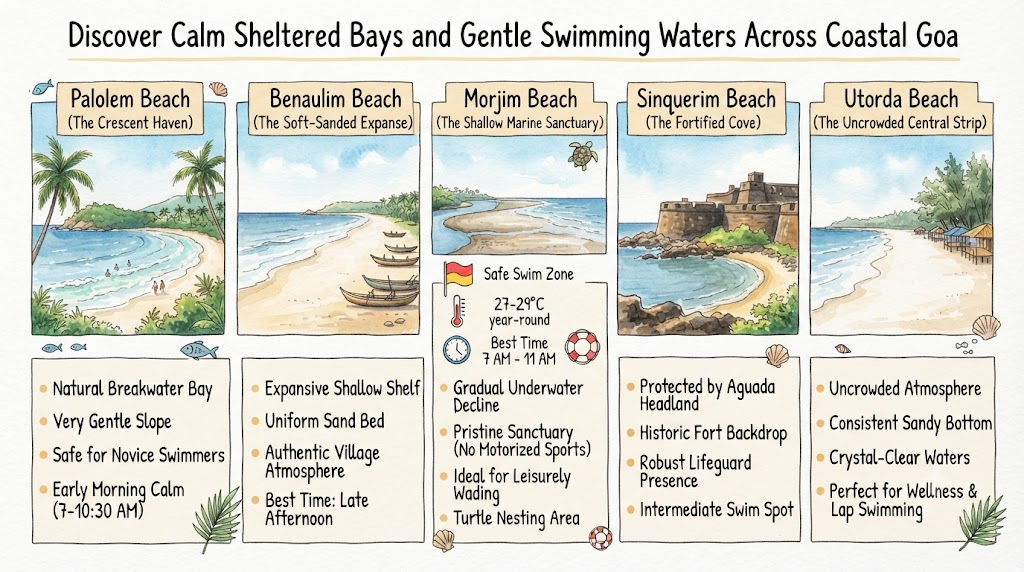
Palolem Beach (The Crescent Haven)
Palolem Beach is universally celebrated for its distinctive natural geography. Nestled inside a deep, protective crescent-shaped bay flanked by towering headlands of ancient granite, this bay acts as a natural breakwater that dampens the open Arabian Sea’s aggressive swells. Coconut palms lean dramatically toward the shore, providing a lush backdrop to an idyllic body of water that frequently resembles a placid saltwater lagoon.
The gentle slope of the ocean bed here means that swimmers can wade dozens of meters into the sea while remaining safely within waist-deep conditions. The absence of sharp underwater reefs along the central arc of the beach creates an exceptionally forgiving environment for leisurely breaststrokes and beginner open-water swimmers.
- Location: Canacona Taluka, South Goa; approximately 67 km south of Panaji and 38 km from Madgaon Railway Station.
- Why it is worth visiting: Its naturally sheltered bay geography makes it one of Goa’s calmest, most wave-protected swimming environments.
- Best things to do: Enjoy an early morning swim before the boat traffic begins, paddle a sea kayak out to Monkey Island, and wander the pastel-colored beach shack paths.
- Best time to visit: 7:00 AM to 10:30 AM from November to March, when the water surface remains glass-like.
- Ideal for whom: Novice swimmers, families with small children, couples, and relaxed vacationers. GoaOrbit
- Travel tip: Stay strictly within the central crescent; currents and depth shifts can occur near the rocky northern and southern headlands.
Benaulim Beach (The Soft-Sanded Expanse)
Steeped in local mythological folklore as the spot where Parashurama’s arrow landed to claim Goa from the sea, Benaulim represents coastal South Goa at its most serene. Unlike its heavily commercialized northern counterparts, this wide, silver-sand shoreline boasts an expansive shallow continental shelf that allows wave energy to dissipate far out from the tideline.
The water here is free from sudden underwater trenches and scattered rock piles, allowing swimmers to enjoy long, uninterrupted sessions parallel to the shore. Fishermen still haul in traditional wooden outrigger canoes in the early dawn, lending the landscape an authentic village atmosphere that grounds your coastal visit in genuine regional rhythm.
- Location: Salcete Taluka, South Goa; roughly 35 km south of Panaji and just 8 km from Madgaon.
- Why it is worth visiting: An exceptionally uniform sandy bed free of hidden rocks, coupled with lower tourist footfall and continuous lifeguard surveillance.
- Best things to do: Take an extended distance swim parallel to the shoreline, spot resident Indo-Pacific humpback dolphins from the shore, and savor freshly landed prawns at traditional wooden beach shacks.
- Best time to visit: October to April; late afternoons between 4:00 PM and 6:00 PM offer pleasant water temperatures and sunset light.
- Ideal for whom: Fitness swimmers, solo travelers seeking calm waters, and seniors.
- Travel tip: Observe the red-and-yellow flag corridor established daily by lifeguards to avoid zones where local fishing boats deploy bottom nets.
Morjim Beach (The Shallow Marine Sanctuary)
Morjim Beach marks the northern mouth where the Chapora River quietly meets the vast sea, famed internationally as a protected nesting ground for endangered Olive Ridley sea turtles. Because of its ecological designation, commercial water sports and high-decibel motorized watercraft are strictly regulated, leaving the sea pristine and free of diesel fumes and propeller risks.
From a swimmer’s standpoint, Morjim offers an extraordinarily gradual underwater decline. Low tide exposes vast swathes of firm, packed sand, allowing swimmers to wade out into knee-to-waist-deep water over hundreds of meters without facing sudden tidal drop-offs.
- Location: Pernem Taluka, North Goa; approximately 28 km north of Panaji.
- Why it is worth visiting: Wide, shallow coastal shelves with minimal motorized watercraft, creating a clean, tranquil swimming sanctuary.
- Best things to do: Wade through the gentle morning shallows, walk down toward the river spit to watch migratory gulls, and unwind at tasteful seaside cafes.
- Best time to visit: 8:00 AM to 11:00 AM from November to February for warm sun and mirror-flat shallows.
- Ideal for whom: Leisure waders, nature enthusiasts, young families, and mindful travelers.
- Travel tip: Do not enter the water at the extreme southern tip where the Chapora River empties into the sea, as estuarine tidal currents can be swift and treacherous.
Sinquerim Beach (The Fortified Cove)
Sheltered under the imposing 17th-century bastion walls of Fort Aguada, Sinquerim features a dramatic marriage of coastal military architecture and ocean access. The presence of the natural headland and historic stone fortifications provides a geographic barrier against dominant oceanic crosswinds, producing a pocket of calm surf right below the fort’s lower ramparts.
The seabed directly along the open sandy sweep of Sinquerim consists of soft, clean sand. Because this beach sits at the beginning of the major northern resort belt, lifeguard presence is robust and active, making it a reliable choice for North Goa visitors who want to swim safely without traveling deep into the south.
- Location: Bardez Taluka, North Goa; roughly 13 km northwest of Panaji.
- Why it is worth visiting: The Aguada headland provides natural shelter from harsh coastal wind chops, creating calm swimming conditions.
- Best things to do: Swim with the historic red-laterite fort ramparts in clear view, take an architectural walk along the Aguada perimeter, and stroll northward toward Candolim.
- Best time to visit: 7:30 AM to 10:30 AM, avoiding the mid-day boat excursion traffic.
- Ideal for whom: Heritage enthusiasts, first-time Goa travelers, and intermediate swimmers.
- Travel tip: Always swim in the open sandy zone away from the exposed rocks near the fort wall to avoid wave surges pushing you against barnacles.
Utorda Beach (The Uncrowded Central Strip)
Utorda Beach forms the peaceful midpoint of South Goa’s continuous 26-kilometer stretch of white-sand coastline. Often bypassed by tourists rushing toward larger hubs, Utorda preserves a clean shoreline where gentle, rolling waves break steadily over a remarkably consistent sandy bottom.
The absence of heavy boat corridors means the water remains crystal-clear throughout the dry winter months. Swimmers will appreciate the steady, predictable tidal rhythm here, which lacks the disorienting cross-currents often found near steep headlands or river estuaries.
- Location: Salcete Taluka, South Goa; roughly 28 km south of Panaji and 15 km from Dabolim Airport.
- Why it is worth visiting: Soft white sand, absence of sudden drop-offs, and a tranquil atmosphere free from dense tourist crowds. Caravela Beach Resort, Goa
- Best things to do: Practice continuous distance swimming within the designated flags, enjoy barefoot strolls across pristine sandbars, and relax beneath shady casuarina groves.
- Best time to visit: November to March, particularly around 4:30 PM to 6:00 PM for calm waters and stunning golden-hour reflections.
- Ideal for whom: Couples, lap swimmers, wellness practitioners, and travelers seeking complete tranquility.
- Travel tip: Check the tide chart before heading out; low tide creates a very wide, shallow splash pool that is especially safe for children.
Offbeat Exploration: Hidden Gems Tourists Miss
Galgibaga Beach (The Whispering Pine Shore)
Known locally as Turtle Beach, Galgibaga in southern Canacona is one of the most secluded coastal environments in the state. Lined by casuarina and pine groves rather than commercial bars, this beach features unpolluted waters and a serene ambience. While swimmers must remain mindful of the open sea swells and respect seasonal turtle-nesting cordons, early morning dips within the flagged zones are deeply therapeutic.
Polem Beach (The Southern Border Secret)
Positioned at the southernmost boundary of Goa right before Karnataka, Polem is a tiny, pristine cove rarely visited by typical tourists. Surrounded by headlands that keep major rip currents at bay, the waters here are calm and clear during the dry winter season. A single family-run shack provides fresh coconut water and local fish curry, making it feel like a private coastal getaway.
Siridao Beach Shell Coves
Tucked quietly along the Zuari Estuary just south of Panaji, Siridao is a distinct, jagged shoreline celebrated by local foragers for its abundance of mother-of-pearl oysters and marine fossils. While its rocky outcrops demand caution, the small sandy coves offer calm, shallow wading pools where you can float while watching local fishermen navigate traditional outrigger boats.
Detailed Practical Guidance for Travelers
| Destination | Standard Entry Fee | General Timings | Best Local Food Options Nearby | Recommended Nearby Attractions |
|---|---|---|---|---|
| Palolem Beach | Free Public Access | 24 Hours (Lifeguards: 7:30 AM – 6:00 PM) | Dropadi Shack (Goan Prawn Curry), Magic Bus Café | Butterfly Beach, Monkey Island, Agonda Beach |
| Benaulim Beach | Free Public Access | 24 Hours (Lifeguards: 7:30 AM – 6:00 PM) | Pedro’s Shack (Kingfish Rava Fry), Cavatina Cordo | Colva Beach, Holy Trinity Church, Varca |
| Morjim Beach | Free Public Access | 24 Hours (Lifeguards: 7:30 AM – 6:00 PM) | Divine Bar & Restaurant, Jardin d’Ulysse | Chapora Fort, Ashwem Beach, Mandrem |
| Sinquerim Beach | Free Public Access | 24 Hours (Lifeguards: 7:30 AM – 6:00 PM) | Fisherman’s Cove (Goan Fish Thali), Calamari Bathe & Binge | Lower Aguada Fort, Aguada Jail Museum, Candolim |
| Utorda Beach | Free Public Access | 24 Hours (Lifeguards: 7:30 AM – 6:00 PM) | Zeebop by the Sea (Stuffed Crab), Balton’s Shack | Majorda Beach, Betalbatim Church, Arossim |
Logistics & On-Ground Navigation
Local Transport Options
- Self-Drive Scooters & Motorcycles: The quintessential Goan transport choice. Rented at ₹350 to ₹600 per day, they offer unmatched freedom to navigate coastal lanes. Ensure you wear a helmet and carry a valid driving license.
- GoaMiles App-Based Taxis: The government-backed taxi service offers fixed digital pricing, helping travelers avoid arbitrary roadside fare bargaining.
- Self-Drive Car Rentals: Available from major airports (Dabolim and Mopa) starting from ₹1,200 per day for small hatchbacks; ideal for families moving between remote swimming beaches.
- Kadamba State Buses: Highly budget-friendly, regular bus lines connect major bus depots (Panaji, Mapusa, Margao, and Canacona) for ₹15 to ₹45 per ride.
- Motorcycle Pilots: A uniquely Goan transport tradition featuring licensed two-wheeler taxi operators who transport solo passengers quickly over short rural routes.
Budget Planning
- Backpacker & Solo Tier (₹1,500 – ₹2,800 / day): Includes a shared dorm bed or budget beach hut (₹600–₹1,200), scooter rental with fuel (₹450), and authentic meals at local village canteens and beach shacks (₹500–₹800).
- Mid-Range Comfort Tier (₹4,500 – ₹8,500 / day): Includes a boutique coastal resort or heritage Portuguese home stay (₹3,000–₹5,500), private app-cab travel or car hire (₹1,500), and fresh seafood lunches with evening cocktails (₹1,500–₹2,000).
Safety and Inclusivity Tips
- For Families: Stick strictly to beaches with active lifeguard patrols (Palolem, Benaulim, and Utorda). Keep children away from tidal surge lines during high tide, and pack rash vests to protect sensitive skin from intense sun. GoaOrbit
- For Couples: Seek out quieter coastal expanses like Utorda or southern Agonda for sunset swimming, away from noisy water-scooter lanes.
- General Ocean Safety: Always swim parallel to the beach rather than straight out toward deep water. If caught in a rip current, remain calm, float on your back, and paddle across the current rather than fighting directly against it.
Strategic Travel Planning Guardrails
Travel Planning Tips for Goa
- Plan Around the Dry Window: Schedule swimming trips between November and April; the monsoon months (June through September) bring strong swells, dangerous undercurrents, and strict statewide swimming bans.
- Carry Liquid Cash for Rural Shacks: While digital UPI payments work in most towns, beachfront shacks on remote stretches like Galgibaga or Polem often experience intermittent mobile data connectivity.
- Check Daily Tide Charts: Consult online tide predictions daily; the 2 hours flanking low tide are consistently the calmest and safest times for open-water dips.
- Carry High-Protection Sunscreen: Choose water-resistant, coral-safe mineral zinc formulas to protect your skin from intense equatorial UV exposure without harming local marine flora.
- Keep Safety Flags in Sight: Red flags indicate severe rip hazards; red-and-yellow flags denote safe, actively monitored zones. Always enter the water between the markers.
Common Mistakes to Avoid
- Drinking Alcohol Before Swimming: Consuming chilled beer or feni before entering the sea impairs your balance and reaction times, which is the leading cause of preventable beach rescues.
- Ignoring River Mouth Hazards: Never swim where inland rivers join the ocean (such as the mouth of the Chapora or Zuari), as tidal rip currents are powerful and unpredictable.
- Underestimating Shorebreak Power: Some steep beaches produce heavy breaking waves directly onto the sand, which can knock waders off balance and cause neck or shoulder injuries.
- Renting Unlicensed Watercraft: Always ensure water sports operators possess valid registration certificates, up-to-date insurance, and certified safety life jackets.
- Swimming After Dark: Lifeguard patrols end at sunset; navigating the Arabian Sea at night is extremely dangerous due to limited visibility and changing tidal currents.
Suggested Itinerary Blueprints
1. Day Quick Dash (North Coast Scenic Swim Circuit)
- Target Audience: Short-stay travelers based in North Goa wanting safe morning swimming and coastal fort views.
- Morning (8:00 AM – 11:30 AM): Head directly to Sinquerim Beach beneath Fort Aguada for a calm morning swim inside the sheltered cove. Goa Tour Packages
- Midday (12:00 PM – 2:30 PM): Enjoy a traditional Goan Fish Curry Thali lunch along the Candolim heritage strip.
- Afternoon/Evening (3:30 PM – 6:30 PM): Drive north across the Siolim Bridge to Morjim Beach; wade along the wide shallows and watch the sunset over the quiet turtle sanctuary.
2. Day Deep-Dive (South Goa Pure Water Immersion)
- Day 1 (The Great Crescent Bay): Settle into Palolem Beach. Spend the morning swimming within the calm central bay. Rent an afternoon kayak to explore the quiet nearby cliffs, concluding with dinner at Dropadi Shack. Caravela Beach Resort, Goa
- Day 2 (Quiet Sands & Village Life): Drive north to Benaulim Beach. Enjoy a long open-water swim along the gentle sandy slope. Spend your afternoon cycling through Benaulim village’s old Portuguese mansions, finishing with sunset drinks at Utorda.
3. Complete Weekend Travel Plan (All-Goa Aquatic Loop)
- Friday (North Coastal Heritage): Arrive, base yourself near Candolim, and enjoy an evening warm-up swim at Sinquerim Beach, followed by dinner at a restored village tavern. GoaOrbit
- Saturday (Central Strip & White Sands): Drive south past Panaji, stopping for a swim in the peaceful waters of Utorda Beach. Continue down to Cavelossim for fresh seafood, and check into a South Goa boutique stay.
- Sunday (The Southern Sanctuary): Wake up early for dawn swimming at Palolem. Take an afternoon scooter drive through the pine groves of Galgibaga, and catch an early evening flight home from Dabolim or Mopa. GoaOrbit
Common Tourist Mistakes to Avoid
Geographic Blunders
Attempting to split your day between northern party beaches like Baga and southern swimming sanctuaries like Palolem is a common logistical error. The one-way drive spans nearly 80 kilometers and can easily eat up three hours through heavy coastal traffic, leaving you exhausted instead of relaxed. Pick one geographic zone per day and explore it thoroughly.
Commercial Traps
Spending entire afternoons trapped in packed resort shopping strips or noisy water-sports corridors robs you of Goa’s natural coastal beauty. Crowded zones feature aggressive jet-ski operators that disrupt the tranquility of the sea, whereas swimming-focused shores provide clean, undisturbed waters.
Neglecting Modern/Alternative Zones
Many visitors stick solely to ancient beach strips, overlooking the vibrant culinary culture and creative hubs thriving just inland in villages like Assagao, Aldona, and Chorao Island. Taking time to discover these interior villages reveals charming artisan bakeries, organic farm kitchens, and historic heritage estates.
Transport Overpayment
Hailing unmetered roadside tourist taxis without agreeing on a rate upfront frequently leads to inflated prices. Always book through the official GoaMiles app, ask your hotel front desk for recognized local union fare charts, or rent a self-drive scooter to keep transportation costs reasonable.
Luxury Dining Bias
Dining exclusively inside five-star resort dining rooms deprives you of Goa’s culinary heart. The state’s best food is served at humble, family-run matan-bhat canteens and coastal shacks, where daily-caught kingfish, mackerel, and mud crabs are spiced with authentic red recheado and sour kokum.
Frequently Asked Questions
1. Which beach is generally considered the safest for swimming in Goa?
Palolem Beach in South Goa is widely recognized as the safest swimming beach due to its natural, sheltered bay shape. The flanking headlands break incoming ocean swells, creating calm conditions that resemble a peaceful lagoon and provide a secure environment for families and casual swimmers.
2. Are lifeguards stationed on all Goa beaches?
Professional lifeguards managed by Drishti Marine actively patrol all major designated tourist beaches across both North and South Goa from morning until sunset. They mark daily swimming zones with red-and-yellow flags and monitor swimmers using rescue tubes, jet skis, and patrol towers.
3. Is it safe to swim in Goa during the monsoon season?
No, swimming in the sea during the monsoon season from June through September is strictly prohibited. Strong swells, heavy shorebreaks, shifting sandbars, and unpredictable undercurrents make the sea extremely dangerous, and all beaches post mandatory red flags during these months.
4. What do the different colored flags on Goan beaches mean?
A red-and-yellow paired flag indicates a designated safe swimming zone under active lifeguard watch. A solid red flag warns of high hazards and strictly prohibits swimming due to dangerous rip currents, steep underwater drop-offs, or bad weather. Always check flag positions before entering the water.
5. Are there dangerous marine animals or jellyfish in Goa waters?
Jellyfish can occasionally drift near the shoreline, particularly during seasonal weather transitions in October or late spring. While severe stings are rare, they can cause painful skin irritation. If you see jellyfish or feel a stinging sensation, exit the water immediately and seek first aid from the nearest lifeguard.
6. Can non-swimmers safely wade into the water at Goan beaches?
Yes, non-swimmers can safely wade at shallow, gently sloping beaches such as Morjim, Palolem, and Utorda during calm dry-season mornings. Always remain between waist and chest depth, stay within designated flagged zones, and never turn your back on incoming waves.
7. Why should you avoid swimming at river mouths in Goa?
River mouths where estuaries meet the Arabian Sea—such as the mouth of the Chapora or Zuari—feature hidden dangers. Combining river discharge with incoming ocean tides creates powerful undertows, swirling whirlpools, and sudden shifts in water depth that can easily overpower even strong swimmers.
8. What is the best time of day to go swimming in Goa?
The best window for swimming is early morning between 7:30 AM and 10:30 AM. During these morning hours, coastal winds are light, the water surface remains calm and clear, the sun is gentle, and water-sports boats have not yet begun operating.
9. Are North Goa beaches safe for swimming compared to South Goa?
Select North Goa spots like Sinquerim and Morjim are very safe when staying within monitored zones. However, South Goa beaches generally have gentler slopes, softer waves, and less motorized watercraft traffic, offering an overall calmer swimming environment.
10. What should you do if you get caught in a rip current in Goa?
Never attempt to fight the current by swimming straight back to shore, as this causes exhaustion. Stay calm, float on your back to conserve energy, raise one arm to signal the lifeguards, and swim parallel to the beach to escape the narrow current channel.
11. Is it safe to go swimming in the sea after sunset in Goa?
Swimming after dusk is extremely unsafe and strongly discouraged. Lifeguards end their active beach patrols at sunset, visibility drops to zero, and changing tidal currents make it difficult to spot rip channels or rescue swimmers in distress.
12. What protective swimwear should I pack for Goa?
Pack quick-drying UV-protective rash guards, comfortable swimwear, a wide-brimmed sun hat, and polarized sunglasses. If you plan to explore rocky areas around headlands, lightweight neoprene water shoes will protect your feet from sharp barnacles and hidden stones.
Conclusion
Stepping into the tranquil waters of an untouched Goan bay connects you directly to the living spirit of the Konkan coast. By choosing sheltered shores, listening to the wisdom of the local tides, and respecting the natural rhythms of the sea, your holiday transforms from a generic coastal trip into an authentic, rejuvenating retreat that lingers long after you leave the shore.
