Introduction
Beyond the commercial basslines, high-decibel beach clubs, and neon-lit corridors that dominate mainstream tourism pamphlets, a vastly different Goa breathes quietly. This is the realm of true susegad—a relaxed, unhurried contentment rooted deeply in centuries of Konkan coastal tradition, lush riverine ecosystems, and Indo-Portuguese architectural poise.
Trade the overcrowded sands of Baga or Calangute for shaded verandahs overlooking tranquil backwaters, whispering cashew orchards, and unspoiled southern shores. Choosing a peaceful retreat in Goa connects you directly to the state’s authentic pulse, where village bakers still deliver fresh bread on bicycles at dawn, and church bells toll across sleepy emerald fields.
Why Goa is a must-visit city
Goa occupies a distinct cultural and ecological niche on the west coast of India. Shaped by four centuries of Portuguese influence alongside pre-colonial Hindu traditions, its heritage thrives in its protected village hamlets (waddos), ancient red laterite stone churches, and family-run plantations. Far from being merely a sun-and-sand hub, the state is bordered inland by the biodiversity of the Western Ghats and crisscrossed by tidal rivers like the Mandovi, Zuari, and Chapora.
Reaching these tranquil enclaves is seamless for all traveler archetypes. With dual international airports—Manohar International Airport (Mopa / GOX) in the north and Dabolim Airport (GOI) in central Goa—coupled with major rail junctions at Madgaon (MAO) and Thivim (THVM), the region is well connected. Modern highways merge effortlessly into winding village lanes, where family-run eco-resorts, heritage homestays, and boutique wellness hideaways offer peaceful sanctuaries.
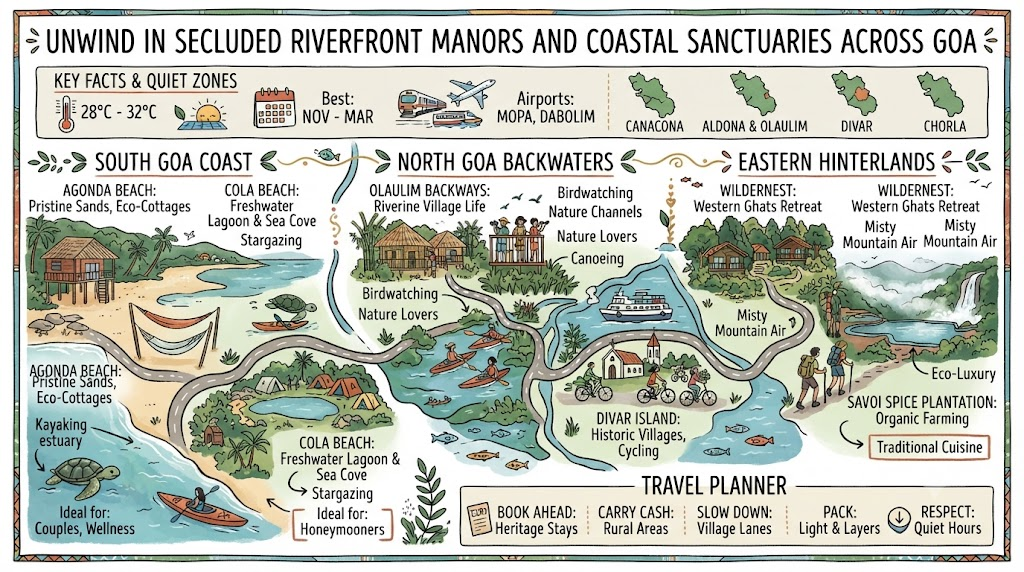
The state’s tranquil travel circuit divides into three serene corridors: the deep, palm-fringed coastlines of South Goa, the quiet mangrove backwaters of interior North Goa, and the misty hills of the eastern hinterlands.
| Key Fact | Regional Detail |
| Geographic Character | Coastal Konkan strip backed by tidal estuaries and the Western Ghats |
| Best Months for Quiet Stays | November to March (Dry and pleasant); July to September (Lush monsoon retreat) |
| Nearest Transit Hubs | Mopa Airport (North), Dabolim Airport (South/Central), Madgaon Junction Railway |
| Average Daytime Temperature | 28°C to 32°C during peak dry season |
| Quiet Sanctuary Zones | Canacona (South), Aldona & Olaulim (North Backwaters), Divar Island, Chorla Ghats |
Best Places or Experiences
Agonda Beach Eco-Cottages
Agonda is a three-kilometer arc of white sand that stands as one of Goa’s quietest coastal preserves. Unlike the bustling beaches to the north, Agonda strictly prohibits motorized water sports, loud seaside music, and aggressive commercial hawking, allowing the natural rhythm of the Arabian Sea to set the daily tempo. The beach also doubles as a protected nesting habitat for Olive Ridley sea turtles, ensuring an eco-conscious ethos that safeguards its clean sands and starry night skies.
Staying here means waking up in sustainably built, stilt-supported wooden cottages set beneath whispering coconut groves. The village path behind the coastline features low-key cafes, independent yoga shalas, and laid-back open-air reading spaces, making it a premier haven for restorative travel.
- Location: Canacona Taluka, South Goa; approximately 37 km from Madgaon Railway Station and 65 km from Dabolim Airport.
- Why it is worth visiting: Pristine, quiet shores free from jet skis and beach party noise, enriched by eco-conscious boutique cottages.
- Best things to do: Kayak on the tranquil north-end river estuary, participate in sunrise mindfulness sessions, and spot dolphins playing offshore without motorboat crowds.
- Best time to visit: November to February for pleasant sea breezes and calm waters.
- Ideal for whom: Couples seeking romantic privacy, solo readers, and wellness travelers.
- Travel tip: Book cottages set along the central or northern end of the beach for maximum quiet, and keep flashlight use minimal at night to protect nesting marine turtles.
Olaulim Backyards
Tucked alongside the Mandovi River backwaters in the sleepy hamlet of Olaulim, this eco-resort estate redefines the inland Goan countryside. Constructed with raw laterite stone, bamboo, and reclaimed timber, its private cottages blend into a landscape of mature tropical foliage, hornbill nesting sites, and gentle water channels.
The property is the brainchild of resident naturalists who emphasize responsible, community-integrated tourism. Here, days revolve around unhurried breakfasts of homemade poi bread and tropical fruit, followed by drifting along mangrove-lined channels where kingfishers hunt in quiet shallows.
- Location: Pomburpa-Olaulim village, North Goa; roughly 11 km from Mapusa and 16 km north of Panaji.
- Why it is worth visiting: An authentic riverine sanctuary free from vehicular traffic, offering deep immersion into Goan village life.
- Best things to do: Paddle wooden kayaks through calm backwater channels, birdwatch from open-air verandas, and swim in the chlorine-free hillside pool.
- Best time to visit: October through March for pleasant breezes, or July to September for lush monsoon greenery.
- Ideal for whom: Nature lovers, creative writers, birdwatchers, and families looking for digital detox retreats.
- Travel tip: Pack eco-safe insect repellent and waterproof sandals for morning canoe outings along the tidal mudflats.
Aldona Heritage Mansions
Aldona is often called one of the most picturesque villages in the world, renowned for its winding river bends, stone bridges, and centuries-old Indo-Portuguese villas. Staying in a restored heritage home here immerses travelers in authentic aristocrat-manor architecture, complete with high wooden ceilings, oyster-shell window panes, central courtyards (courtyard raj-aangans), and sprawling fruit orchards.
The atmosphere in Aldona is peaceful and neighborly. Walking past the whitewashed St. Thomas Church or strolling along the riverbanks at sunset reveals a pastoral slice of Goan life where traditional communal bonds remain intact.
- Location: Bardez Taluka, North Goa; approximately 18 km northeast of Panaji.
- Why it is worth visiting: Rare architectural preservation offering an authentic window into traditional Indo-Portuguese manor living.
- Best things to do: Take a heritage walking tour of local village squares, sketch or photograph riverside stone bridges, and visit the historic Corjuem Fort nearby.
- Best time to visit: October to February during the dry winter, or during late afternoon hours for ideal village golden-hour photography.
- Ideal for whom: Architecture buffs, slow-travel enthusiasts, couples, and cultural researchers.
- Travel tip: Rent a classic bicycle to navigate the village’s narrow lanes, as car parking along traditional village roads is extremely limited.
Cola Beach Lagoon Retreats
Cola Beach is a natural wonder tucked away in South Goa, where an emerald freshwater lagoon sits mere meters from the waves of the Arabian Sea. Hemmed in by steep volcanic cliffs and dense palm trees, the beach has no direct tarmac road access, naturally shielding it from bus tours and noisy crowds.
Accommodations here consist of luxury safari-style tents and wooden chalets spaced along the hillside and lagoon banks. Guests can alternate between swimming in the calm, cool waters of the natural river and resting under palm trees by the sea.
- Location: Canacona Taluka, South Goa; approximately 50 km from Margao and 10 km north of Agonda.
- Why it is worth visiting: A unique coastal landscape combining a freshwater river lagoon and a sheltered ocean cove in one frame.
- Best things to do: Paddleboard on the emerald freshwater lagoon, enjoy cliff-edge sunset picnics, and stargaze beneath skies free of city light pollution.
- Best time to visit: November to March; access paths are often washed out during heavy monsoon rains.
- Ideal for whom: Honeymoon couples, adventurous nature lovers, and travelers seeking off-grid coastal stays.
- Travel tip: The access path down the cliff is a steep, unpaved dirt trail; wear sturdy footwear and pack light duffel bags rather than heavy wheeled luggage.
Wildernest Nature Resort, Chorla Ghats
Perched at an elevation of 800 meters within the Swapnagandha Valley, Wildernest sits in the lush embrace of the Western Ghats along the Goa-Karnataka-Maharashtra border. This eco-luxury forest retreat was built without felling trees, using local acacia wood and laterite stone to minimize its footprint on the surrounding wilderness.
Overlooking the dramatic Vazra Sakla waterfalls, the resort offers an escape into misty mountain air and dense forest canopies. Mornings feature guided botanical treks led by naturalists, while evenings invite relaxation beside an infinity pool that appears to melt into the mountain mist.
- Location: Chorla Ghats, Sattari Taluka; roughly 55 km northeast of Panaji.
- Why it is worth visiting: Crisp mountain air, rich biodiversity, and sweeping vistas over misty ghat valleys.
- Best things to do: Join guided nature treks to hidden valley waterfalls, take part in midnight herpetology walks, and relax by the valley-view infinity pool.
- Best time to visit: June to November to witness rushing waterfalls and lush rainforest landscapes.
- Ideal for whom: Ecotourists, wildlife photographers, trekkers, and travelers seeking cool mountain temperatures.
- Travel tip: Mountain roads feature sharp hairpin turns; hire an experienced local driver or drive an SUV with good ground clearance.
Offbeat Exploration: Hidden Gems Tourists Miss
Divar Island’s Piedade Village
Separated from the mainland by the Mandovi River and accessible only via government ferry, Divar Island feels like a living museum. The hilltop village of Piedade features traditional Goan-Baroque homes, ancient hillside chapels, and wide vistas over the surrounding floodplains (khazan lands). A stay in the island’s heritage homes offers an atmosphere free from traffic noise and commercial tourism.
Galgibaga Turtle Beach Estuary
Situated at the southernmost tip of Goa, Galgibaga is often called “Turtle Beach” alongside Morjim and Agonda. Shaded by tall casuarina groves rather than coconut palms, the beach has no permanent concrete buildings. Sitting by the Poinguinim River estuary at dusk reveals one of the quietest coastal sunsets in the entire state.
Savoi Spice Plantation Heritage Stays
Located deep within Ponda’s interior, this 200-year-old family-run estate invites travelers into organic spice farming culture. Staying in their traditional cottages allows guests to wake up to the aromas of cardamom, nutmeg, and vanilla, accompanied by home-cooked Saraswat-style vegetarian feasts served on fresh banana leaves.
Detailed Practical Guidance for Travelers
| Destination | Standard Entry Fee | General Timings | Best Local Food Options Nearby | Recommended Nearby Attractions |
| Agonda Beach Eco-Cottages | Free (Open Public Shore) | 24 Hours (Best 6:00 AM – 7:00 PM) | Fatima’s Corner (Goan Fish Curry), Zest Vegan Café | Cabo de Rama Fort, Cola Lagoon |
| Olaulim Backyards | Property Guests Only | Open Daily (Day tours by prior booking) | Authentic home-cooked Goan thalis on-site, Pomburpa bakery | Pomburpa Springs, Chorao Bird Sanctuary |
| Aldona Heritage Mansions | Free Village Access (Stay rates apply) | 24 Hours | Village poi bakeries, local tavernas, nearby Moira cafes | Corjuem Fort, St. Thomas Church |
| Cola Beach Lagoon | Free Public Access | 6:00 AM – 6:30 PM (Cliffs unlit at night) | Blue Lagoon Shack (Grilled Red Snapper), shack cafes | Agonda Beach, Butterfly Beach |
| Wildernest, Chorla Ghats | Residential Retreat Packages | 24 Hours (Check-in 1:00 PM) | The Randhan Dining Hall (Traditional Chulha-cooked buffet) | Vazra Falls Viewpoint, Mhadei Wildlife Reserve |
Logistics & On-Ground Navigation
Local Transport Options
- Self-Drive Scooters and Motorcycles: Ideal for navigating narrow coastal roads and village lanes in Canacona or Aldona. Rates range from ₹350 to ₹600 per day, depending on the season. Always carry a valid driver’s license and wear an ISI-marked helmet.
- Self-Drive Car Rentals: Best suited for traveling between north and south districts or heading up into the Chorla Ghats. Rates range between ₹1,200 and ₹2,500 per day for compact hatchbacks and SUVs.
- Prepaid Airport and Railway Taxis: Readily available at Mopa, Dabolim, and Madgaon stations. Use official government or GoaMiles app counters to secure regulated fares and avoid roadside price gouging.
- Inland River Ferries: Operated by the River Navigation Department, these ferries connect islands like Divar and Chorao. They are free for pedestrians and charge a nominal fee for two-wheelers and cars.
Budget Planning
- Budget / Slow-Backpacker Tier (₹1,800 – ₹2,800 per day): Clean village homestays, non-AC eco-cottages, scooter rentals, and meals at local Konkani thali canteens and family-run bakeries.
- Mid-Range / Comfort & Heritage Tier (₹5,500 – ₹11,000 per day): Restored Indo-Portuguese boutique villas, air-conditioned beachfront eco-cottages, rental cars, and dining at farm-to-table estate restaurants.
Safety and Inclusivity Tips
- For Solo Female Travelers: Quiet pockets like Agonda and Aldona are among the safest destinations in India for solo women. Stick to well-lit village streets at night, arrange evening transport through your homestay hosts, and save local emergency helpline numbers (112).
- For Couples: Respect local village decorum. While swimwear is standard on beaches, throw on a cover-up, sarong, or shirt when walking through residential village paths or visiting heritage chapels.
- General Water Safety: Quiet beaches often have fewer lifeguard towers. Always observe shoreline hazard flags—never swim near river-mouth estuaries where undercurrents can be strong.
Strategic Travel Planning Guardrails
Travel Planning Tips for Goa
- Book Heritage Stays in Advance: Intimate properties like restored manor houses and eco-retreats often have fewer than ten rooms; book three to four months ahead for peak winter travel.
- Carry Physical Cash for Countryside Stays: While digital UPI payments are widespread, mobile networks can be spotty in deep valleys like Cola or Chorla Ghats. Keep ₹2,000 to ₹4,000 in cash on hand for small purchases.
- Embrace Slow Driving in Villages: Village roads are narrow, winding, and shared with pedestrians, cyclists, and stray animals. Keep driving speeds under 30 km/h.
- Pack for Varied Microclimates: Coastal areas are warm and humid, while forest stays like Chorla Ghats bring evening drops in temperature. Pack a light windbreaker or fleece alongside cotton clothing.
- Respect the Quiet Hours: Quiet coastal and inland villages sleep early. Keep outdoor music and loud conversations to a minimum after 10:00 PM.
Common Mistakes to Avoid
- Packing Oversized Wheeled Suitcases: Cobblestone paths, rustic garden trails, and sandy beach lanes make heavy rolling luggage difficult to manage. Travel light with duffels or backpacks.
- Expecting Round-the-Clock Room Service: Eco-lodges and historic homestays prioritize peace and environmental harmony; do not expect late-night commercial resort amenities.
- Skipping Inland Waterways: Sticking solely to beaches misses out on the serene rivers, mangroves, and island networks that define Goa’s heartland.
- Ignoring the Monsoon Months: Assuming Goa is only worth visiting in winter means missing the monsoon season, when waterfalls roar, countryside lanes turn lush green, and room rates drop significantly.
- Overcrowding Your Daily Schedule: Rushing across three distant talukas in a single afternoon contradicts the relaxing spirit of susegad. Plan no more than one major activity per day.
Suggested Itinerary Blueprints
1. Day Quick Dash (The Serene South Circuit)
- Morning: Begin with a 7:30 AM peaceful coastal walk along Agonda Beach, followed by a fresh fruit and poi breakfast at a beachside cafe.
- Afternoon: Head north to Cabo de Rama Fort to explore the historical laterite ramparts, then enjoy a scenic lunch overlooking the cliffs.
- Evening: Travel to the hidden lagoon at Cola Beach for a late afternoon freshwater swim and watch the sunset over the sea.
2. Day Deep-Dive (Islands & Backwaters Retreat)
- Day 1: Take the ferry to Divar Island, check into a restored Portuguese manor, and spend the morning cycling through quiet village lanes. In the afternoon, explore the historic churches of Old Goa before enjoying a quiet riverside dinner.
- Day 2: Journey to Olaulim village for a guided morning kayak excursion through mangrove channels. Spend the afternoon reading by the riverside pool and dining on home-cooked Goan fish curry.
3. Complete Weekend Travel Plan (Hinterlands to Southern Shores)
- Friday: Arrive and head straight up to the cool elevations of Chorla Ghats. Check into an eco-lodge, take a dusk canopy walk, and enjoy fireside Konkan dining.
- Saturday: Wake to birdcalls across the misty Swapnagandha valley, join a morning waterfall trek, and make the scenic drive south to settle into a beach cottage in Agonda by late afternoon.
- Sunday: Enjoy an early morning kayak outing on the Agonda river estuary, savor an unhurried brunch of local specialties, and spend a quiet afternoon resting by the quiet southern coast.
Common Tourist Mistakes to Avoid
- Geographic Blunders: Booking a quiet stay in Canacona (South Goa) while planning daily dinner reservations in Anjuna or Assagao (North Goa). The 90-kilometer drive takes over two and a half hours each way, exhausting you and defeating the purpose of a relaxing vacation.
- Commercial Traps: Spending afternoon hours wandering generic beach flea markets full of mass-produced goods. Instead, visit local village potters, traditional bakeries, or organic spice plantations for authentic handmade wares.
- Neglecting Modern/Alternative Zones: Overlooking Goa’s emerging creative and artistic inland communities. Quiet villages like Moira, Aldona, and Chorao host sustainable lifestyle studios, independent art foundations, and peaceful cafes well worth discovering.
- Transport Overpayment: Agreeing to unmetered airport taxi rates quoted on the curb. Always purchase pre-fixed tickets at official government counters inside the arrivals hall or book verified app-based rides to ensure fair pricing.
- Luxury Dining Bias: Limiting your meals to upscale international resort menus. Goa’s culinary heritage shines best in simple village ambotik curries, wood-fired poi breads, and traditional thalis prepared fresh at local family-run eateries.
Frequently Asked Questions
1. Which part of Goa is best for a truly peaceful vacation?
South Goa, particularly the Canacona and Quepem talukas, offers the most peaceful coastal ambiance, featuring quiet beaches like Agonda and Galgibaga. For travelers seeking lush countryside rather than beaches, the interior riverine villages of North Goa—such as Aldona, Moira, and Olaulim—provide serene stays set among mango orchards and quiet waterways.
2. Are quiet stays in Goa suitable for solo female travelers?
Yes, quiet regions like Agonda, Aldona, and Divar Island are considered very safe for solo female travelers. These communities are close-knit, welcoming, and relaxed. Practicing sensible travel habits—such as avoiding unlit rural pathways late at night and using trusted homestay-arranged transport—ensures a safe and peaceful visit.
3. What is the quietest beach in Goa that still offers comfortable stays?
Agonda Beach provides the ideal balance between modern comfort and natural tranquility. It offers boutique, stilt-supported wooden cottages and quality dining options while strictly prohibiting motorized sports and loud music. This preserves a calm, uninterrupted coastal atmosphere for visitors who want to relax by the sea.
4. How do I get to offbeat and quiet stay locations from the airport?
The most reliable approach is booking a prepaid taxi inside the arrivals terminal at either Mopa (GOX) or Dabolim (GOI) airport. Alternatively, coordinate directly with your boutique homestay or eco-resort ahead of time to arrange a trusted local driver who knows the rural roads.
5. Is it practical to rent a scooter for exploring quiet Goan villages?
Yes, renting an automatic scooter is one of the best ways to explore rural Goan villages and quiet coastal stretches. The traffic is light and speeds are slow, making it easy to discover hidden chapels and quiet viewpoints. Always wear an approved helmet and carry your driving license.
6. Do quiet homestays and eco-resorts in Goa offer reliable Wi-Fi for remote work?
Most established boutique stays and heritage homestays now provide stable fiber-optic broadband. However, in more remote natural areas like the Chorla Ghats or Cola Beach, mobile data signals can be inconsistent. Always confirm the specific internet setup with your hosts if you require high-speed connectivity for remote work.
7. What should I pack for an eco-stay or heritage retreat in Goa?
Pack breathable cotton clothing, sturdy sandals, slip-on shoes for visiting historic chapels, reef-safe sunscreen, and plant-based insect repellent. A light rain jacket is helpful for sudden coastal showers, and a warm fleece or sweater is useful for misty mountain retreats in the Western Ghats.
8. Are food choices limited when staying in remote or quiet parts of Goa?
Not at all. While you will encounter fewer international fast-food chains, quiet stay areas offer rich culinary experiences. You will enjoy authentic home-style Goan Saraswat and Catholic dishes, fresh seafood, wood-fired local breads, and farm-to-table organic produce prepared with local ingredients.
9. Can I visit quiet heritage stays in Goa during the monsoon season?
Yes, the monsoon season from June to September is a wonderful time to visit inland heritage homes and forest lodges. While swimming in the sea is prohibited due to high waves, the countryside turns lush green, rivers flow fully, and the cooler climate creates a peaceful, reflective ambiance.
10. What is local etiquette when staying in traditional Goan villages?
Dress respectfully by covering your shoulders and knees when entering residential village paths, temples, and historic chapels. Always ask before taking portraits of locals, avoid loud music after dark, and take care to support small neighborhood bakeries and family-run shops.
11. How do quiet stays in South Goa compare to interior North Goa?
Quiet stays in South Goa focus largely on the coastline, offering peaceful swimming bays, cliff viewpoints, and beachside reading. In contrast, interior North Goa centers on river islands, mangrove backwaters, birdwatching, and restored Indo-Portuguese villas surrounded by orchards and rich history.
12. Do I need special permits to stay in eco-sensitive or forest zones in Goa?
Standard eco-resorts and village heritage stays do not require special entry permits for domestic or international tourists. However, if you plan to venture deep into protected wildlife reserves like Mhadei or Cotigao for off-trail trekking, you may need a day pass from the Goa Forest Department.
Conclusion
Choosing a quiet stay in Goa transforms a routine beach holiday into a restorative retreat. Leaving behind crowded nightlife corridors opens up the true spirit of the coastal state: listening to early morning birdsong along the Mandovi backwaters, watching fishermen mend nets on undisturbed southern sands, and unwinding on the veranda of a centuries-old heritage manor. Here, susegad is more than a word—it is an invitation to slow down, breathe deeply, and experience Goa at its most authentic.
