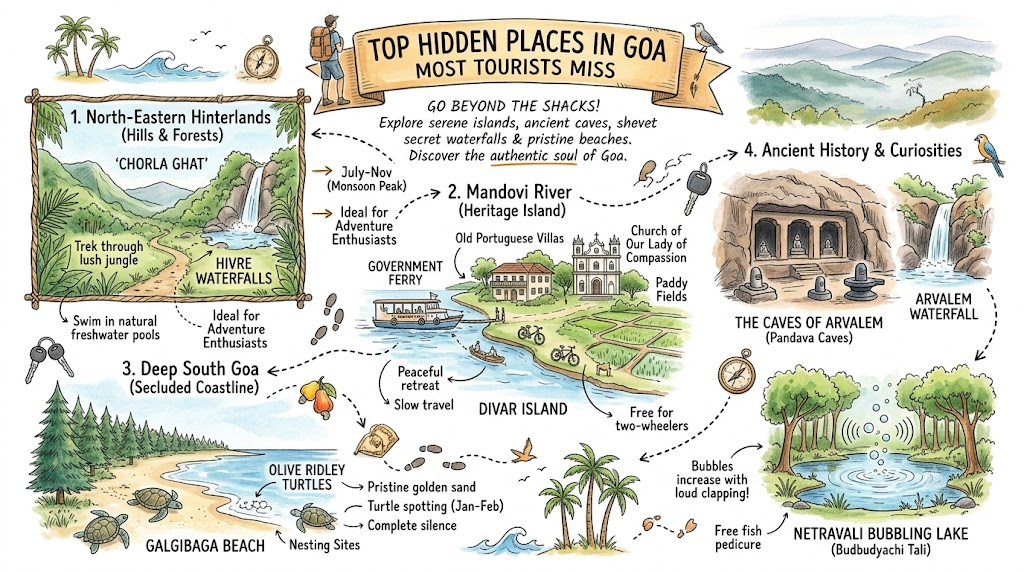
Think of Goa, and your mind likely drifts to Baga Beach at sunset, neon-lit clubs, and crowded shacks playing loud music. But if you only stick to the popular tourist hubs, you are seeing just a fraction of what this beautiful coastal state has to offer. Beyond the commercialized strips lies a completely different world—one of silent mangrove forests, ancient heritage homes, pristine backwaters, and secret waterfalls hidden deep within the Western Ghats.
This Goa travel guide is designed to take you off the beaten path. Whether you are a first-time visitor wanting to escape the crowds, a couple looking for romance, a solo backpacker chasing raw nature, or a family seeking peace, exploring the hidden places in Goa will completely change how you view this destination. Goa is more than just a party capital; it is a rich tapestry of Portuguese-Indian culture, biodiversity, and serene local life waiting to be discovered.
Why Goa is a Must-Visit City
While Goa is technically a state rather than a single city, its interconnected towns, villages, and beaches function as a massive, laid-back coastal playground. It remains a top destination because it offers an incredible contrast of experiences within short driving distances.
In the morning, you can hike through a dense forest reserve; by afternoon, you can sip local feni at a 400-year-old Portuguese estate; and by evening, you can watch the sunset on a beach where the only footprints are your own. The local transport ecosystem—primarily rented scooters and self-drive cars—gives you the ultimate freedom to explore at your own pace. Moreover, Goa caters to every budget imaginable, from backpacker hostels tucked away in sleepy villages to ultra-luxury heritage villas.
Exploring the Hidden Side of Goa: Practical Guidance
When skipping the mainstream Goa tourist places, you need to adjust your travel style. Hidden gems lack the loud infrastructure of North Goa’s commercial beaches, meaning you won’t find rows of commercial shacks or jet-ski operators. Instead, you get raw beauty and authentic interactions.
- Best places to visit: Focus your attention on the eastern hinterlands, the extreme southern coastline, and the river islands of the Mandovi and Zuari rivers.
- Things to do: Kayak through silent mangroves, birdwatch in the early morning light, trek to hidden freshwater pools, and sample authentic Goan Saraswat or Catholic cuisine in village taverns.
- Local transport options: A scooter or a sturdy hatchback is essential. Public buses rarely frequent the deep interior roads where these hidden spots are located.
- Budget planning: Offbeat Goa is incredibly pocket-friendly. Entry fees for forest reserves or historic caves are negligible (usually between ₹20 to ₹100), and local village eateries offer massive portions of fish curry rice for a fraction of resort prices.
- Safety tips: Because these areas are secluded, mobile networks can be patchy. Always download offline maps before heading inland, and ensure you head back to main roads before total darkness sets in.
Best Places or Experiences
1. Chorla Ghat and the Hivre Waterfalls
Nestled along the intersection of the borders of Goa, Karnataka, and Maharashtra, Chorla Ghat is a stunning tropical rainforest ridge. Hidden within this region are the Hivre Waterfalls, a pristine set of falls tucked away from standard tourist itineraries.
- Location: Sattari taluka, North-Eastern Goa.
- Why it is worth visiting: The drive up the winding roads of Chorla Ghat offers panoramic views of the misty Western Ghats. The trek to Hivre Waterfalls takes you through dense tropical vegetation, small streams, and local farmlands, providing an intense burst of nature far removed from the coast.
- Best things to do: Embark on a guided jungle trek, indulge in landscape photography, spot endemic bird species, and swim in the cool, natural freshwater pools at the base of the falls.
- Best time to visit: July to November, when the monsoons turn the entire ghat into an emerald paradise and the waterfalls are at their peak volume.
- Ideal for whom: Adventure enthusiasts, trekkers, solo travelers, and nature photographers.
- Travel tip: Hire a local guide from the Hivre village before starting the trek. The jungle trail can become confusing and slippery, especially during heavy rains.
2. Divar Island
Separated from the mainland by the Mandovi River, Divar Island is a slice of time frozen in place. Stepping off the ferry feels like entering a Goa from fifty years ago, defined by old Portuguese villas, narrow winding lanes, and endless paddy fields.
- Location: Mandovi River, accessible via a short ferry ride from Ribandar or Old Goa.
- Why it is worth visiting: It offers complete isolation from the mainland chaos. The island features gorgeous vintage architecture, historic baroque churches like the Church of Our Lady of Compassion, and a deeply slow, peaceful rhythm of life.
- Best things to do: Rent a bicycle or scooter to explore the quiet lanes, visit the ancient site of Saptakoteshwar Temple, take a sunset dyke walk along the riverbanks, and experience the traditional Bonderam festival if visiting in August.
- Best time to visit: October to May for pleasant exploration weather, though the monsoons make the island incredibly lush and moody.
- Ideal for whom: Couples looking for a romantic, quiet escape, heritage lovers, writers, and slow travelers.
- Travel tip: The government-run ferries are completely free for pedestrians and two-wheelers, and they run every 15 minutes. Make sure to catch a ferry around sunrise for spectacular river views.
3. Galgibaga Beach
While most travelers head to Palolem or Agonda in the south, Galgibaga remains almost completely untouched. Known as one of the primary nesting sites for the endangered Olive Ridley sea turtles, it is an pristine stretch of golden sand flanked by swaying pine trees.
- Location: Canacona taluka, Deep South Goa.
- Why it is worth visiting: It is one of the cleanest and quietest beaches left in India. Commercial activity is strictly limited to protect the turtle nesting habitats, ensuring you won’t find loud beach shacks, water sports, or rowdy crowds here.
- Best things to do: Walk along the vast, empty shoreline, read a book under the shade of pine trees, spot turtle hatchlings (during nesting season), and enjoy a quiet swim in the clear blue waters.
- Best time to visit: November to March. If you visit between January and February, you might get a chance to witness turtle eggs hatching under the supervision of forest officials.
- Ideal for whom: Solo travelers, couples seeking solitude, and eco-conscious travelers.
- Travel tip: Pack your own water and snacks, as there are very few commercial outlets nearby. Always respect the nesting zones, which are clearly cordoned off by local authorities.
4. The Caves of Arvalem (Pandava Caves)
Deeply rooted in ancient history and local folklore, these rock-cut mystery caves date back to the 6th century. They offer a sharp, fascinating contrast to the typical beach-centric narratives of the state.
- Location: Sanquelim, North Goa.
- Why it is worth visiting: The caves feature a beautiful architectural style carved out of a single laterite rock face. Local legends link them to the Pandavas from the Mahabharata epic, while historians note their distinct Buddhist architectural influences.
- Best things to do: Explore the five distinct rock compartments, admire the ancient lingas preserved inside, and take a short walk to the nearby Arvalem Waterfall and the ancient Rudreshwar Temple.
- Best time to visit: October to February, when the weather is comfortable for walking around historical sites.
- Ideal for whom: History buffs, families with curious children, and spiritual travelers.
- Travel tip: Dress modestly as the caves are adjacent to an active temple complex, and pair this visit with a trip to the nearby Harvalem waterfall to maximize your journey.
5. Netravali Bubbling Lake (Budbudyachi Tali)
Tucked away in the serene interiors of South Goa, within the premises of the Gopinath Temple, lies a fascinating natural anomaly—a clean, stone-lined fresh water pond where bubbles continuously rise to the surface in response to external sounds.
- Location: Sanguem taluka, South Goa.
- Why it is worth visiting: The lake is a natural puzzle. When you clap or speak loudly, the intensity of the bubbles rising from the laterite floor increases. It’s an incredibly peaceful spot surrounded by deep forest and spice plantations.
- Best things to do: Dip your feet into the clear water for a free, natural fish pedicure, observe the unique acoustic bubbling phenomenon, and explore the ancient temple architecture.
- Best time to visit: September to March, when the forest roads are in good condition and the pond water is crystal clear.
- Ideal for whom: Offbeat explorers, families, and science enthusiasts.
- Travel tip: Combine this visit with a tour of a nearby organic spice plantation, where you can enjoy a traditional Goan lunch served on banana leaves.
Travel Planning Tips for Goa
Executing a smooth trip to the lesser-known corners of Goa requires careful preparation. Keep these practical Goa vacation tips in mind:
- Book stays early during peak season: Even if you plan to stay in offbeat homestays in South Goa or forest resorts in the ghats, book well in advance if you are traveling between October and January.
- Rent scooters only with proper documents: When renting vehicles, ensure the vendor provides a valid registration card, insurance papers, and a clean yellow-plated commercial registration. Always wear a helmet—Goa police strictly enforce traffic rules on highways.
- Respect beach safety rules: Hidden beaches like Galgibaga or Kakolem can have sudden drop-offs and strong undercurrents. Never venture deep into the water if there are no active lifeguards stationed nearby.
- Avoid isolated beaches late at night: While Goa is generally safe, interior villages and hidden coastlines lack streetlighting and cellular reception. It is wise to return to your base before late night.
- Carry cash for local markets: In remote villages, interior forest checkposts, and small local taverns, digital payment systems like UPI or cards may fail due to weak network connectivity. Always carry sufficient physical cash.
- Check weather before water activities: If you plan on kayaking through mangroves or taking river boats in the hinterlands, keep a close eye on weather forecasts, particularly during the shoulder monsoon months.
- Respect local culture and environment: Keep your voice down when visiting quiet villages like those on Divar Island. Do not litter, do not disturb wildlife, and always ask for permission before photographing locals or their private heritage properties.
Common Mistakes to Avoid
To ensure your Goa trip planning goes off without a hitch, try to avoid these frequent tourist pitfalls:
| Mistake | Why it ruins the trip | Better Alternative |
| Visiting only crowded beaches | Leads to high costs, noise, traffic, and stress. | Balance your days between popular spots and quiet, hidden gems. |
| Ignoring South Goa | Most travelers stay stuck in Calangute or Baga, completely missing the pristine, green, and peaceful half of the state. | Split your stay: spend 2 days in the vibrant North and 3 days exploring the scenic South. |
| Not checking transport options | Taxis can be expensive, and app-based aggregators face severe local restrictions. | Pre-arrange a self-drive car or rent a scooter immediately upon arrival. |
| Overpaying for rentals | Accepting the first price given by airport or railway station transport vendors. | Research standard rates online or request your homestay host to arrange a trusted local vehicle vendor. |
| Skipping local food | Eating generic continental or North Indian food at commercial beach resorts. | Visit small local bhojanalyas or village bars to sample authentic Goan fish curry, poi bread, and vegetable foogath. |
Suggested Goa Itinerary Angle
Integrating these hidden spots into a standard holiday requires a smart Goa itinerary. Here is how you can seamlessly weave these unique experiences into your trip, depending on your duration.
1-Day Plan: The Heritage & River Island Trail
- Morning: Take an early morning ferry ride to Divar Island. Spend a few hours cycling past old Portuguese mansions and empty roads.
- Afternoon: Cross back over, grab a local Goan fish thali in Old Goa, and visit the historical Caves of Arvalem.
- Evening: Watch a peaceful sunset at the nearby Arvalem waterfalls before heading back to your hotel.
2-Day Plan: Deep Nature & Wilderness Escape
- Day 1: Head straight to the lush greenery of Chorla Ghat. Spend the day trekking through the jungle to reach the Hivre Waterfalls. Stay overnight at a nature eco-resort in the hills.
- Day 2: Drive down south towards Sanquelim and spend your afternoon relaxing near the calm, shaded woods surrounding the Netravali Bubbling Lake.
Weekend Travel Plan: The Ultimate South Goa Solitude
- Friday Evening: Arrive and check into a cozy heritage homestay in Canacona.
- Saturday: Spend a completely disconnected day at Galgibaga Beach. Enjoy the pine trees, read, swim, and dine at a small local seafood eatery nearby.
- Sunday Morning: Take a morning drive to the ancient Cabo de Rama fort ruins nearby, looking down over empty ocean cliffs before your departure.
FAQs
1. What are the best hidden places in Goa that tourists usually miss?
Some of the finest overlooked locations include Divar Island, Galgibaga Beach, Chorla Ghat, the Arvalem Caves, Netravali Bubbling Lake, and Cumberjua Mangrove Canal.
2. Is South Goa better than North Goa for finding uncrowded spots?
Yes, absolutely. A South Goa travel guide will always lean heavily toward peace, nature, and isolation. While the North Goa travel guide centers around vibrant nightlife, bustling markets, and crowded beaches, South Goa features long stretches of empty sand, forests, and old-world heritage.
3. How do I travel to interior places like Divar Island?
You can easily reach Divar Island by boarding one of the frequent government-run vehicular ferries from the Ribandar or Old Goa ferry ramps. The ferry ride is quick and accommodates cars, scooters, and pedestrians.
4. Are hidden beaches in Goa safe for swimming?
Not all of them. Hidden beaches like Galgibaga have strong undertows and lack continuous lifeguard towers. It is best to wade in shallow waters and avoid swimming deep, especially during high tide or rough weather.
5. Can I visit the waterfalls in Goa throughout the year?
While interior waterfalls like Hivre or Tambdi Surla have a small stream year-round, they are best visited from July to November when the monsoons fill them up, turning the surrounding forests incredibly lush.
6. Do I need an entry permit for forest reserves in Goa?
Most wildlife sanctuaries and interior forest tracks (like Netravali or Bhagwan Mahavir Wildlife Sanctuary) require a basic entry fee paid at the forest checkpost, typically ranging from ₹20 to ₹50 per person.
7. Is mobile network connectivity good in offbeat Goa locations?
Network connectivity can be quite weak or non-existent in deep forest areas like Chorla Ghat or remote coastal strips in the far south. It is highly recommended to download Google Offline Maps for navigating these routes.
8. What is the best way to get around hidden spots if I don’t drive?
If you cannot drive a scooter or car, your best option is to hire a private taxi for the day through local operators or hotel desks. Ensure you agree on a fixed daily rate beforehand, as interior locations lack on-demand app cabs.
9. Are there good food options available near offbeat tourist sites?
You won’t find major multi-cuisine restaurants, but you will discover excellent local family-run eateries (khanavals) serving authentic Goan fish curry rice, chicken xacuti, and vegetarian dishes at reasonable prices.
10. Can families comfortably visit these hidden spots?
Yes, destinations like Divar Island, Arvalem Caves, and the Netravali Bubbling Lake are highly family-friendly, offering easy accessibility, historical value, and unique experiences that kids will love.
Conclusion
Stepping off the well-trodden tourist track reveals a side of Goa that stays with you long after the tan lines fade. Exploring peaceful river islands, ancient caves, and quiet, pine-fringed beaches allows you to experience the authentic soul of the state—one rooted in nature, history, and tranquil community life.
When you are ready to sketch out your next escape, let Goaorbit.com be your trusted digital companion. From finding the perfect itinerary adjustments to uncovering local transit secrets and lesser-known villages, we help you make smarter, more meaningful travel decisions. Pack your bags, leave the crowded beach shacks behind, and go discover the true magic of hidden Goa.
