



Introduction
Mainstream travel brochures tend to flatten Goa into a loud parade of neon-lit beach shacks, crowded party strips, and congested jet-ski docks. Yet across its 105-kilometer shoreline, the real pulse of this Konkan coastal strip beats in an entirely different cadence.
True Goan beach culture thrives where quiet river estuaries bleed into the Arabian Sea, where fishermen repair hand-woven nylon nets beneath casuarina trees, and where century-old Portuguese-era chapel bells echo across golden sand spits. Tracing these coastal routes from end to end uncovers an authentic tapestry of maritime heritage, coastal village life, and untamed natural sanctuaries that typical package tourists bypass completely.
Why Goa is a must-visit city
Goa occupies an incomparable ecological and cultural frontier along India’s southwestern rim. Wedged securely between the biodiverse Western Ghats and the Arabian Sea, its geography alternates between dramatic laterite sea cliffs, broad tidal river mouths, and secluded sandy crescents.
Its historical role as the maritime crown jewel of Portuguese trade routes infused its coastal settlements with a distinctive Indo-Latin charm found nowhere else in South Asia. Reaching these shores is effortless: modern aviation infrastructure spans Manohar International Airport in Mopa (North Goa) and Dabolim Airport (Central/South Goa), while the scenic Konkan Railway lines connect hubs like Thivim and Madgaon directly to major Indian metros.
For the dedicated beach hopper, Goa naturally fragments into distinct geographic circuits. The North features energetic coastal communities, surf breaks, and artistic cafe enclaves, while the South unfolds as an uninterrupted chain of white-sand stretches, tidal lagoons, and dense coconut groves.
| Key Fact | Specification |
|---|---|
| Geographic Zone | Konkan Coast, Western India |
| Total Coastline | ~105 km spanning North and South districts |
| Prime Beach Hopping Season | November to March (Calm surf, pleasant weather) |
| Primary Transit Modes | Rented two-wheelers, local pilot taxis, private rental cars |
| Coastal Highway Backbone | NH-66 connecting northern and southern circuits |
| Surf & Water Character | Shallow continental shelves in the South; rolling breaks in the North |
Best Places or Experiences
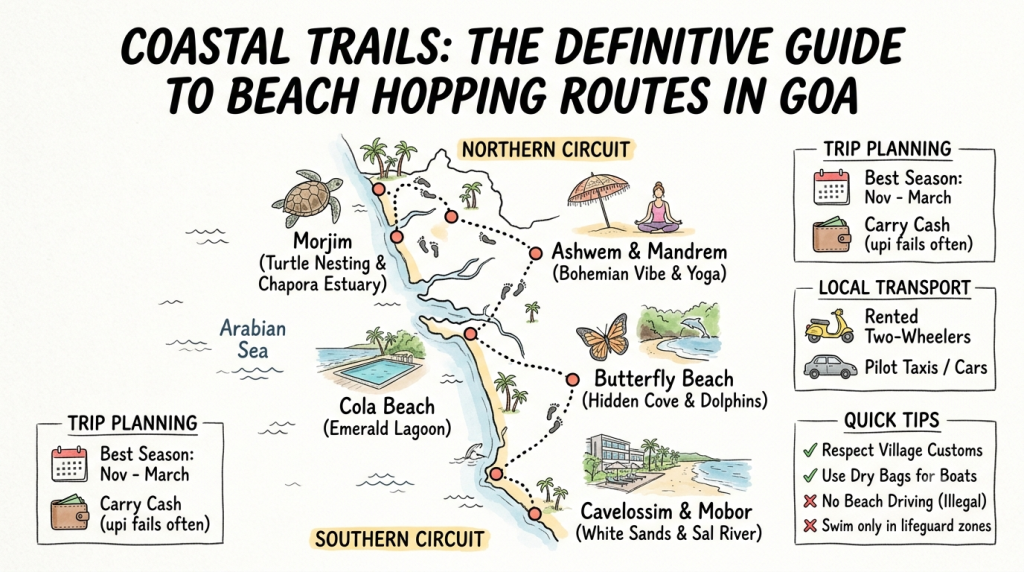
Morjim’s protected turtle nesting grounds.
Serene shores of Ashwem Beach.
The emerald lagoon of Cola Beach.
Hidden cove at Butterfly Beach.
White sands of Cavelossim Beach. es
Morjim Beach & The Chapora Estuary
Morjim sits at the convergence of the Chapora River and the open sea, forming a fragile, biologically vibrant delta. Known historically as a traditional fishing hamlet, its wide, dark-sand shelf serves as an internationally recognized breeding ground for endangered Olive Ridley sea turtles.
The southern spit of Morjim offers sweeping views of Chapora Fort’s ramparts across the water, providing a breezy, open horizon free from dense commercial construction. Coastal vegetation and sand dunes carpet the backdrop, creating an airy, peaceful retreat for travelers seeking wide-open shores.
- Location: Pernem taluka, North Goa; roughly 28 km north of Panaji.
- Why it is worth visiting: Pristine turtle conservation zones, serene delta views, and top-tier coastal birdwatching.
- Best things to do: Spot migratory seabirds on the sand spit, photograph local fishing trawlers at dawn, and enjoy fresh seafood at low-impact wooden shacks.
- Best time to visit: 6:30 AM to 9:00 AM for birdwatching, or late afternoon for gentle sunset light.
- Ideal for whom: Nature enthusiasts, birders, solo travelers, and eco-conscious couples.
- Travel tip: Do not shine flashlights on the beach or run on the demarcated southern dunes during turtle nesting season from November to March.
Ashwem & Mandrem Coastal Stretch
Ashwem and its northern neighbor Mandrem form an expansive, flat coastal shelf separated by a shallow tidal creek. Lined with swaying palm trees and rustic bamboo bridges, this stretch represents the chic, bohemian epicenter of North Goa’s mindful beach scene.
The beaches here are broad and free from intrusive concrete developments, meaning low tide reveals enormous expanses of firm, reflective sand ideal for long walks. The village lanes running parallel to the beach host artisanal bakeries, sustainable fashion boutiques, and open-air yoga shalas.
- Location: Pernem district, North Goa; approximately 32 km from Panaji.
- Why it is worth visiting: Ultra-wide sandy flats, tranquil surf breaks, and high-quality artisanal cafes.
- Best things to do: Cross the bamboo footbridges over Mandrem creek, take a beginner surf lesson, and swim in gentle, shallow waters.
- Best time to visit: 8:00 AM for early swims or 4:30 PM to watch the sunset paint the tidal pools in gold.
- Ideal for whom: Swimmers, wellness travelers, families with young children, and creative digital nomads.
- Travel tip: Low tide offers the safest swimming conditions; check local tide charts before planning an afternoon dip.
Cola Beach & The Emerald Lagoon
Cola Beach is one of South Goa’s most dramatic natural anomalies, characterized by towering laterite cliffs that plunge into the sea. What makes this beach extraordinary is a crystal-clear freshwater lagoon running parallel to the ocean, fed by natural hillside streams.
Visitors cross a rugged hill trail to find this untouched amphitheater where green palm groves frame an idyllic freshwater pool. You can swim in calm, fresh river water just meters away from the pounding waves of the Arabian Sea.
- Location: Canacona, South Goa; roughly 35 km south of Madgaon Railway Station.
- Why it is worth visiting: A rare freshwater lagoon separated from the ocean by a narrow sandbar.
- Best things to do: Kayak on the calm freshwater lagoon, sunbathe on the secluded sandbar, and hike the laterite ridge trails.
- Best time to visit: November through February; arrive by 11:00 AM to enjoy the lagoon before shadows fall behind the western cliffs.
- Ideal for whom: Adventurous couples, landscape photographers, and hikers.
- Travel tip: The access road involves a rough, unpaved dirt track; drive slowly or hire an experienced local driver to avoid scraping your vehicle.
Butterfly Beach Hidden Cove
Tucked neatly between the rocky promontories of Palolem and Agonda, Butterfly Beach is a tiny, semi-circular pocket of soft golden sand that remains completely inaccessible by direct road. Dense coastal forest surrounds the cove, protecting it from commercial development.
The cove earns its name from both the multitude of butterflies that inhabit the surrounding cliff foliage and the wing-like shape of the bay itself. Bottlenose dolphins often cruise near the rocky entrance, offering a wild maritime spectacle.
- Location: Canacona region, South Goa; around 37 km from Madgaon.
- Why it is worth visiting: Pristine isolation, dramatic cliff scenery, and frequent wild dolphin sightings.
- Best things to do: Take a traditional wooden boat ride from Palolem, snorkel around the rocky headlands, and watch for passing pods of dolphins.
- Best time to visit: Early morning between 7:00 AM and 10:00 AM for optimal boat conditions and dolphin activity.
- Ideal for whom: Intrepid backpackers, snorkelers, romantic travelers, and nature lovers.
- Travel tip: If hiking in via the forest trail from Leopard Valley, wear closed shoes with solid traction and carry ample drinking water.
Cavelossim & Mobor Peninsula
The Cavelossim-Mobor stretch forms an elongated sandy peninsula where the Sal River parallels the Arabian Sea before terminating at Betul Point. Known for its powdery, blindingly white quartz sands, this coastline offers an upscale, serene beach escape.
The calm waters and broad beach provide an ideal contrast to the busier northern strips. The riverward side features sleepy jetties and mangrove channels, while the oceanward side opens to unbroken horizons and gentle sea breezes.
- Location: Salcete taluka, South Goa; roughly 18 km from Madgaon.
- Why it is worth visiting: Pristine white sand, tranquil luxury resorts, and mangrove river cruises along the Sal River.
- Best things to do: Take a boat safari along the Sal River mangroves, walk the expansive white sandbar at Mobor, and savor fresh mud crabs at riverfront shacks.
- Best time to visit: Late afternoon around 4:00 PM for cool breezes and sunset beach walks.
- Ideal for whom: Families, luxury seekers, mature travelers, and peace-seekers.
- Travel tip: The Sal River estuary has tricky underwater currents near Betul; swim strictly on the demarcated ocean-facing beaches.
Offbeat Exploration: Hidden Gems Tourists Miss
Kakolem (Tiger) Beach
Hidden beneath a steep, unpaved canyon descent south of Cabo de Rama, Kakolem Beach is a wild cove fed by a small seasonal hillside waterfall. The absence of paved road access keeps it whisper-quiet, offering intrepid explorers an authentic castaway experience.
Betul Lighthouse & Fishing Harbor
Perched on the red laterite bluff above Betul village, this working candy-striped lighthouse overlooks the Sal River’s meeting point with the sea. At dusk, you can watch hundreds of traditional wooden trawlers set out into the Arabian Sea while the sun dips beneath the horizon.
Galgibaga Turtle Beach
Located in the far south of Canacona, Galgibaga is arguably Goa’s cleanest and most untamed public beach. Backed by towering Australian pine trees and strict environmental protections for sea turtles, it remains blissfully free of permanent commercial shacks and loudspeaker music.
Detailed Practical Guidance for Travelers
| Destination | Standard Entry Fee | General Timings | Best Local Food Options Nearby | Recommended Nearby Attractions |
|---|---|---|---|---|
| Morjim Beach | Free | Open 24 Hours (No night entry on turtle dunes) | Burger Factory Morjim, Divine Bar & Restaurant (Fish Thali) | Chapora River Estuary, Ashwem Beach |
| Ashwem / Mandrem | Free | Open 24 Hours | La Plage (French-Beachfront), Verandah (Contemporary Goan) | Mandrem Creek, Arambol Mountain |
| Cola Beach | Free | 7:00 AM – 6:30 PM | Blue Lagoon Shack, local fresh coconut stalls | Cabo de Rama Fort, Agonda Beach |
| Butterfly Beach | Free | Daylight hours (Boat access 7:00 AM – 5:30 PM) | Pack your own snacks; Dropadi at Palolem upon return | Palolem Beach, Monkey Island |
| Cavelossim Beach | Free | Open 24 Hours | Fisherman’s Wharf (Goan Seafood), Mike’s Place | Sal River Estuary, Betul Fort ruins |
Logistics & On-Ground Navigation
Local Transport Options
- Scooters & Motorcycles: The most efficient way to hop between neighboring beaches. Expect daily rental rates between ₹350 and ₹600, excluding fuel.
- Self-Drive Cars: Ideal for family groups or cross-district journeys (e.g., navigating from North to South Goa via NH-66). Rates range from ₹1,200 to ₹2,500 per day.
- Pilot Taxis: Single-passenger motorcycle taxis with yellow mudguards; an affordable, uniquely Goan option for hopping between local coastal villages.
- Prepaid & App Taxis: Traditional tourist taxis do not use meters, so negotiate rates upfront or use regional app-based platforms like Goa Taxi to secure fixed-price fares.
Budget Planning
- Backpacker / Budget Hopper (₹1,500 – ₹2,500 / day): Dorm bed in a surf or coastal hostel (₹600–₹1,000), scooter rental with fuel (₹450), and seafood thalis at village canteens (₹500–₹800).
- Mid-Range / Comfort Hopper (₹4,500 – ₹8,500 / day): Air-conditioned heritage cottage or beachfront room (₹2,800–₹5,500), rental hatchback (₹1,500), and meals at boutique beachfront cafes (₹1,500–₹2,500).
Safety and Inclusivity Tips
- For Families: Stick to beaches with gentle drop-offs and active lifeguard coverage, such as Mandrem, Palolem, and Cavelossim.
- For Couples: Respect local village sensibilities when transitioning off the sand; cover up with lightweight shirts or sarongs before entering residential village streets.
- General Safety: Never swim after consuming alcohol or after sunset when lifeguards have gone off duty. Watch for colored beach flags: red means danger, keep out of the water.
Strategic Travel Planning Guardrails
Travel Planning Tips for Goa
- Target the Shoulders: Late October and early March offer sunny skies and active shacks without peak December crowds and inflated hotel rates.
- Carry Paper Currency: Rural beach parking attendants, coconut vendors, and boatmen often work in zones with poor cellular connectivity where digital UPI payments fail.
- Sun & Skin Defense: Coastal midday heat is intense; pack broad-spectrum reef-safe sunscreen, a wide-brim hat, and UV-filtering polarized sunglasses.
- Mind Sacred Spaces: Avoid walking through village crosses, chapels, and temple pathways in swimwear.
- Pack a Dry Bag: Essential for boat transfers to secluded beaches like Butterfly Cove to protect electronics from salt spray.
Common Mistakes to Avoid
- Over-Scheduling the Day: Packing five beaches into eight hours leads to spending your entire trip sitting in traffic rather than relaxing on the sand.
- Ignoring Tide Shifts: Entering isolated rocky coves at low tide without knowing the high tide schedule can leave you stranded against steep cliffs.
- Neglecting Village Kitchens: Skipping local family-run eateries (anvodd) means missing out on freshly spiced Goan mackerel curry and poee bread.
- Driving on Protected Dunes: Driving two-wheelers or cars onto the sand is illegal, destroys turtle nesting habitats, and carries hefty police fines.
- Booking Unregistered Boats: Always verify that boat operators supply certified life jackets before boarding for dolphin-watching trips.
Suggested Itinerary Blueprints
1-Day Quick Dash (Pernem Northern Surf & Sands)
- Target Audience: Short-stay travelers based in North Goa looking for scenic shores.
- Morning: Start with a 7:30 AM sunrise stroll along Morjim’s river delta. Head up to Ashwem for breakfast and coffee.
- Midday: Relax on Mandrem’s wide beach; swim in the gentle mid-tide waters.
- Afternoon/Evening: Drive north to Arambol to hike past the rocky headland to Sweet Water Lake, ending the day with sunset beach views.
2-Day Deep-Dive (North-to-South Coastal Contrast)
- Day 1 (The Bohemian North): Spend the morning learning to surf at Ashwem. Have lunch at a beachfront cafe, explore the backwaters of Mandrem by kayak, and watch the sunset over the sea at Morjim.
- Day 2 (The Wild South): Drive down south to Canacona. Board an early morning boat to Butterfly Beach, spend the midday relaxing along Palolem’s crescent bay, and head to Cola Beach for a late afternoon swim in the freshwater lagoon.
Complete Weekend Travel Plan (Southern Seclusion Loop)
- Friday: Arrive and check into a beachfront hut in Agonda. Enjoy an unhurried sunset walk along Agonda’s quiet sand stretch, followed by fresh seafood at a local shack.
- Saturday: Take an early 7:30 AM boat ride out to Butterfly Beach. Head to Cola Beach by noon to kayak on the freshwater lagoon, then drive to Cabo de Rama Fort to catch the golden hour.
- Sunday: Drive north along the coast to Cavelossim for a morning walk on its white sands. Take a 2-hour afternoon mangrove cruise along the Sal River before departure.
Common Tourist Mistakes to Avoid
- Geographic Blunders: Booking a hotel in Calangute and expecting to casually “pop down” to Palolem for lunch. The two-hour one-way drive through city traffic consumes half your vacation day.
- Commercial Traps: Spending all your evening hours along saturated commercial zones like Baga or Calangute, where aggressive touts and loudspeaker noise replace the natural seaside calm.
- Neglecting Modern/Alternative Zones: Focusing entirely on the sand while missing inland coastal villages like Assagao and Siolim, which host restored heritage villas, independent art galleries, and farm-to-table dining.
- Transport Overpayment: Agreeing to private taxi rides without confirming standard rates with your hotel front desk or cross-referencing state-approved fare cards.
- Luxury Dining Bias: Eating exclusively inside high-end resort buffets instead of tasting freshly prepared daily catch and traditional vindaloo at small family-owned coastal bars.
Frequently Asked Questions
1. What is the single best route for beach hopping across North Goa?
The most seamless northern route runs from Morjim northward through Ashwem to Mandrem. These three beaches form an uninterrupted coastal ribbon linked by scenic rural roads, keeping you away from major highway congestion while providing wide sandy shores, surf schools, and chic bohemian cafes.
2. Which Goa beaches are safest for families with young children?
Palolem and Mandrem are exceptional options for families. Palolem sits within a sheltered, crescent bay with negligible undercurrents, while Mandrem features expansive shallow waters at low tide alongside a calm tidal creek where small children can splash safely.
3. How do I get to Butterfly Beach without an expensive boat tour?
You can reach Butterfly Beach on foot via a 2-kilometer forest trail starting near Leopard Valley. The trail involves uneven, rocky laterite paths through coastal forest, requiring sturdy athletic shoes, drinking water, and basic physical fitness.
4. Are all beaches in Goa accessible free of charge?
Yes, by Indian maritime regulation, all beaches across Goa are completely free and open to the public up to the high-tide line. While private resorts may own the beachfront land behind the sand, they cannot restrict pedestrian access to the beach.
5. What is the legal protocol for driving scooters along the beaches?
Driving any motorized vehicle onto the beaches of Goa is strictly illegal under local conservation and tourism laws. Violators face impounded vehicles, severe police fines, and potential arrest for damaging coastal ecosystems and endangering pedestrians.
6. Can I swim safely at any beach in Goa?
No, ocean currents vary significantly along the coastline. Beaches like Morjim and Cola often have strong riptides and sudden drop-offs. Always check for colored safety flags, stay within the flags set by active lifeguards, and avoid the water entirely during monsoons.
7. How do I travel between North and South Goa beaches economically?
The most budget-friendly method is taking the Kadamba Transport Corporation (KTC) state shuttle bus between Panaji and Margao (₹40–₹60), and then catching connecting local buses to northern beaches like Morjim or southern beaches like Palolem.
8. Is beach hopping practical during the monsoon months from June to September?
While you cannot swim due to rough seas, red flags, and closed beach shacks, monsoons offer a scenic road trip experience. The surrounding countryside turns bright emerald green, and spots like Cabo de Rama Fort offer dramatic views of crashing storm waves.
9. What are the best beaches for spotting wild dolphins ethically in Goa?
Butterfly Beach, Morjim spit, and Sinquerim are top spots for dolphin watching. For an ethical experience, hire local boat operators who maintain a respectful distance from the pods and avoid chasing or circling the animals with running boat motors.
10. Do beach shacks accept credit cards and UPI digital payments?
Most established beach shacks accept UPI and credit cards, but cellular networks along remote beaches like Cola and Kakolem can be unstable. Carrying ₹1,500 to ₹2,000 in cash ensures you can always pay for meals, drinks, and local parking fees.
11. What is the best beach route for scenic coastal photography?
The southern cliff route linking Cabo de Rama, Cola Beach, and Agonda provides the most dramatic photography spots. You will capture steep laterite cliffs, hidden sandy coves, an emerald freshwater lagoon, and sweeping views of the Arabian Sea.
12. What local etiquette should I follow when visiting Goan fishing villages?
Always ask permission before photographing local fishermen or their boats, avoid stepping on drying fish nets laid out on the sand, and wear a shirt or sarong over swimwear when walking through residential village paths and around roadside shrines.
Conclusion
Stepping off the crowded tourist trail and setting out along Goa’s coastal routes reveals an entirely different relationship with the sea. Whether watching the Chapora River drift past Morjim’s nesting dunes, paddling across Cola’s emerald lagoon, or walking the windswept ramparts of Cabo de Rama at sunset, this coastline rewards those who travel with curiosity and patience. Take your time, follow the tide, and let the authentic rhythms of the Konkan coast guide your journey.

Leave a Reply
You must be logged in to post a comment.