



Introduction
Enterprise companies run huge fleets of digital machines around the clock. These sprawling setups create deep operational puzzles for engineering departments. Smart software programs now transform Artificial Intelligence for IT Operations across modern data networks. Connected servers yield millions of operational records every single second. Human technicians cannot inspect these vast piles of information without fast digital assistance. Because of this volume, automated algorithms study incoming numbers immediately. They pinpoint broken software before paying clients encounter slow screens. Visitors discover core principles, career paths, and deployment advice at TheAIOps.com. This practical manual delivers clear guidance for managing healthy systems with less daily stress.
What Is AIOps?
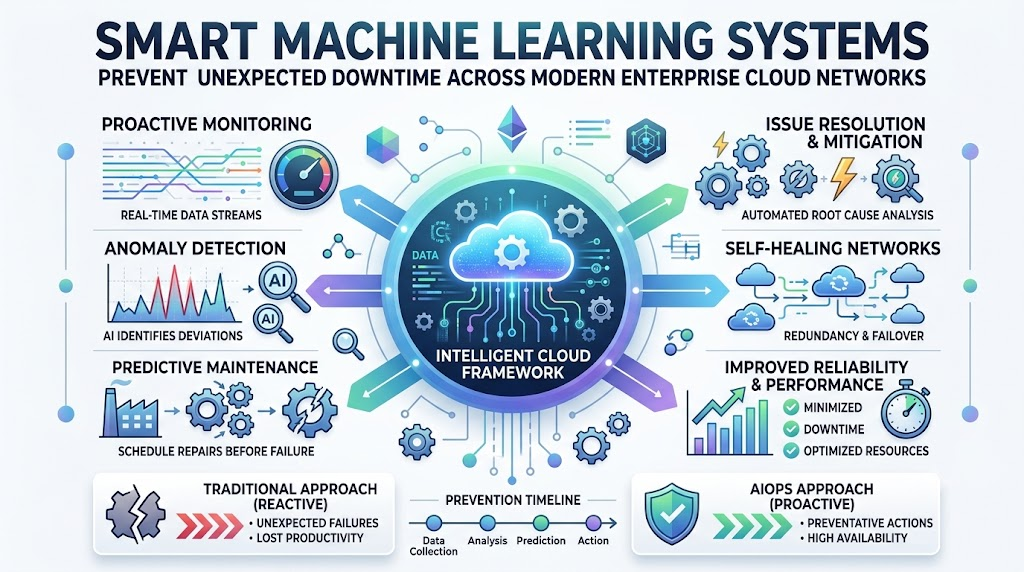
Picture a digital mechanic that continuously watches your car engine during long highway drives. AIOps acts like that smart mechanic for enterprise computer networks. It applies artificial intelligence to daily server care and software health. Machine learning helps programs study historical system breakdowns to forecast fresh operational trouble. Meanwhile, monitoring tools watch memory limits, processor speed, and storage space. Machines create logs to record everything that happens inside active software code. They track metrics, which are simple numbers showing system speed. They also record events, which mark unexpected network changes. Smart platforms inspect all these records at light speed. Alert analysis groups twenty matching warning bells into one tidy ticket. Root-cause analysis names the exact broken switch or bad code line. Then, automation fixes simple glitches by restarting frozen services without human help.
Why Do IT Teams Need AIOps?
Enterprises run software across dozens of global cloud hosting facilities. This vast spread creates tangled webs of cables, code, and virtual instances. When a single central switch breaks, hundreds of alarms blast loud warnings at once. Exhausted engineers lose hours sorting through this blinding wall of red lights. Duplicate alerts distract workers from fixing real database crashes. Slow manual investigation hurts customer trust and drains company profits. Repeated outages also frustrate support agents and burn out senior developers. Smart systems bring order to this noisy digital world by sorting clutter. They spotlight urgent dangers while muting trivial notices. Still, artificial intelligence serves as an assistant rather than a replacement for human wisdom.
AIOps Tasks and Benefits
Technical operations teams use smart assistants to eliminate boring, repetitive chores. The table below lists daily tasks alongside their direct workplace benefits.
| AIOps Task | Simple Meaning | Possible Benefit |
| Data Gathering | Pulling records from servers into one central pool | Workers view system health on a single dashboard. |
| Noise Reduction | Deleting harmless duplicate alarms from inbox queues | Engineers give full attention to genuine emergencies. |
| Anomaly Catching | Spotting unusual spikes that break normal daily habits | Teams patch hidden bugs before users see errors. |
| Event Grouping | Connecting related machine alarms to one source problem | Staff fix one central incident instead of dozens. |
| Root Cause Search | Locating the specific code error behind a crash | Technicians stop wasting hours on blind guessing. |
| Auto Healing | Running short scripts that restart stuck background tasks | Systems repair common glitches while operators sleep. |
What Does TheAIOps.com Offer?
Engineers need honest, straightforward facts to master modern operations technology. The platform explains Artificial Intelligence for IT Operations using clear, plain lessons. Beginners access targeted AIOps Training to learn daily system oversight skills. An interactive AIOps Course breaks down complex architectural topics into simple modules. Readers also compare leading AIOps Tools currently shaping corporate technology centers. Enterprise leaders can study how an end-to-end AIOps Platform handles massive data flows. In addition, organizations explore dependable AIOps Consulting and practical AIOps Services. The portal assists every future AIOps Engineer with practical roadmaps. IT directors also find step-by-step guidance for a smooth AIOps Implementation.
AIOps Training and AIOps Course
New learners need hands-on keyboard practice instead of endless dry theory. Comprehensive AIOps Training begins with core server health monitoring and log tracking. Students learn how distributed cloud nodes gather performance numbers and error logs. Next, learners build basic filters to silence repetitive warning messages. They run tests on anomaly detection tools using noisy practice data. A structured AIOps Course demonstrates root-cause analysis across broken sample applications. Students also write lightweight Python scripts to trigger safe automated server reboots. They study basic machine learning principles without drowning in dense mathematical formulas. Real operational skills develop through live lab troubleshooting. Regular terminal practice builds lasting competence on production networks.
AIOps Learning Areas
Every student needs an organized roadmap covering essential technical skills. The table below outlines core study subjects alongside weekly hands-on practice projects.
| Learning Area | What Learners Should Practice |
| Metric Tracking | Gather CPU, memory, and disk numbers from Linux servers. |
| Log Parsing | Scan system text files to extract clear error messages. |
| Alert Filtering | Build logic rules that drop identical warning notices. |
| Event Linking | Map network slowdowns directly to database connection drops. |
| Root Cause Work | Inspect broken application components to locate bad code. |
| Script Writing | Create shell scripts that restart halted services safely. |
| Data Hygiene | Remove empty spaces and corrupted lines from incoming logs. |
| Safe Guardrails | Require human approval clicks before modifying live databases. |
AIOps Certification and AIOps Engineer Skills
Industry professionals often seek an official AIOps Certification to advance their careers. Earning an AIOps Certification confirms that a technician grasps fundamental operational concepts. It signals discipline and foundational knowledge to prospective employers. Even so, passing an exam never replaces actual debugging capability on live servers. Companies hire an AIOps Engineer for practical problem-solving habits and calm thinking under pressure. Successful engineers master cloud networking, operating systems, and scripting languages like Python. They also build strong speaking skills to explain technical issues to managers. Building home cloud labs demonstrates your actual talent better than paper scores. Certifications highlight your dedication, but genuine project work earns long-term respect.
AIOps Tools and AIOps Platform
Operations crews rely on specialized programs to keep web services running fast. Standalone AIOps Tools solve narrow, focused technical tasks across your network. One tool might monitor network packets while another scans web server logs. In contrast, an integrated AIOps Platform unites every observation tool into one hub. It ingests telemetry data from cloud hosts, microservices, and corporate databases. It cleans data streams, eliminates alert clutter, and triggers auto-remediation scripts. However, buying teams must evaluate software options with great care. First, inspect your current telemetry pipelines and daily technical pain points. Compare software subscription fees, data privacy standards, and current team capabilities. Never adopt complex software that demands months of confusing maintenance.
AIOps Implementation: How Does It Work?
Smart technology adoptions succeed when leaders take cautious, deliberate steps. First, select one annoying operational headache, such as midnight disk space warnings. Next, gather reliable metrics and logs from those specific machines. Connect your server outputs to an ingestion pipeline that handles incoming messages. Configure basic deduplication filters to discard identical alarms immediately. Next, run anomaly detection engines to discover odd spikes in traffic. Train the system to cluster related warnings into unified problem tickets. Then, introduce safe automated scripts to complete routine cleanup chores. Always preserve manual review steps before changing critical user-facing settings. Track your team response times each week to verify progress. Expand your automated workflows across other departments only after showing solid results.
AIOps Consulting and AIOps Services
Growing companies often seek experienced guidance before investing in new tools. Dedicated AIOps Consulting pinpoints hidden gaps across messy infrastructure setups. Veteran advisors inspect current monitoring tools, daily team rituals, and painful bottlenecks. Following that review, professional AIOps Services configure reliable data pipelines between apps and servers. Advisors build stable deployment plans, connect scattered monitoring tools, and instruct operational staff. They also write safe boundaries around automated self-healing scripts. Even so, corporate managers must specify measurable business targets before hiring outside partners. Vague expectations waste corporate budgets and confuse internal engineering talent. Establish precise operational goals before signing external advisory contracts.
Real-Life Scenarios / Experiences
- An e-commerce platform received twelve thousand identical memory alarms during a flash sale, but smart event grouping condensed the barrage into a single ticket.
- A streaming video site failed during peak evening traffic because of bad cache settings, yet automated rules restarted the service within ninety seconds.
- A corporate payroll portal slowed down every Friday morning, and machine learning models traced the lag to an unindexed database query instantly.
- A logistics firm spent six hours every weekend triaging server reboots, but smart noise filters reduced manual review time to fifteen minutes.
How TheAIOps.com Can Help
Modern system administrators require straightforward educational guides to keep pace with changing technology. The platform delivers grounded knowledge without confusing marketing claims or empty promises. It collects comprehensive reviews covering leading AIOps Tools and modern system architectures. Learners compare features across every major AIOps Platform to make smart buying choices. Anyone seeking a career shift can explore a detailed AIOps Course to build practical skills. The site also highlights established AIOps Training programs alongside recognized AIOps Certification tracks. Furthermore, corporate decision-makers discover reputable AIOps Consulting and dependable AIOps Services. You can rely on the portal to guide your next AIOps Implementation from start to finish.
A Practical Implementation Approach
Start your system rollout by addressing one manageable, high-friction operational chore. Avoid attempting to modernize your entire enterprise stack on your first day. Identify the three servers that trigger the most repetitive manual work for staff. Next, direct performance streams from those boxes into your central collector. Build precise deduplication rules that erase identical alarm noise immediately. Then, test machine learning anomaly models against standard weekday server traffic. Ensure the engine catches unusual performance dips without generating false panic alerts. Next, deploy simple auto-healing scripts for low-risk operational corrections. Retain mandatory human authorization for any restart touching customer data stores. Monitor incident resolution speed over several weeks to confirm real improvements. Roll out these automated solutions across other teams only after demonstrating measurable success.
Common Mistakes to Avoid
- Attempting to automate intricate, high-risk production tasks during week one.
- Ingesting fragmented, unstructured, or uncleaned log files into analysis models.
- Purchasing high-priced commercial software suites before setting plain organizational targets.
- Granting automated scripts full permission to reboot core database clusters without checks.
- Neglecting the daily opinions of frontline system administrators during vendor reviews.
- Muting unfamiliar alarms without verifying that real software errors do not linger beneath.
- Trusting extreme sales claims that artificial intelligence will eliminate human engineering teams.
- Overlooking routine tracking of cloud expenses, incident response times, and system reliability.
Frequently Asked Questions
1. What does AIOps mean in simple words?
The phrase describes using smart software programs to oversee complex computer hardware. Business networks now produce far too many logs for human operators to inspect manually. Intelligent software reads these records instantly to detect hidden flaws. It alerts human engineers before outages disrupt everyday online users.
2. Can AIOps tools replace human engineers?
Human engineers remain essential, so algorithms never replace technical staff in modern departments. Software simply takes over tedious chores like grouping identical error alerts. It pinpoints subtle trends across gigantic metric streams rapidly. However, human engineers still invent strategic architecture, resolve unexpected surprises, and approve risky system changes.
3. What is the difference between DevOps and AIOps?
DevOps defines a cooperative team philosophy that creates, tests, and deploys software rapidly. AIOps delivers intelligent monitoring software that guards those live deployments around the clock. DevOps teams utilize this intelligent visibility to locate production bugs fast. Both concepts work hand in hand to maintain fast, stable web applications.
4. Why is data quality important for machine learning?
Predictive models extract normal performance baselines directly from your historical operational data. If you feed broken, incomplete logs to your models, they produce inaccurate predictions. Clean records help algorithms detect genuine errors with high accuracy. Disciplined data hygiene prevents stressful false alarms across production servers.
5. What does alert noise mean in IT operations?
Alert noise refers to endless waves of minor, redundant, or misleading warning messages. Technicians stare at flashing red displays all afternoon for trivial background events. This continuous onslaught exhausts workers and clouds their judgment. Critical outage warnings get buried inside this clutter, triggering expensive downtime.
6. What skills does an AIOps Engineer need first?
Start by learning foundational Linux server administration and basic networking principles. You must master how systems emit numeric metrics, textual logs, and distributed network traces. Writing simple Python scripts helps you assemble automated remediation jobs. After mastering these basics, study how statistical models detect anomalies.
7. Is an AIOps Certification enough to get a job?
A certificate proves your commitment and confirms that you comprehend standard operational terms. It helps your resume stand out when recruiters review junior applicants. Even so, hiring teams prize practical diagnostic capability above paper credentials. Always build personal lab projects to demonstrate your technical competence.
8. How does anomaly detection help server teams?
Anomaly detection models map the typical behavior of an application during quiet operating hours. The software knows expected traffic levels for weekday mornings, holidays, and evenings. When visitor activity plummets unexpectedly, the tool warns operations staff immediately. This early notice allows engineers to fix silent bugs before users complain.
9. What is root-cause analysis in simple terms?
Root-cause analysis identifies the single underlying breakdown behind a cluster of loud alarms. When an internal router fails, dozens of connected services sound alarms at once. Smart platforms trace those dependent warnings back to the broken switch. This precision prevents engineers from chasing irrelevant side issues.
10. How should a small team start using AIOps?
Small teams should tackle one noisy, well-defined operational pain point first. Avoid buying expensive enterprise software packages right away. Select your most troublesome server alerts and set up automated deduplication filters. Once your team reclaims several hours each week, apply those methods elsewhere.
11. What is the difference between monitoring and observability?
Monitoring notifies you whenever a specific server crashes or crosses a safety limit. Observability lets you investigate inside running software to understand the deeper reason for a failure. It combines metrics, logs, and execution traces into a rich forensic picture. Smart algorithms use this rich visibility to uncover hidden bugs.
12. Are free open-source tools good enough for AIOps?
Yes, many engineering groups assemble capable intelligent monitoring systems with free open-source packages. You can gather system statistics, filter logs, and run remediation scripts without software licenses. However, your own engineers must configure and maintain these tools. Commercial software costs more money but speeds up initial deployment.
CONCLUSION
Worldwide commerce depends on intricate server networks that emit continuous streams of operational telemetry. Smart platforms help human engineers master this flood by silencing alert clutter, identifying errors, and repairing routine failures quickly. Beginning your rollout requires patience, clean telemetry records, and deliberate practice with foundational observability tools. You can consult educational resources, tool analyses, and professional development tracks to expand your technical expertise. Concentrate on fixing one concrete infrastructure bottleneck before broadening your scope. As your digital estate expands, automated systems will give your engineers the time and space to invent better software products.

Leave a Reply
You must be logged in to post a comment.