Introduction
Step off the sun-baked asphalt of the tourist strips and leave the mass-produced trinkets behind. True travel is not validated by plastic keychains or generic shell necklaces shipped thousands of miles across standard supply chains. It is found in tangible artifacts steeped in heritage, culinary craftsmanship, and artisanal tradition.
Goa carries centuries of syncretic history where Konkani coastal folkways blend seamlessly with Portuguese colonial artistry. For the discerning traveler, shopping here is an intimate cultural dialogue with local potters, spice cultivators, master tile painters, and village distillers. Choosing an authentic souvenir lets you bring home an enduring sensory fragment of Goa’s coastal soul.
Why Goa is a must-visit city
Goa stands as an indispensable chapter in global maritime history, once serving as the glamorous crown jewel of the Portuguese Estado da Índia. This historic position transformed the coastal state into a cultural crossroads, exchanging botany, architectural techniques, and culinary traditions between Europe, South America, and the Konkan coast. Its physical geography bridges the serene Arabian Sea coastline with the dense tropical foliage of the Western Ghats, yielding rich soil for cashews, coconuts, and fragrant spices.
Reaching and navigating this coastal enclave is exceptionally straightforward for every style of traveler. Two active airports—Dabolim Airport (GOI) in the center and Manohar International Airport (GOX) in Mopa to the north—complement the Konkan Railway network with major passenger stops at Madgaon and Thivim. Smooth coastal highways connect travelers quickly to luxury heritage estates, seaside boutique retreats, and lively backpacker hostels.
The shopping circuit splits naturally between the energetic bazaars of the north and the serene heritage workshops of the south. North Goa offers lively open-air flea markets, bohemian maker collectives, and bustling municipal trade hubs. In contrast, South Goa and the central capital region preserve historic tile studios, traditional Portuguese fado parlors, spice plantations, and time-honored community markets.
| Key Fact | Regional Specification |
|---|---|
| Primary Artisan Hubs | Panaji, Mapusa, Margao, Anjuna, Bicholim |
| Signature Artifacts | Hand-painted Azulejos, Feni, Chourico, Brassware, Kunbi Sarees |
| Peak Shopping Season | October to March (Full market operations & vibrant night bazaars) |
| Market Currency Norms | UPI accepted widely; hard cash required for rural markets & roadside stands |
| Major Railway Hubs | Madgaon Junction (South/Central), Thivim (North) |
| State Transport | Scooter rentals, Kadamba interstate buses, pilot motorcycle taxis |
Best Places or Experiences
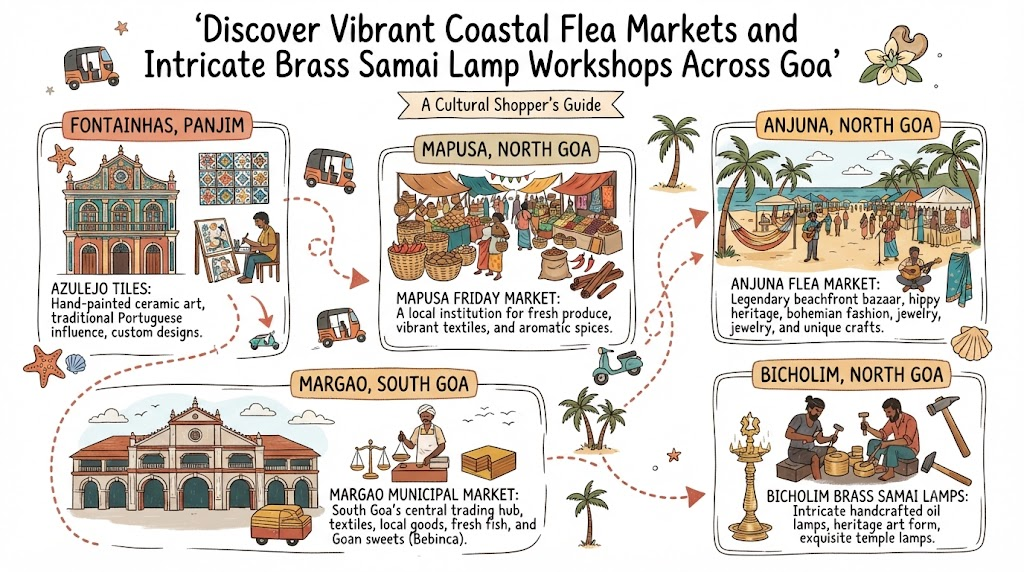
Azulejos and heritage lanes in Fontainhas.
Aromatic spices at Mapusa Market.
Handmade bohemian wares at Anjuna.
Traditional produce at Margao Market.
Handcrafted brass artifacts in Goa.
Velha Goa Galeria and Fontainhas Tile Studios
Located within the maze of Panaji’s Latin Quarter, the artisan studios of Fontainhas continue the centuries-old tradition of hand-painted ceramic tiles known as azulejos. Introduced during the colonial era, this decorative craft features tin-glazed ceramic tilework adorned with cobalt blues, sunny yellows, and earthy terracotta reds. Master artisans preserve these techniques by hand-painting individual nameplates, traditional rural tableaus, and geometric patterns before firing them in electric kilns.
A walk through the quiet lanes of 31st January Road brings you directly into these intimate gallery showrooms. The air smells faintly of glaze and baked earthenware, with finished tiles lining the whitewashed walls of restored Portuguese townhouses. Securing an authentic piece here supports local Goan artists keeping this delicate firing art alive in an era of digital printing.
- Location: Fontainhas, Panaji; approximately 28 km north of Dabolim Airport.
- Why it is worth visiting: The only destination in India producing authentic, master-fired Indo-Portuguese azulejo tiles and customized hand-lettered ceramic nameplates.
- Best things to do: Commission a personalized family nameplate, purchase decorative tile coasters featuring Goan folklore, and watch resident artists apply delicate cobalt glaze strokes.
- Best time to visit: Late morning between 10:30 AM and 1:00 PM for calm gallery viewing and bright natural light.
- Ideal for whom: Interior design lovers, art collectors, couples seeking home decor, and heritage preservationists.
- Travel tip: Request bubble wrap and hard cardboard boxing at the counter; authentic fired ceramics crack easily if not cushioned properly in your checked luggage.
Mapusa Friday Market
Long before tourist supermarkets existed, Mapusa served as the primary agricultural and trade depot for the farmers of North Goa and the foothills of the Western Ghats. Every Friday morning, the town square and municipal market convert into a sensory whirlwind of bartering, colors, and earthy aromas. Village vendors lay out woven palm baskets piled high with dried red chillies, raw cashew nuts, fresh local ginger, and pottery.
The municipal market is an authentic cultural hub where local Goan home cooks and estate managers source their kitchen provisions. Walking along the stone lanes reveals stacks of fragrant Goan chouriço sausages cured in toddy vinegar, blocks of dark palm jaggery wrapped in dried leaves, and bundles of fiery Aldona chillies.
- Location: Mapusa Municipal Market, Bardez; roughly 13 km north of Panaji.
- Why it is worth visiting: The ultimate raw culinary epicenter for buying indigenous spices, sun-dried fish, and traditional pantry staples directly from local producers.
- Best things to do: Buy strings of smoky Goan pork sausages from traditional meat stalls, purchase pyramid-shaped coconut palm jaggery, and pick up cold-pressed coconut oil.
- Best time to visit: Friday mornings between 7:30 AM and 10:30 AM to beat the coastal heat and secure the freshest farm batches.
- Ideal for whom: Culinary enthusiasts, home chefs, food historians, and cultural photographers.
- Travel tip: Wear covered, flat walking shoes with good traction; market passageways get wet and crowded near the vegetable and fish alleys.
Anjuna Flea Market
Born during the freewheeling hippie movement of the early 1970s under the coconut palms of South Anjuna Beach, this market has evolved into a sprawling open-air craft exchange. While modern stalls sell popular beach apparel, the original soul of the market endures in its gathering of independent metalsmiths, leather workers, and traveling artists.
The market stretches across sandy lanes right along the beachfront. Strolling the stalls to the rhythm of acoustic instruments and ambient coastal chatter, you will encounter hand-tooled leather journals, hand-cut gemstones set in raw silver, macramé hangings, and musical instruments crafted from dried gourds.
- Location: Monster Road, South Anjuna; roughly 19 km northwest of Panaji.
- Why it is worth visiting: Iconic coastal counter-culture history paired with a diverse gathering of independent alternative jewelers, textile weavers, and wood sculptors.
- Best things to do: Find handcrafted sterling silver jewelry, barter for hand-stitched leather travel bags, and relax with fresh cold-pressed watermelon juice under the shade trees.
- Best time to visit: Wednesdays from November to April; arrive around 3:30 PM to shop comfortably in cooler temperatures and catch the beach sunset.
- Ideal for whom: Solo backpackers, bohemian fashion seekers, vintage artifact hunters, and music enthusiasts.
- Travel tip: Never accept the first quoted price; friendly bargaining is part of the tradition, and vendors often settle at 30% to 40% below their opening quote.
Margao Municipal New Market
Located in South Goa’s commercial hub, the Margao Municipal New Market—known locally as the Mercado Velho—is a labyrinthine shopping arcade dating back to colonial trade days. Its shaded, narrow alleyways are packed with centuries-old spice purveyors, textile merchants, and dry-goods traders. It is the premier place in the south to purchase authentic culinary ingredients and indigenous household crafts.
The market provides an authentic window into traditional Goan life, untouched by seasonal tourist trends. From ceiling rafters hang dried bundles of medicinal roots, clay roasting pots for coffee and spices, and woven bamboo winnowing trays. It is also the finest marketplace for authentic Goan Feni, offering premium cashew and coconut distillations straight from registered estate bottlers.
- Location: Margao City Center, Salcete; roughly 5 km from Madgaon Railway Station.
- Why it is worth visiting: The definitive southern trading hub for farm-direct spice blends, medicinal spices, estate-distilled cashew liquors, and traditional terracotta cookware.
- Best things to do: Sample and purchase aged cashew feni from licensed family shops, buy freshly ground recheado paste, and collect clay cooking vessels.
- Best time to visit: 9:00 AM to 12:00 PM on weekdays for an unhurried, comfortable walk through the indoor alleys.
- Ideal for whom: Serious home cooks, southern circuit travelers, families, and lovers of regional culture.
- Travel tip: Look for government seals on liquor bottles; genuine cashew feni carries a clear geographical indication (GI) certification mark on its label.
Aparapar and Bicholim Artisan Workshops
The inland sub-district of Bicholim is the ancestral home of Goa’s metal casters, potters, and woodcarvers. Known as the state’s traditional craft belt, this region keeps generational artisan guilds thriving outside coastal tourist zones. At government craft centers like Aparapar and independent family workshops, master artisans shape raw brass, bronze, and seasoned teak into functional and spiritual masterpieces.
The showpiece of Bicholim’s brass guild is the Samai, an intricately turned Goan brass oil lamp topped with an ornamental peacock or floral motif, traditionally lit during coastal festivals. Visiting these inland village workshops lets you see the heat of the casting furnaces and the meticulous hand-polishing required for every piece, ensuring fair, direct compensation for the craftsmen.
- Location: Bicholim Industrial Estate & Town Center; roughly 30 km northeast of Panaji.
- Why it is worth visiting: Direct access to authentic brassware workshops and state-sponsored craft centers preserving ancient dhokra casting and wood-turning arts.
- Best things to do: Buy an authentic multi-tiered brass Samai oil lamp, pick up carved coconut shell art, and purchase hand-painted wooden lacquered toys.
- Best time to visit: October to February, arriving between 10:00 AM and 2:00 PM when active metalworking and polishing are underway.
- Ideal for whom: Heritage connoisseurs, cultural researchers, spiritual seekers, and art collectors.
- Travel tip: Brassware is heavy; confirm the item’s exact weight with the artisan before purchasing so you do not exceed airline baggage allowances.
Offbeat Exploration: Hidden Gems Tourists Miss
The Cashew Distilleries of Valpoi and Sattari
Tucked away in the dense tropical foothills of the Western Ghats, the rural estates of Valpoi brew authentic single-estate Cashew Feni during the spring harvest. Small pot stills made from traditional copper and clay cook the fermented cashew apple juice (neero) over open wood fires. Visiting these rustic estates lets you sample smooth, double-distilled cazulo and purchase seasonal bottles directly from the distillers.
Kunbi Weaving Workshops of Guirdolim
Near the quiet southern village of Chandor, a small collective of weavers is reviving the historic Kunbi Saree. This traditional checkered cotton drape, dyed in warm terracotta reds and indigos, was worn by the indigenous tribal women of Goa before colonial laws suppressed its production. Visiting a master weaver’s loom offers a rare chance to purchase authentic, breathable cotton handloom textiles straight from the artisans.
Bicholim Terracotta Potters Colony
Hidden along the back lanes of Gaonkarwada in Bicholim, generational potters shape red laterite clay into porous water jugs, cooking pots, and decorative garden urns. These pots lend Goan curries an unmistakable earthy flavor and natural cooling properties, offering a sustainable, handcrafted souvenir rooted in the soil of the state.
Detailed Practical Guidance for Travelers
| Destination | Standard Entry Fee | General Timings | Best Local Food Options Nearby | Recommended Nearby Attractions |
|---|---|---|---|---|
| Velha Goa Galeria | Free | 10:00 AM – 7:30 PM (Mon-Sat) | Viva Panjim (Prawn Curry Thali), Confeitaria 31 De Janeiro | Our Lady of the Immaculate Conception Church, Mandovi Riverfront |
| Mapusa Friday Market | Free | 7:00 AM – 6:30 PM (Fridays) | Cafe Xavier (Beef Cutlet Bread & Chai), Ruchira Restaurant | Mapusa Municipal Park, St. Jerome Church |
| Anjuna Flea Market | Free | 8:00 AM – 7:00 PM (Wednesdays) | Shiva Valley Shack, Curlies (Goan Poi & Cold Brew) | South Anjuna Beach, Curlies Cove Viewpoint |
| Margao Municipal Market | Free | 8:30 AM – 8:00 PM (Daily) | Longuinhos Bar & Restaurant (Pork Chilly, Beef Roast) | Holy Spirit Church, Monte Hill Viewpoint |
| Bicholim Artisan Guilds | Free | 9:30 AM – 5:30 PM (Mon-Sat) | Udupi Anand Bhavan (Local thalis & filter coffee) | Mayem Lake, Arvalem Waterfalls & Rock Caves |
Logistics & On-Ground Navigation
Local Transport Options
- Self-Drive Scooters and Motorcycles: The most convenient way to navigate busy village roads and narrow market lanes. Daily rentals run between ₹300 and ₹500, with higher rates during the holiday season.
- Pilot Motorcycle Taxis: A licensed Goan service where solo riders sit behind a professional driver on a motorcycle—inexpensive and ideal for quickly running errands between town markets.
- Four-Wheeler Rentals & Private Taxis: Ideal for families and travelers visiting distant inland craft villages like Bicholim. Taxis do not use meters, so negotiate and agree on the fare before setting off.
- Kadamba State Buses: Reliable air-conditioned shuttle buses link major urban transport hubs—such as Panaji, Margao, Mapusa, and Vasco—for minimal fares (₹20 to ₹60).
Budget Planning
- Backpacker / Budget Tier (₹1,500 – ₹2,500 per day): Stay in hostel dorms (₹600–₹1,000), use scooter rentals (₹350/day), eat authentic fish thalis and street food (₹500/day), and shop at community municipal markets for spices and small ceramic trinkets.
- Mid-Range / Comfort Tier (₹4,500 – ₹9,000 per day): Stay in heritage boutique hotels or restored Portuguese villas (₹3,000–₹5,500), take private air-conditioned cabs for day trips (₹2,000), dine at upscale Goan bistros (₹1,500), and purchase framed hand-painted azulejo tiles, aged feni, and brass lamps.
Safety and Inclusivity Tips
- Families: Markets get hot and crowded during midday. Keep young children hydrated and visit open-air markets like Mapusa before 10:30 AM to avoid crowds.
- Couples: Exploring the tranquil, shaded alleys of Fontainhas and southern heritage estates offers a relaxed, culturally engaging day out.
- General Safety: Stay alert for pickpockets in crowded open-air bazaars like Anjuna and Mapusa. Keep wallets, phones, and valuables in a secure front sling bag, and secure delicate ceramic purchases in durable hard-shell bags.
Strategic Travel Planning Guardrails
Travel Planning Tips for Goa
- Align Plans with Market Days: Plan your weekly itinerary around specific market schedules—Wednesdays for Anjuna Flea Market, Fridays for Mapusa, and Saturdays for Arpora.
- Carry Small Cash Denominations: While digital UPI payments work at most urban stores, small rural vendors and spice stalls require physical cash (₹50, ₹100, and ₹200 bills).
- Inspect Spice Packaging Carefully: Purchase vacuum-sealed whole spices rather than pre-ground powders to preserve freshness, potency, and essential oils on your journey home.
- Verify Liquor Regulations: Domestic airlines allow up to five liters of commercially sealed alcohol per traveler in checked baggage, provided you carry an official state transit permit issued by the vendor.
- Wear Breathable Cotton: Goan humidity remains high year-round. Wear light, breathable fabrics and comfortable walking sandals when browsing outdoor markets.
Common Mistakes to Avoid
- Buying Pre-Packaged “Tourist Cashews”: Steer clear of cheap roadside gift packs; they often conceal broken kernels or lower-grade nuts. Purchase whole W-180 or W-210 grade cashews from trusted municipal sellers in Panaji or Mapusa.
- Assuming Flea Markets Run Year-Round: Coastal flea markets like Anjuna close entirely during the monsoon season (June to September). Focus on indoor urban markets if traveling off-season.
- Relying Exclusively on Digital Payments: Remote rural craft workshops frequently suffer from weak cell coverage, making mobile payments unreliable. Always carry emergency cash.
- Ignoring Heavy Baggage Restrictions: Heavy brassware and fragile terracotta cookware quickly add weight to your bags. Weigh your items carefully to avoid airport excess baggage fees.
- Purchasing Non-Goan Souvenirs: Many beachside stalls sell Tibetan tapestries, Rajasthani textiles, or generic imports. Seek out local Goan handicrafts like Kunbi weaves, azulejos, and local feni to ensure authentic souvenirs.
Suggested Itinerary Blueprints
1. Day Quick Dash (Capital Heritage & Artisanal Route)
- Morning: Begin at 8:00 AM with fresh pastries at Confeitaria 31 De Janeiro in Fontainhas, followed by a morning walk through Velha Goa Galeria to select custom-painted azulejo tiles.
- Afternoon: Head to the Panaji Municipal Market to purchase cashew nuts, Kokum peel, and vacuum-sealed chouriço sausages. Enjoy a hearty Goan fish curry lunch at a local bistro.
- Evening: Wrap up your day at the Aparapar State Handicraft Showroom along the Mandovi promenade, exploring brass lamps and woven coconut crafts before catching a sunset river breeze.
2. Day Deep-Dive (North-to-South Cultural Circuit)
- Day 1 (The North Circuit): Start early at Mapusa Market (ideally Friday) for spices and palm jaggery. Head west toward Anjuna for coastal crafts and lunch by the sea, ending the evening at an artisan boutique in Assagao.
- Day 2 (The South Circuit): Travel south to the Margao Municipal Market for aged Cashew Feni and spicy recheado pastes. Spend your afternoon visiting the traditional Kunbi handloom weaving sheds near Chandor before dining in an authentic heritage mansion.
3. Complete Weekend Travel Plan (Comprehensive Craft & Heritage Loop)
- Friday: Arrive and dive directly into the energy of the Mapusa Friday Market. In the afternoon, head to the artisanal inland village of Bicholim to watch brass foundrymen and terracotta potters at work.
- Saturday: Spend a relaxed morning exploring Fontainhas in Panaji to browse ceramic tile studios. Spend the afternoon shopping at boutique design stores in Porvorim and end the evening at a coastal night market.
- Sunday: Drive down through the coconut groves of Salcete to explore the old quarter of Margao for local sausages and feni. Conclude your weekend trip with a peaceful sunset dinner on the sands of Benaulim.
Common Tourist Mistakes to Avoid
- Geographic Blunders: Trying to visit Mapusa Friday Market in the north and the Margao Municipal Market in the south on the same morning. The 50-kilometer journey through city traffic wastes half your shopping day.
- Commercial Traps: Spending your time in modern shopping malls or busy souvenir strips along Calangute Beach, which sell generic imported goods rather than authentic Goan handicrafts.
- Neglecting Modern/Alternative Zones: Overlooking the quiet inland villages of Assagao, Aldona, and Saligao, where independent designer studios, organic perfumers, and sustainable craft collectives reside.
- Transport Overpayment: Agreeing to unmetered taxi fares without negotiating in advance. Check standard app-based estimates first or rent a scooter for the day to keep transport affordable.
- Luxury Dining Bias: Eating exclusively in resort dining rooms and skipping local neighborhood bakeries (padarias) and street carts, which serve warm poi bread, spicy choris pao, and sweet bebinca.
Frequently Asked Questions
1. What is the most iconic traditional souvenir to buy in Goa?
The most iconic authentic souvenir is a hand-painted Azulejo ceramic tile from Panaji’s Latin Quarter. These glazed artworks showcase traditional Goan-Portuguese floral patterns, rural scenes, or custom family names, making for durable, beautiful home decor.
2. How do I know if the Goan Cashew Feni I am buying is authentic?
Look for a state excise seal and a clear Geographical Indication (GI) certification label on the bottle. Authentic feni should be crystal clear, aromatic, and bottled by licensed distillers around Valpoi, Sattari, or Margao.
3. Are the famous flea markets in Goa open during the monsoon season?
No, open-air seasonal beach markets like the Anjuna Flea Market close entirely from June through September due to the coastal rains. For off-season shopping, visit covered municipal markets in Panaji and Margao.
4. Where can I buy genuine, high-grade Goan cashew nuts?
Purchase your cashews from government-licensed dry fruit outlets and dedicated agricultural cooperatives in Panaji or Mapusa. Look for whole, vacuum-sealed W-180 or W-210 grade nuts, which guarantee top-tier size, freshness, and crunch.
5. Can I safely bring authentic Goan pork sausages (chouriço) back on domestic flights?
Yes, you can carry Goan chouriço on domestic flights as long as it is cured, dry, and securely vacuum-packed. Pack the strings inside your checked baggage to keep strong vinegar and spice aromas contained.
6. What makes the traditional Goan Kunbi saree so special?
The Kunbi saree is an important handloom textile featuring simple red-and-white cotton checks. Worn historically by the indigenous Kunbi farming community, it is soft, breathable, and currently preserved by skilled artisan collectives.
7. How much should I reasonably expect to bargain at Goan tourist markets?
At open-air beach markets like Anjuna, friendly bargaining is part of the experience; aim for 30% to 40% below the opening quote. However, government craft emporiums, tile studios, and spice cooperatives use fixed pricing.
8. What traditional brass souvenir is unique to Goan culture?
The Samai is Goa’s signature brass artifact. This tall, hand-turned oil lamp is topped with an ornamental peacock and plays a central ceremonial role in local Goan temple festivities and household celebrations.
9. Where can I find genuine spice mixtures and organic toddy vinegar?
Visit the central spice alleys inside the Mapusa Friday Market or the Margao New Market. Local vendors sell fresh bottles of naturally fermented coconut toddy vinegar along with spice pastes like Recheado and Xacuti.
10. What packing precautions should I take for fragile ceramic tile purchases?
Always ask the gallery staff to wrap each tile individually in thick bubble wrap and secure it within a rigid cardboard sleeve. Pack the ceramics snugly in the center of your hard-shell checked suitcase, cushioned by soft clothing.
11. Are credit cards and mobile UPI payments widely accepted in Goan markets?
Urban boutiques, galleries, and major spice shops accept all major credit cards and mobile UPI payments. However, smaller vegetable vendors, sausage stands, and rural craft workshops deal almost entirely in cash.
12. Can I take bottles of Goan Feni home on domestic flights within India?
Yes, Indian aviation regulations permit passengers to carry up to five liters of commercially sealed alcohol in checked luggage. Make sure to get an official state excise permit from the shopkeeper when you make your purchase.
Conclusion
Choosing an authentic Goan souvenir means carrying home a living piece of coastal history. Whether it is an azure tile painted with Mediterranean flair, an aged bottle of cashew feni from a forest still, or freshly ground spices from a bustling market lane, these genuine keepsakes hold the true heart of the state. Long after the ocean tan fades, these handcrafted treasures will continue to remind you of Goa’s timeless warmth, rhythm, and creative soul.
