Introduction
While the neon-lit flea markets of the north often cater to hurried party crowds and factory-made trinkets, South Goa preserves a soulful commerce rooted in centuries of maritime trade and village traditions. Here, shopping is not a rushed tourist transaction but an unhurried cultural immersion into the historic heart of the Konkan coast.
Wandering through South Goa’s trading quarters reveals atmospheric town squares, generational spice merchants, family-run cashew depots, and barefoot seaside bazaars. Step past the commercial souvenirs to discover authentic handloom fabrics, Goan pottery, sun-dried kokum, fragrant choris, and bohemian resort wear crafted by skilled coastal artisans.
Why South Goa is a must-visit city
South Goa represents the historical trading nexus and agricultural granary of the state. Anchored by the historic commercial capital of Margao (Madgaon), this district has connected coastal fisherman, inland spice farmers, and Arabian Sea trade routes since the pre-colonial Kadamba and Portuguese eras. Today, the region balances traditional municipal trading hubs with laid-back beach markets, creating an authentic alternative to mass commercial tourism.
Caravela Beach Resort, Goa
Getting to South Goa is seamless across all transport routes. Goa Dabolim International Airport sits right at the northern threshold of the district, while the bustling Madgaon Junction serves as the central rail terminal for superfast expresses nationwide. Smooth national highways (NH-66) link the pristine coastal belt of Canacona and Salcete directly to central transit points, making South Goa easily navigable for backpackers, couples, and family vacationers alike.
| Key Travel Fact | Details & Practical Specifications |
|---|---|
| Commercial Hub | Margao (Madgaon), Salcete Taluka |
| Peak Shopping Season | October through April (Active seasonal beach stalls and artisan pop-ups) |
| Signature Local Purchases | Goan red rice, fermented chorizo sausages, feni, cashew nuts, and spices |
| Bargaining Culture | Expected at beach bazaars; fixed prices at municipal food depots and spice shops |
| Accepted Payment Modes | UPI is widespread; physical cash remains vital for village vendors |
| Average Half-Day Spend | ₹1,200 to ₹4,500 (Including artisanal gifts, clothing, and spices) |
Aromatic spices at Margao Market.
Artisan stalls along Palolem Beach.
Vibrant trade inside Margao Market.
Best Places or Experiences
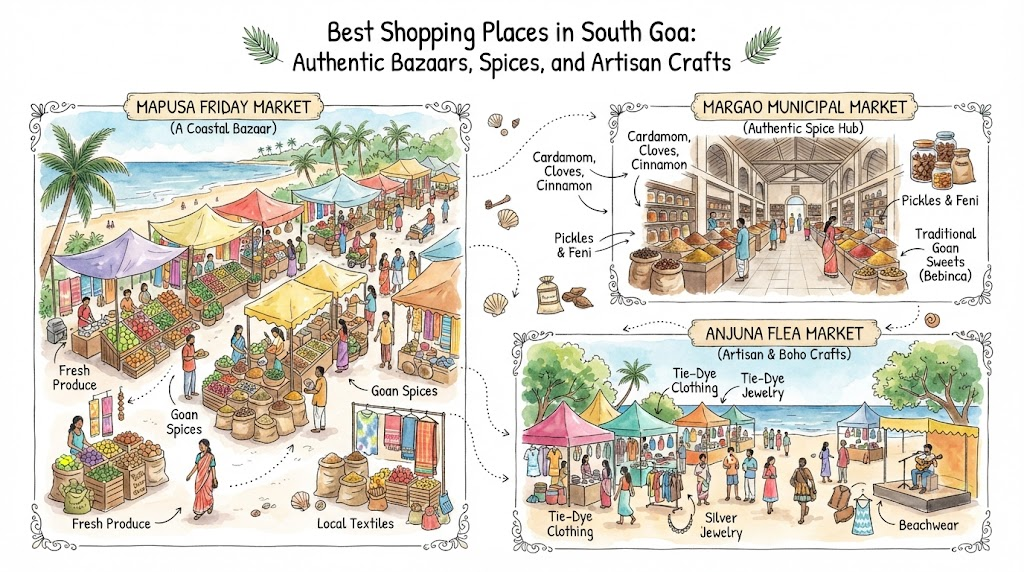
Margao Municipal Market (New Market)
Established during the late Portuguese colonial administration as a centralized civic trading grid, the Margao Municipal Market—known locally as the New Market—is the beating commercial heart of South Goa. The sprawling complex is an intricate labyrinth of vaulted covered corridors, weathered stone floors, and interconnected alleys that pulse with authentic local commerce.
Generations of local families operate tiny timber stalls overflowing with mountain-grown black peppercorns, cinnamon quills, peri-peri chillies, hand-rolled chorizo sausages, and dried salted fish. It provides a raw, unfiltered sensory journey through Goa’s culinary and domestic heritage that modern shopping malls cannot replicate.
- Location: Central Margao, approximately 28 km south of Dabolim Airport and 2 km from Madgaon Railway Station.
- Why it is worth visiting: The quintessential destination for authentic culinary provisions, organic spices, and traditional Goan kitchenware at wholesale rates. Universal Adventures
- Best things to do: Procure vacuum-sealed Goan pork sausages from generational vendors, pick up authentic clay curry pots, and buy sun-dried kokum rinds.
- Best time to visit: 8:30 AM to 11:00 AM to experience active morning commerce and avoid midday heat.
- Ideal for whom: Culinary travelers, home cooks, cultural explorers, and photographers. Justdial
- Travel tip: Wear slip-resistant footwear, as the stone walkways in the inner vegetable and spice aisles can be wet.
Palolem Beach Market Lane
Flanking the main approach road leading into the crescent bay of Palolem, this lively beachside bazaar caters to free-spirited travelers seeking bohemian coastal aesthetics. The market evolved alongside South Goa’s backpacker movement, transitioning into a vibrant lane shaded by coconut palms and bamboo canopies.
Stalls here are lined with flowing cotton kaftans, hand-dyed linen shirts, silver gemstone jewellery, leather sandals, and macramé home decor. The atmosphere is warm, social, and distinctly relaxed compared to the louder bazaars of the northern coast.
- Location: Canacona, southernmost tip of Goa, roughly 37 km from Margao.
- Why it is worth visiting: Unmatched selection of lightweight summer apparel, yoga gear, and handmade jewellery directly steps away from the Arabian Sea.
- Best things to do: Customize handmade brass or silver rings, pick up bohemian mandala bedspreads, and shop for eco-friendly beach totes.
- Best time to visit: 5:00 PM to 9:00 PM when string lights illuminate the street stalls after the beach sunset.
- Ideal for whom: Solo backpackers, bohemian fashion seekers, couples, and souvenir hunters.
- Travel tip: Gentle bargaining is standard practice here; aim to negotiate with a polite smile, starting around 25% to 30% below the quoted opening price.
Colva Beach Bazaar
Colva is one of the oldest coastal resorts in South Goa, fronted by a bustling promenade that leads directly onto pristine white sands. The road approaching the shore features a vibrant shopping enclave lined with permanent open-air shops and festive pop-up stalls.
Visitors will find an abundance of colourful beachwear, bamboo chimes, sea-shell wind chimes, local Goan cashew nuts, and feni bottles. Its proximity to the sea creates a casual environment where you can browse in flip-flops while sipping fresh sugarcane juice.
- Location: Colva, Salcete, approximately 8 km west of Margao city centre.
- Why it is worth visiting: Exceptional convenience for picking up casual beach clothing, footwear, and fun sea-themed keepsakes right by the water.
- Best things to do: Browse hand-crafted sea-shell souvenirs, purchase affordable sunglasses and sun hats, and stock up on roasted, salted whole cashew kernels.
- Best time to visit: Late afternoon between 4:00 PM and 7:30 PM.
- Ideal for whom: Families traveling with children, beachgoers, and casual day-trippers.
- Travel tip: Inspect the seal and manufacturing date stamps on bottled feni or packed cashews before finalizing your purchase.
Tibetan Market Margao
Set up seasonally along the public grounds near the Municipal Council in Margao, the Tibetan Market is an annual winter bazaar run by Tibetan traders and artisans. This temporary enclave brings the textiles and craftsmanship of the Himalayan regions straight to sunny coastal Goa.
The stalls feature woollen jackets, pashmina shawls, poncho sweaters, turquoise and coral jewellery, prayer wheels, and brass singing bowls. It presents a fascinating cultural contrast to the tropical coastal trade happening across the rest of the town.
- Location: Near the Municipal Garden, Pajifond, Margao.
- Why it is worth visiting: Excellent source for authentic hand-loomed winter wear, bohemian coats, silver ornaments, and Tibetan spiritual artefacts.
- Best things to do: Test the acoustic pitch of handmade singing bowls, pick up pure wool shawls, and browse authentic stone bead necklaces.
- Best time to visit: November through February, between 11:00 AM and 8:00 PM.
- Ideal for whom: Textile collectors, winter apparel shoppers, and holistic wellness enthusiasts.
- Travel tip: Prices here are relatively fixed compared to beach stalls, reflecting genuine handmade quality and high wool content.
Agonda Village Boutiques
The single street running parallel to pristine Agonda Beach has transformed into a boutique shopping corridor. Unlike crowded urban bazaars, shopping in Agonda is curated, artistic, and peaceful, reflecting the beach’s status as a quiet sea turtle sanctuary.
Independent shops nestled among garden cafes stock handmade organic skincare, organic tea blends, Ayurvedic oils, sustainable hemp clothing, and artistic pottery. It is an idyllic destination for thoughtful, ethical gifting without the chaos of commercial haggling.
- Location: Agonda coastal belt, Canacona Taluka, roughly 10 km north of Palolem.
- Why it is worth visiting: The premier hub in South Goa for ethical fashion, artisan skincare, slow lifestyle goods, and curated coastal crafts.
- Best things to do: Shop for handmade linen tunics, sample locally blended essential oils, and discover unique ceramic mugs made by Goan potters.
- Best time to visit: 10:00 AM to 1:00 PM or 5:30 PM to 8:30 PM.
- Ideal for whom: Eco-conscious travelers, design lovers, digital nomads, and wellness devotees.
- Travel tip: Many of these boutiques are run by independent designers who only open from late October through early April.
Offbeat Exploration: Hidden Gems Tourists Miss
Cansaulim Local Farmers Market
Tucked near the Cansaulim railway crossing, this open-air morning market is where rural village farmers gather at dawn. You will find sweet Cansaulim watermelons, local country eggs, pure wild forest honey, and freshly pressed toddy vinegar, offering an authentic glimpse of agro-Goan village life without tourist crowds.
Gandhi Market Old Textile Gali
Hidden within the inner grid of Margao’s Gandhi Market, this narrow, sheltered alleyway specializes in raw textiles. It is the premier secret spot to purchase traditional Goan Kunbi cotton sarees with their distinctive red and white checks, along with custom tailoring services that can copy your favourite garments within 48 hours.
Quepem Spice Depots
Located inland towards the foothills of the Western Ghats, the traditional spice warehouses around Quepem offer farm-direct spices. Skip the tourist-packaged spice packets and buy whole nutmeg, true Ceylon cinnamon bark, and vanilla beans weighed straight out of burlap sacks at wholesale agrarian rates.
Detailed Practical Guidance for Travelers
| Destination | Standard Entry Fee | General Timings | Best Local Food Options Nearby | Recommended Nearby Attractions |
|---|---|---|---|---|
| Margao Municipal Market | Free | 7:30 AM – 8:30 PM | Longuinhos (Pork Roast & Choris Pao), Café Tato (Puri Bhaji) | Holy Spirit Church, Monte Hill Chapel |
| Palolem Beach Market Lane | Free | 9:00 AM – 10:30 PM | Dropadi (Butter Garlic Crab), Magic Bus (Vegan Smoothie Bowls) | Colomb Bay, Patnem Beach |
| Colva Beach Bazaar | Free | 10:00 AM – 9:30 PM | Kentuckee Seafood Bar, Sagar Kinara (Vegetarian Thalis) | Benaulim Beach, Our Lady of Mercies Church |
| Tibetan Market Margao | Free | 10:00 AM – 8:30 PM (Winter Only) | Martin’s Multicuisine, Sharda Classic (Fish Thali) | Margao Municipal Garden, MMC Building |
| Agonda Village Boutiques | Free | 9:30 AM – 9:00 PM (Oct–Apr) | Fatima Corner (Tandoori Snapper), Zest Cafe (Raw Vegan Desserts) | Butterfly Beach, Cabo de Rama Fort |
Logistics & On-Ground Navigation
Local Transport Options
- Rented Scooters: The most practical and scenic method to hop between South Goa’s beach boutiques and coastal villages. Rates average ₹350 to ₹500 per day; always wear a helmet and carry a valid license.
- Auto-Rickshaws: Abundant in Margao city centre, perfect for short trips between the railway terminal, New Market, and local bakeries. Confirm prices beforehand since meters are seldom used.
- Self-Drive Cars: Recommended for families or shoppers purchasing heavy items like stone mortars, spice cases, and boxes of feni. Rates start around ₹1,400 per day.
- Kadamba State Buses: Reliable public buses connect Margao’s central KTC bus stand to Colva, Benaulim, and Canacona for pocket-change fares (₹15 to ₹40).
Budget Planning
- Budget / Backpacker Tier (₹1,500 – ₹2,500 per day): Stay in beach hostels, rent a scooter, dine on local Goan fish curry thalis, and focus on street markets and affordable spices.
- Mid-Range / Comfort Tier (₹4,500 – ₹8,000 per day): Stay in heritage boutique villas or beachfront cottages, hire private AC taxis for town shopping runs, and buy designer resort wear and certified organic produce.
Safety and Inclusivity Tips
- For Families: The open promenades at Colva and the walkable lanes of Agonda are stroller-friendly; avoid navigating Margao’s central New Market alleys with large prams during peak morning rush.
- For Couples: Strolling through the twilight beach stalls of Palolem and Agonda offers a relaxed, pressure-free romantic vibe without persistent street touts.
- General Safety: Keep wallets, phones, and tote bags secure in crowded town markets. Carry small-denomination currency so you avoid flashing large bank notes while bargaining.
Strategic Travel Planning Guardrails
Travel Planning Tips for South Goa
- Time Your Town Visits Around Siesta: Many heritage shops and municipal market stalls in Margao pull down their shutters between 1:30 PM and 4:00 PM for traditional afternoon repose.
- Carry Reusable Cotton Totes: Goan local bodies actively discourage single-use plastic; bringing your own sturdy cloth shopping bags is practical and eco-friendly.
- Test Before Purchasing Cashews: Buy from established dry-fruit stores that vacuum-pack their stock. Ensure you taste test unflavoured kernels to check for crisp freshness.
- Master Gentle Bargaining: Keep your negotiations courteous and respectful. In family-run grocery shops and fixed-price bakeries, avoid bargaining entirely.
- Carry Sufficient Paper Currency: Mobile data connectivity can fluctuate inside dense stone markets and remote southern bays, making digital payments intermittent.
Common Mistakes to Avoid
- Buying Pre-Packaged “Spice Box” Sets: Generic tourist spice boxes found along beach roads often contain stale, colour-treated spices; buy loose, whole spices from Margao’s historic market aisles instead.
- Confusing North and South Flea Markets: Do not travel to South Goa expecting the loud, chaotic Anjuna-style flea raves; shopping here is laid-back and community-driven.
- Ignoring the Alcohol Carrying Permits: If you are purchasing authentic Goan Feni to bring home, ensure the licensed liquor vendor issues an official excise permit for transit.
- Skipping Cash for Auto Rides: Rickshaw drivers and small village producers rarely take cards, so running out of physical cash creates unnecessary friction. Justdial
- Overpacking Your Day: South Goa’s distances are deceptively large; do not combine shopping in Margao with a beach bazaar run to Palolem on a single afternoon.
Suggested Itinerary Blueprints
1-Day Quick Dash (Heritage Town to Coastal Sunset)
- Morning (8:30 AM – 11:30 AM): Dive into Margao Municipal Market for spices, Goan sausages, and handmade feni. Fuel up with puri bhaji at Café Tato. Beleza By The Beach
- Afternoon (1:00 PM – 4:00 PM): Retreat from the midday sun with lunch and AC boutique shopping in Margao’s Pajifond neighbourhood.
- Evening (5:00 PM – 7:30 PM): Drive to Colva Beach for coastal shopping, seaside shell crafts, and sunset seafood snacks along the promenade.
2-Day Deep-Dive (Flavours, Crafts, and Southern Shores)
- Day 1: Dedicate your morning to Margao’s New Market and the Old Textile Gali. In the afternoon, visit a spice plantation near Quepem for farm-fresh spices, ending with dinner in Benaulim.
- Day 2: Ride south along the scenic coastal road to Agonda. Spend the morning browsing slow-fashion village boutiques, then head to Palolem Beach Market for evening shopping and beachfront dining.
Complete Weekend Travel Plan (The Ultimate South Goa Circuit)
- Friday: Arrive and check into your stay in Salcete. Spend the evening browsing Colva’s seaside bazaar and dining on fresh catch.
- Saturday: Explore the culinary treasures of Margao Municipal Market, visit the Tibetan Market, and discover the hidden village market of Cansaulim. Beleza By The Beach
- Sunday: Take an excursion to Canacona. Spend the afternoon uncovering organic treasures in Agonda, followed by sunset shopping and live music along Palolem’s beach lane.
Common Tourist Mistakes to Avoid
- Geographic Blunders: Trying to stay in North Goa (like Calangute or Baga) while planning to do your souvenir and spice shopping in Margao and Palolem. You will waste five hours in heavy traffic.
- Commercial Traps: Spending your entire holiday shopping inside air-conditioned town malls when authentic Goan handicrafts, ceramics, and handlooms are flourishing in village workshops.
- Neglecting Modern/Alternative Zones: Overlooking the contemporary artist studios and sustainable design boutiques tucked away in quiet southern villages like Chinchinim and Raia.
- Transport Overpayment: Agreeing to arbitrary taxi prices outside transport hubs without checking standard government-approved counter rates or hiring a self-drive scooter.
- Luxury Dining Bias: Eating only inside five-star hotel properties and missing out on South Goa’s legendary legacy bakeries and humble fish-curry eating houses located right beside the bazaars.
Frequently Asked Questions
1. What are the best traditional items to buy when shopping in South Goa?
South Goa is famous for culinary provisions, traditional crafts, and relaxed beach fashion. You should look for authentic Goan chorizo sausages, unrefined coconut jaggery, whole cashew nuts, feni, organic kokum, and hand-woven Kunbi cotton sarees. Coastal markets also offer custom silver jewellery, flowy linen garments, brass handicrafts, and traditional terracotta pottery.
2. Which market in South Goa offers the best prices for authentic spices?
The Margao Municipal Market (New Market) is the best and most affordable place for authentic spices in South Goa. Generational spice traders sell farm-fresh black pepper, star anise, nutmeg, and fiery dry red chillies weighed loose straight from burlap sacks. Buying here is significantly cheaper and more authentic than pre-sealed tourist souvenir boxes.
3. Is bargaining acceptable in South Goa’s local markets?
Bargaining is expected at open-air beach markets like Palolem and Colva, where goods do not carry fixed price tags. Polite, friendly haggling can reduce the opening price by 20% to 30%. However, prices are strictly fixed in municipal grocery stalls, heritage bakeries, government handicraft emporiums, and established spice shops.
4. What are the operating timings of the Margao Municipal Market?
The market generally opens around 7:30 AM and runs until 8:30 PM, Monday through Saturday. The best time to experience its energy and fresh stock is between 8:00 AM and 11:00 AM. Note that many inner grocery and fabric stalls close for an afternoon siesta from 1:30 PM to 4:00 PM.
5. How does shopping in South Goa compare to North Goa?
Shopping in South Goa is noticeably quieter, authentic, and centered around local culture, food products, and relaxed resort wear. North Goa focuses heavily on loud night bazaars, mass-produced trinkets, party wear, and commercial flea markets. South Goa offers an unhurried, personal shopping experience where you can interact directly with shop owners.
6. Are digital payment apps like UPI accepted by vendors in South Goa?
Yes, UPI apps like Google Pay and PhonePe are widely accepted across urban shops, supermarkets, and established beach shacks. However, physical cash is still necessary when shopping in traditional market alleys, buying from street vendors, or paying for parking. Remote coastal areas can also experience intermittent network outages.
7. Where can I buy authentic Goan Feni and wine in South Goa?
Licensed wholesale and retail liquor stores in Margao and along the major coastal roads of Salcete provide the best selection. Look for reputable brands of double-distilled cashew or palm feni. Ensure the shopkeeper packs the bottles safely and provides a valid excise permit if you intend to travel with it.
8. Can I buy authentic Goan chorizo sausages in South Goa markets?
Yes, the pork section of Margao’s New Market is the most famous place in Goa to purchase authentic chorizo sausages. Made with pork, ginger, garlic, palm vinegar, and fiery local toddy spices, these stringed sausages are dried to preserve their shelf life. Ask the vendor for well-cured strings and double-layer packaging for transit.
9. What should I look for when purchasing cashew nuts in South Goa?
Always buy from reputed dry-fruit depots in Margao rather than temporary beach stalls. Look for whole, unbroken kernels labeled as W180 or W210, which indicate large premium grades. High-quality cashews should have an even pale-cream color, zero dark blemishes, and a crisp bite without any hint of moisture or chewiness.
10. When does the Tibetan Market in Margao operate?
The Tibetan Market is a seasonal market that runs only during the winter months, typically opening in early November and operating through February. Located near the Margao Municipal Garden, it is open daily from 10:00 AM until approximately 8:30 PM, offering Himalayan textiles, jackets, silver jewellery, and woollens.
11. What is the most practical way to travel between markets in South Goa?
Renting a 110cc or 125cc scooter is the most flexible, cost-effective transport for navigating village roads and seaside market lanes. If you are traveling as a family or buying delicate pottery and bulky goods, booking an air-conditioned local taxi or renting a self-drive hatchback is the most comfortable choice.
12. Are beach markets in South Goa open during the monsoon season?
No, seasonal beach stalls in Palolem, Colva, and Agonda pack up by late May and do not operate through the monsoon months (June to September). Permanent shopping complexes, fabric stores, and the historic indoor municipal markets in Margao, however, stay open and fully active year-round.
Conclusion
Choosing to explore the shopping landscapes of South Goa means choosing connection over consumerism. Beyond the colourful beach pareos and polished brass souvenirs lies a deeply rooted coastal culture sustained by generational artisans, spice growers, and welcoming local merchants. Taking home a string of hand-tied Goan choris, a pouch of aromatic hill-grown peppercorns, or a piece of local pottery isn’t just about collecting vacation souvenirs—it carries the timeless warmth, heritage, and easy-going rhythm of South Goa back into your everyday life.
