Introduction
Navigating the landscape of cloud-native architecture requires validated engineering expertise that aligns with enterprise infrastructure needs. The Certified Kubernetes Administrator (CKA) program stands as a premier benchmark for professionals looking to establish their authority in container orchestration. This comprehensive guide is tailored for software engineers, platform administrators, site reliability engineers, and technical leaders who need to make informed decisions regarding skill acquisition and professional development. By clarifying the operational depth, examination structure, and industry relevance of this credential, this resource helps professionals design a clear learning trajectory within the modern DevOps ecosystem. Understanding these components allows engineering teams to optimize containerized deployments while driving career progression effectively across modern technical frameworks, including specialized areas supported by platforms like aiopsschool.
What is the Certified Kubernetes Administrator (CKA)?
The Certified Kubernetes Administrator (CKA) is an intensive, performance-based certification program designed to validate an engineer’s ability to install, configure, manage, and troubleshoot production-grade Kubernetes clusters. Unlike traditional multiple-choice examinations, this program tests hands-on proficiency within a live command-line environment, simulating real-world operational challenges. It focuses on core administrative competencies, including cluster architecture, networking, security configurations, storage management, and logging infrastructure. For enterprises transitioning to microservices, the program serves as a reliable filter for identifying talent capable of maintaining system uptime and managing complex, multi-tenant cloud environments. It represents a shift from theoretical infrastructure knowledge to verifiable, execution-level expertise.
Who Should Pursue Certified Kubernetes Administrator (CKA)?
This program is specifically built for systems administrators, cloud infrastructure engineers, DevOps specialists, and site reliability engineers who manage containerized workloads daily. Software developers looking to deepen their understanding of underlying operational fabrics will find immense value in mastering cluster dynamics. Technical managers and enterprise architects also benefit by gaining the necessary technical insight to oversee large-scale migration strategies and cloud infrastructure investments. Globally, and within rapidly growing technology sectors like India, holding this standard is frequently mandated by enterprise clients and global consulting firms. It serves as an essential career accelerator for both mid-level engineers aiming for senior roles and experienced professionals seeking validation for their architectural decisions.
Why Certified Kubernetes Administrator (CKA)
The modern enterprise software ecosystem has standardized on containerization, making Kubernetes the definitive operating system for the cloud. Achieving this status proves that an engineer possesses tool-agnostic infrastructure management skills that remain relevant regardless of whether an enterprise utilizes AWS, Google Cloud, Azure, or on-premises bare-metal servers. The certification ensures an individual can navigate complex networking, handle stateful applications, and implement security policies efficiently. This technical capability translates directly into reduced system downtime, optimized resource utilization, and faster deployment velocity for engineering teams. The return on investment manifests as enhanced marketability for professionals and heightened operational stability for the organizations that employ them.
Certified Kubernetes Administrator (CKA) Certification Overview
The educational framework and practical preparation for this program are structured through devopsschool, ensuring candidates receive rigorous, industry-aligned training. The assessment process is completely hands-on, requiring candidates to solve complex configuration tasks and resolve real cluster failures under a specific time constraint. Ownership of this baseline competency demonstrates to global organizations that the engineer is capable of handling the day-to-day demands of infrastructure maintenance. The curriculum covers everything from initial cluster provisioning using deployment tools to advanced troubleshooting of the control plane and worker nodes. This thorough assessment structure makes it one of the most respected and sought-after credentials in the cloud-native ecosystem.
Certified Kubernetes Administrator (CKA) Certification Tracks & Levels
The ecosystem surrounding container orchestration is divided into clear progressive tiers to accommodate differing career goals and experience levels. The foundation starts with basic application configuration, moves into core system administration, and culminates in advanced security engineering and architectural design. These tracks allow engineers to align their learning paths with specific organizational roles such as infrastructure management, application delivery, or compliance monitoring. Each tier introduces increased complexity, shifting focus from single-node deployments to highly available, multi-region cluster topologies. By completing these progressive stages, engineers can systematically build their profiles from entry-level cluster operators to principal enterprise architects.
Complete Certified Kubernetes Administrator (CKA) Certification Table
| Track | Level | Who it’s for | Prerequisites | Skills Covered | Recommended Order |
|---|---|---|---|---|---|
| Application Delivery | Associate | Application Developers | Basic Linux Command Line | Pod creation, deployment configuration, volume mounting | First |
| Cluster Administration | Professional | SREs, Systems Administrators | Strong Linux and Networking | Cluster installation, troubleshooting, networking, storage | Second |
| Security Engineering | Advanced | SecOps, Cloud Security Engineers | Cluster Administration Core | Cluster hardening, system auditing, network policies | Third |
Export to Sheets
Detailed Guide for Each Certified Kubernetes Administrator (CKA) Certification
Certified Kubernetes Administrator (CKA) – Core Administrator Level
What it is
This level validates the core engineering skills required to set up, configure, and manage production-ready Kubernetes clusters from scratch. It confirms that the professional can handle day-to-day administrative tasks, manage cluster updates, and maintain high availability.
Who should take it
Systems administrators, DevOps professionals, platform engineers, and SREs who are responsible for maintaining containerized enterprise infrastructure and managing underlying host networks.
Skills you’ll gain
- Provisioning infrastructure and bootstrapping clusters using kubeadm tools.
- Configuring internal cluster networking, core DNS services, and ingress controllers.
- Implementing persistent volume storage allocations for stateful enterprise workloads.
- Diagnosing, isolating, and resolving control plane and worker node failures.
Real-world projects you should be able to do
- Build a highly available, multi-master Kubernetes cluster on bare-metal or cloud instances.
- Upgrade a production cluster from an older minor version to the latest release with zero downtime.
- Troubleshoot broken cluster communication paths caused by misconfigured network plug-ins.
Preparation plan
- 7–14 days: Focus intensely on mastering the command line tool kubectl, understanding imperative commands, and learning to navigate official documentation swiftly.
- 30 days: Set up a local test lab using virtual machines to practice cluster installations, break configurations intentionally, and practice recovery procedures manually.
- 60 days: Execute timed mock examinations repeatedly to build speed, refine debugging methodologies, and master core networking concepts like services and network policies.
Common mistakes
- Relying too heavily on copy-pasting YAML files instead of understanding the underlying API structure.
- Mismanaging time during the practical exam by spending too long on a single high-weight troubleshooting task.
- Neglecting to change contexts properly between different cluster environments during the practical assessment.
Best next certification after this
- Same-track option: Advanced Kubernetes Security Specialist certification.
- Cross-track option: Cloud Provider Specific Enterprise Architect certifications.
- Leadership option: Certified Director of Infrastructure and DevOps Training Programs.
Choose Your Learning Path
DevOps Path
This pathway prioritizes continuous integration and automated infrastructure delivery by blending container administration with deployment pipelines. Engineers focusing on this track learn to treat cluster configurations as code, ensuring that environment definitions are version-controlled and reproducible. The goal is to build seamless pipelines where code commits automatically trigger secure, scalable container rollouts across development and production environments.
DevSecOps Path
Security within containerized systems requires moving compliance and vulnerability checks early into the software delivery process. This path focuses on cluster hardening, implementing strict network boundaries, managing secrets securely, and setting up runtime security monitoring. Professionals training here learn to enforce strict operational policies, ensuring that containerized applications comply with enterprise governance protocols without slowing down delivery teams.
SRE Path
Site Reliability Engineering emphasizes system availability, performance monitoring, scaling automation, and disaster recovery processes. This track focuses on designing self-healing infrastructure, optimizing resource requests to prevent node exhaustion, and managing cluster storage performance under heavy loads. Engineers learn to interpret logs, establish monitoring dashboards, and handle incidents systematically to maintain service level objectives.
AIOps Path
Automating infrastructure operations using machine learning models requires a deeply stable and dynamic container platform. This track guides engineers to deploy automated anomaly detection tools, manage predictive autoscaling models, and integrate intelligent alerting engines directly into cluster runtimes. The objective is to transition from manual operational responses to automated, data-driven system adjustments that optimize resource usage dynamically.
MLOps Path
Deploying machine learning models into production requires specialized infrastructure capable of managing heavy compute, GPU resources, and complex data pipelines. This path trains engineers to provision infrastructure suitable for model training workloads, manage distributed processing nodes, and host scalable inference APIs. It bridges the gap between data science requirements and robust, reproducible container orchestration.
DataOps Path
Managing data architectures requires a strong grasp of stateful container deployment, persistent storage orchestration, and database scaling. This pathway teaches engineering teams how to manage distributed databases, structure data pipelines, and implement resilient backup routines within a clustered ecosystem. It ensures high data availability and consistent performance across complex analytics platforms.
FinOps Path
Cloud cost management requires deep visibility into how cluster resources are allocated, consumed, and wasted across various engineering teams. This track helps professionals implement resource quotas, analyze namespace resource utilization, and set up clear cost-attribution structures. By mastering optimization techniques, engineers help organizations minimize cloud waste while maintaining application performance targets.
Role → Recommended Certified Kubernetes Administrator (CKA) Certifications
| Role | Recommended Certifications |
|---|---|
| DevOps Engineer | Core Administrator Level, Application Delivery Level |
| SRE | Core Administrator Level, Advanced Security Level |
| Platform Engineer | Core Administrator Level, Advanced Security Level |
| Cloud Engineer | Core Administrator Level, Provider Specific Solutions Architect |
| Security Engineer | Advanced Security Level, Core Administrator Level |
| Data Engineer | Core Administrator Level, Data Integration Specialist |
| FinOps Practitioner | Core Administrator Level, Cloud Financial Management Foundation |
| Engineering Manager | Application Delivery Level, DevOps Leadership Certificate |
Export to Sheets
Next Certifications to Take After Certified Kubernetes Administrator (CKA)
Same Track Progression
After establishing a solid foundation in core cluster administration, the logical progression is to dive into specialized security engineering. The next phase involves mastering cluster defense mechanisms, which includes vulnerability scanning, runtime threat detection, and advanced access controls. Moving along this path prepares professionals to take on senior infrastructure roles where they are responsible for designing secure, enterprise-grade cloud environments.
Cross-Track Expansion
To broaden operational capabilities, professionals should look toward mastering service mesh technologies, multi-cluster management frameworks, and advanced gitops deployment tools. Combining administration skills with cloud-specific enterprise architecture credentials creates a highly versatile profile. This expansion ensures that an engineer can design end-to-end delivery ecosystems that tie infrastructure directly into application development workflows.
Leadership & Management Track
For senior professionals looking to transition away from day-to-day command-line operations, the next step involves moving into technology strategy and infrastructure governance. Focus areas should include enterprise cloud strategy, agile delivery methodologies at scale, and financial management frameworks. This shift enables experienced administrators to lead large engineering organizations, manage technical budgets, and direct complex cloud migration initiatives.
Training & Certification Support Providers for Certified Kubernetes Administrator (CKA)
DevOpsSchool provides comprehensive, hands-on instructional programs designed to take professionals from foundational concepts to advanced cluster administration through real-world labs and simulated environments.
Cotocus delivers focused technical bootcamps that prioritize operational readiness, helping teams master container deployment strategies and production-grade troubleshooting methodologies quickly.
Scmgalaxy offers an extensive repository of community-driven resources, technical guides, and interactive discussion forums that assist engineers in resolving real-world configuration challenges.
BestDevOps specializes in corporate transformation training, delivering tailored curriculums that align cluster engineering practices with modern software delivery objectives.
devsecopsschool integrates core security principles into container workflows, training engineers to build secure delivery pipelines and resilient application runtime environments.
sreschool focuses on high availability, systems reliability, and infrastructure monitoring, teaching professionals how to maintain uptime and manage enterprise scale deployments.
aiopsschool teaches the integration of intelligent automation and machine learning insights into infrastructure management frameworks to optimize modern IT operations.
dataopsschool provides specialized training on managing complex data streams, distributed storage systems, and analytics engines within containerized environments.
finopsschool emphasizes cloud financial management, helping technical teams analyze cluster utilization metrics to drive cost-efficiency and eliminate resource waste.
Frequently Asked Questions (General)
- What is the primary focus of the CKA examination? The exam focuses strictly on evaluating practical, hands-on skills required to build, configure, maintain, and troubleshoot live Kubernetes clusters in a timed environment.
- How long is the certification credential valid for after passing? The credential remains active for a period of three years, after which professionals must recertify to demonstrate compliance with updated container technologies.
- Are there any formal prerequisites required before registering for the exam? There are no formal certifications required beforehand, though a deep understanding of Linux system administration and core networking protocols is highly recommended.
- What format does the actual examination take? The assessment is a performance-based, hands-on exam delivered via a command-line interface in a web browser, requiring the resolution of real cluster tasks.
- Can I use external resources or notes during the test? Candidates are permitted to access the official online documentation during the exam, making the ability to navigate those docs quickly a critical skill.
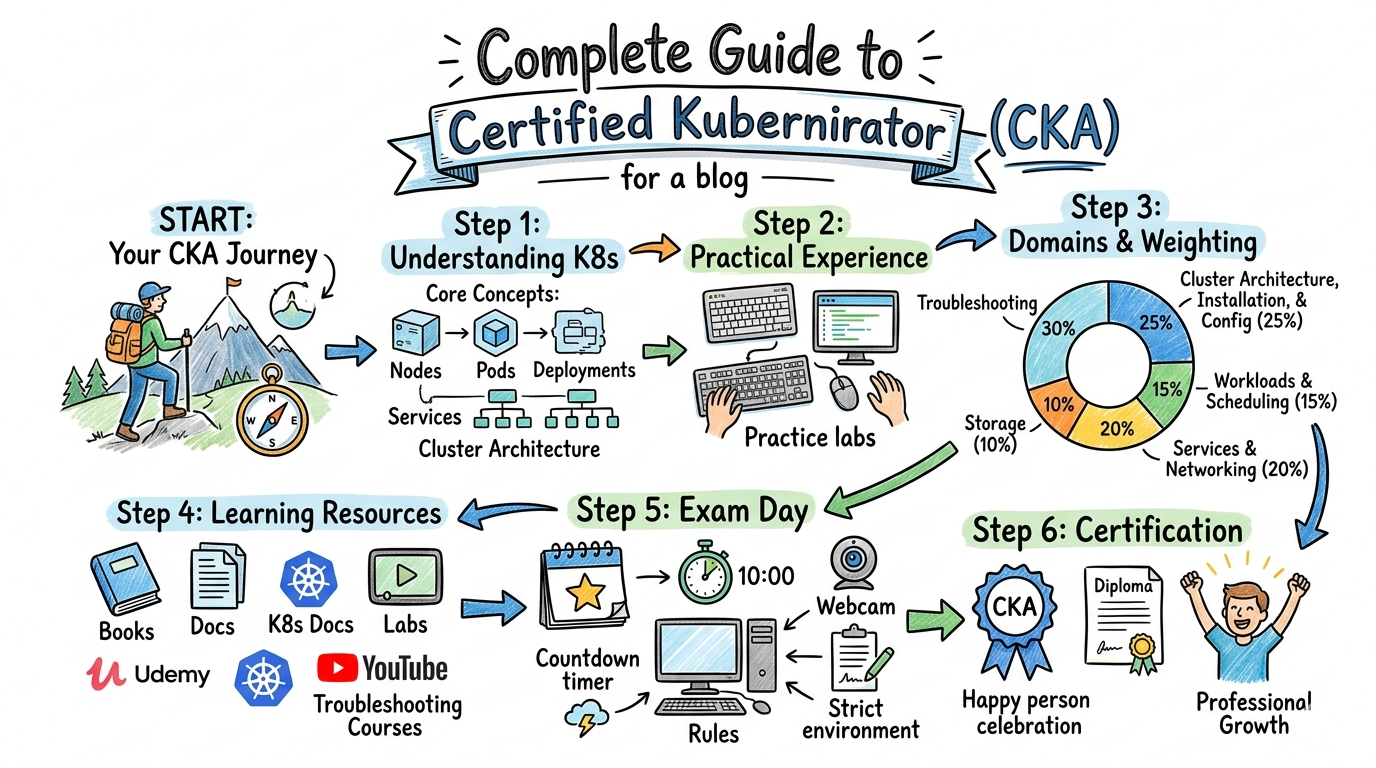
- What is the passing score required to achieve certification? Candidates must score 66% or higher on the practical tasks to successfully pass the examination and receive the administrator designation.
- How does this program differ from developer-focused certifications? The administrator exam emphasizes cluster setup, networking, security, and troubleshooting, whereas developer tracks focus on deploying and configuring applications.
- Is a retake included if I do not pass on my first attempt? Most exam registrations include one free retake attempt if a candidate does not achieve the passing score on their initial try.
- How much time is allowed to complete all the tasks in the exam? Candidates are given exactly two hours to complete all the practical configuration and troubleshooting assignments provided in the testing environment.
- Why do organizations prefer hiring engineers with this specific credential? It guarantees that the candidate possesses practical, verifiable skills in live systems management rather than just memorized theoretical answers.
- Can I take the examination from my home or office? Yes, the exam is remotely proctored, allowing candidates to take it from any secure, quiet location with a reliable internet connection and webcam.
- What operating system environment is used during the assessment? The exam environments are typically built on standard Linux distributions, making comfort with the Linux terminal and bash scripting essential.
FAQs on Certified Kubernetes Administrator (CKA)
- How difficult is the hands-on administrator exam compared to traditional multiple-choice tests? The exam is widely considered highly challenging because it bypasses theoretical multiple-choice questions entirely in favor of direct, live terminal problem-solving. Candidates must actively configure system components, write valid YAML files from scratch, and debug broken cluster infrastructure under strict time constraints. This design tests actual engineering reflexes, meaning that theoretical knowledge without deep, muscle-memory command-line practice will not be enough to pass the assessment.
- Which specific core areas carry the highest weight during the evaluation? Troubleshooting along with cluster architecture, installation, and configuration typically carry the highest percentage of the total score. This means candidates must excel at diagnosing control plane failures, node issues, and broken network paths while proving they can bootstrap a secure cluster cleanly. Storage configuration, networking, services, and core deployment workloads make up the remaining portions, requiring a well-rounded understanding of the entire system architecture.
- How does mastering this technology benefit my long-term career growth in India and globally? As industries globally migrate to cloud-native platforms, enterprise organizations face a critical shortage of qualified professionals capable of managing large production environments. Holding this verified credential validates your expertise immediately to recruiters, helping you stand out for senior roles such as Platform Architect or Lead Site Reliability Engineer. It establishes your technical authority, often leading to better compensation, accelerated promotions, and the opportunity to lead critical cloud migration strategies.
- Can an absolute beginner to IT operations pass this administrative assessment? While anyone can register, an absolute beginner will face a steep learning curve without prior experience in Linux systems administration, bash scripting, and core networking. Success requires a solid foundation in managing file systems, systemd processes, SSH keys, and understanding IP routing, firewalls, and DNS management. Beginners should focus on mastering Linux fundamentals and container basics before attempting the comprehensive administrator curriculum.
- What are the most effective strategies to prepare for the timed exam simulator? The most effective approach is to build clusters multiple times using raw configuration tools like kubeadm instead of relying on automated cloud scripts. Practice imperative commands using the command-line interface extensively to minimize the time spent writing YAML manifests manually during the test. Utilize timed mock exams to train yourself to read errors quickly, manage your time effectively, and adapt to changing cluster contexts.
- How does this credential complement other tools within a modern DevOps toolchain? This certification bridges the gap between infrastructure provisioners like Terraform and continuous delivery tools like ArgoCD by ensuring you understand the destination platform deeply. Knowing the internal workings of the cluster allows you to build more resilient deployment pipelines, write better automated scripts, and design superior monitoring configurations. It acts as the central pillar that connects infrastructure-as-code practices with scalable application delivery frameworks.
- What real-world deployment challenges will I be equipped to handle after passing? You will be fully prepared to handle severe cluster incidents, such as worker nodes dropping to a NotReady status or misconfigured internal networking components. You will also be able to implement strict network policies to isolate multi-tenant workloads, provision persistent network storage volumes, and execute zero-downtime cluster upgrades. These practical skills match the daily operational needs of managing large-scale enterprise microservices platforms.
- Why is the official course framework from devopsschool highly recommended for preparation? The structured learning programs provide guided paths, mentor support, and access to dedicated lab environments that closely mirror the live testing interface. This structure eliminates guesswork from your study routine, ensuring you cover every domain in the official blueprint thoroughly while receiving expert feedback on your troubleshooting technique. It transforms passive reading into active, hands-on engineering practice, significantly increasing your chances of success on exam day.
Final Thoughts: Is Certified Kubernetes Administrator (CKA) Worth It?
Investing time and energy into mastering container orchestration is one of the most reliable decisions an infrastructure engineer can make. The credential is far more than a resume milestone; it represents verifiable proof that you can handle high-pressure infrastructure failures and manage complex production environments cleanly. It strips away marketing buzzwords, requiring engineers to demonstrate genuine operational capability within a live terminal. For professionals serious about building a long-term career in platform engineering, systems reliability, or modern cloud architecture, achieving this standard is entirely worth the effort. It establishes a deep technical foundation that pays consistent dividends across the evolving enterprise software landscape.
