Introduction
Beyond the postcard clichés of lazy sun loungers and crowded tourist plazas lies a raw, kinetic coastal realm where the Arabian Sea collides with sheer adrenaline. Goa is far more than a backdrop for passive vacations; its dynamic shoreline is an open playground shaped by maritime trade winds, volcanic laterite cliffs, and deep maritime history.
While generic resort itineraries herd crowds toward identical swimming zones, true adventure seekers look to the tides, the winds, and the coastal contours. Here, every headland tells a tale of seafaring merchants, Portuguese battlements, and resilient fishing communities whose relationship with these waves spans centuries. Stepping onto these adventure shores means trading predictable sightseeing for heart-pounding water expeditions, wind-powered swells, and secluded marine discovery.
Why Goa is a must-visit city
Goa stands as a premier adventure destination because of its extraordinary geographical variety squeezed into a compact coastline. Flanked by the rugged biodiversity of the Western Ghats to the east and the Arabian Sea to the west, this coastal state offers diverse wind windows, shallow lagoons, and deep open-water channels suitable for every adrenaline tier. Its colonial fortifications, maritime ruins, and vibrant Konkani coastal hamlets lend genuine cultural weight to every offshore excursion.
Practical accessibility makes Goa uniquely welcoming across diverse traveler profiles. Two modern international airports—Dabolim Airport (GOI) in the center and Manohar International Airport at Mopa (GOX) in the north—connect the coast directly with global hubs. Well-serviced railheads at Madgaon and Thivim, alongside upgraded national highways (NH 66), allow road-trippers, backpackers, and luxury thrill-seekers to navigate seamlessly between high-octane surf hubs and tranquil southern bays.
The state’s adventure circuit divides cleanly into two dynamic operational profiles: the wind-swept, high-energy shores of North Goa, known for motorized water sports, surfing, and kitesurfing, and the untamed, dramatic coves of South Goa, celebrated for long-distance kayaking, secret cliff hikes, and open-ocean scuba diving.
| Key Fact | Specification |
|---|---|
| Geographic Zone | Konkan Coast, West Coast of India |
| Adventure Season Window | October to May (Clear water, active wind sports, full water-sport licensing) |
| Average Water Temperature | 27°C to 30°C (Ideal for extended board and dive sessions) |
| High-Risk Monsoon Window | June to September (Strict ban on commercial sea sports and boat charters) |
| Primary Base Camps | Calangute/Candolim (North Hub), Morjim/Arambol (Far North), Palolem (South Hub) |
| Core Adventure Activities | Parasailing, Jet Skiing, Kitesurfing, Scuba Diving, Sea Kayaking, Surfing |
Best Places or Experiences
Calangute Beach
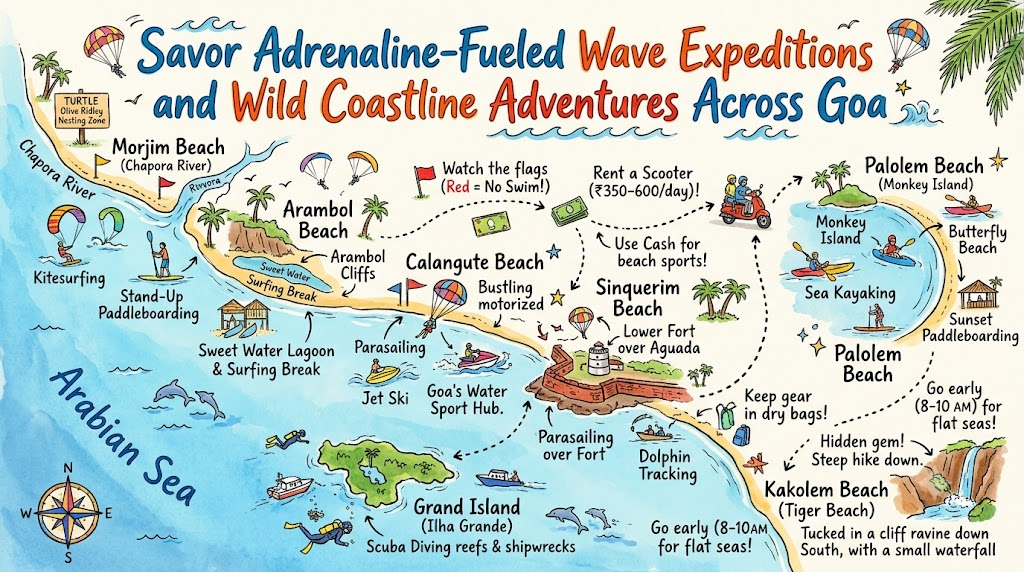
Known historically as the grand coastal bastion of Bardez, Calangute has evolved from a quiet fishing village into the epicenter of commercial motorized marine sports in Western India. The shoreline stretches for miles under open skies, flanked by continuous rows of licensed operators, safety watchtowers, and long swathes of golden sand. The powerful break of the waves here creates an exciting launchpad for adrenaline-fueled watercraft.
The beach’s sheer scale allows multiple boat operators to run simultaneous high-speed operations without bottle-necking the surf. Its position along the central northern coastline makes it the most reliable spot to catch motorized speed runs, where ocean swells challenge your balance against the salt spray.
- Location: Bardez, North Goa; approximately 16 km from Panaji.
- Why it is worth visiting: It boasts Goa’s densest concentration of government-regulated water sport operators, ensuring high competitive standards, diverse rides, and immediate boat availability. GoaOrbit
- Best things to do: Take an aerial parasailing flight with an ocean dip, blast across the swells on a high-powered personal watercraft (jet ski), and tackle the rolling surf on a high-speed banana boat. GoaOrbit
- Best time to visit: October to April, specifically between 8:00 AM and 10:30 AM before midday crowds and harsh heat set in. GoaOrbit
- Ideal for whom: High-energy groups, first-time adventure trippers, and travelers who thrive in bustling coastal environments. GoaOrbit
- Travel tip: Bypass the chaotic central parking drop-off and head toward the northern or southern flanks near Holiday Street to locate certified operators with shorter queues.
Morjim Beach
Tucked quietly north of the Chapora River estuary, Morjim Beach presents a completely different adventure rhythm dominated by natural wind forces rather than engine throttles. The wide, flat sandbar and consistent cross-onshore coastal breezes make Morjim the premier destination in India for wind-powered sports, particularly kitesurfing and stand-up paddleboarding.
Beyond its athletic appeal, Morjim carries immense ecological significance as a designated nesting sanctuary for the endangered Olive Ridley sea turtles. This protected status preserves its raw, undeveloped atmosphere, offering a wide horizon where colorful kites soar against the backdrop of quiet coastal dunes.
- Location: Pernem, Far North Goa; roughly 28 km from Panaji.
- Why it is worth visiting: The steady wind window and gentle ocean gradient create world-class kitesurfing conditions with certified IKO (International Kiteboarding Organization) schools.
- Best things to do: Book a beginner or intermediate kitesurfing session, paddleboard across the calm Chapora river mouth at high tide, and catch early morning coastal trail runs along the dune perimeter.
- Best time to visit: November to March; late afternoons (2:00 PM to 5:30 PM) offer peak thermal wind conditions for kite flight.
- Ideal for whom: Extreme sports enthusiasts, kiteboarders, solo adventurers, and nature-conscious athletes.
- Travel tip: Stay strictly clear of demarcated turtle nesting zones at the southern tip; motorized watercraft are banned here to protect marine ecology.
Sinquerim Beach
Cradled right beneath the weathered 17th-century ramparts of Lower Fort Aguada, Sinquerim Beach merges deep historical architecture with open-ocean water adventures. The fort once served as a primary freshwater watering point and defensive stronghold for Portuguese merchant fleets entering the Mandovi River. Today, its rugged laterite stone provides a dramatic backdrop for aquatic exploration.
The water at Sinquerim transitions rapidly from shallow shorelines to deeper sea channels. This natural bathymetry makes it the primary departure slipway for open-ocean dolphin tracking expeditions, high-power winch-boat parasailing, and boat charters heading outward toward Grand Island.
Tour My India
- Location: Candolim, North Goa; approximately 13 km from Panaji.
- Why it is worth visiting: The dramatic proximity to historic military fortifications provides unmatched visual scale while soaring through the sky on a parasail wing.
- Best things to do: Experience high-altitude winch-boat parasailing over the fort ramparts, embark on an open-ocean speedboat tour to view Aguada Lighthouse, and scuba dive the outer rocky reef fringes. Tour My India
- Best time to visit: November to March; early mornings (7:30 AM to 10:00 AM) feature flat, glassy seas and optimal visibility.
- Ideal for whom: History buffs, couples seeking dramatic adventure backdrops, and watersport purists.
- Travel tip: Book deep-sea boat transfers early from the Sinquerim Jetty rather than buying through unverified beach middlemen to ensure certified safety jackets and proper insurance coverage. Treks and Trails
Arambol Beach & Sweet Water Lagoon
Arambol represents Goa’s free-spirited, counter-cultural northern frontier, where jagged cliffs dip directly into the surf. Long favored by bohemian travelers, backpackers, and alternative sports practitioners, this beach provides an unpolished, raw terrain for both air and water thrills.
North of the main shore, a rocky cliff path wraps around the headland to reveal the Kalacha freshwater lagoon, nestled against a steep verdant hill. From the clifftops towering over the cove, thermals lift paragliders into the sky, giving riders bird’s-eye views of the crashing ocean swells below.
- Location: Pernem, Far North Goa; roughly 36 km from Panaji.
- Why it is worth visiting: It is the only place in Goa combining coastal cliff paragliding, sea surfing, and freshwater lagoon recovery within a single walking circuit.
- Best things to do: Launch a motorized or tandem paraglider from the cliff brow, take a surf lesson on the outer beach break, and hike past the lagoon to the ancient banyan tree trail in the forest.
- Best time to visit: December to February; late mornings offer favorable winds for paragliding, while sunsets bring communal beach circles.
- Ideal for whom: Solo backpackers, extreme air-sport seekers, surfers, and trekking enthusiasts.
- Travel tip: Wear trail-ready sandals or light shoes when navigating the cliff pass to the lagoon; laterite rocks can be sharp and slippery from ocean mist.
Palolem Beach & Monkey Island Coves
Framed by sweeping volcanic rock headlands and coconut groves, Palolem forms an almost complete crescent bay that tempers incoming ocean swells. This semi-enclosed coastal geography creates calm, clear water conditions rarely found along the storm-exposed northern beaches, turning the southern bay into an endurance paddling haven.
At the northern headland of the bay lies Canacona Island (commonly known as Monkey Island), reachable by a rocky scramble during low tide or by kayak at high water. Venturing beyond this headland opens up secret sea passages, hidden rocky inlets, and the rugged open swells of the southern Goan wilderness.
- Location: Canacona, South Goa; approximately 36 km from Madgaon Railway Station.
- Why it is worth visiting: Unrivaled sea kayaking conditions with glassy morning waters and access to otherwise unreachable cliffside marine coves. Anemos Resort Goa
- Best things to do: Rent a sit-on-top sea kayak to paddle around Monkey Island, take a long-distance paddle out to secluded Butterfly Beach, and practice sunset paddleboard balance drills.
- Best time to visit: November to March; dawn (6:30 AM to 9:00 AM) provides dead-calm water, zero boat traffic, and active pods of Indo-Pacific humpback dolphins. Anemos Resort Goa
- Ideal for whom: Independent endurance athletes, kayakers, couples, and nature-focused adventurers. Anemos Resort Goa
- Travel tip: Always secure your phone and electronics in a marine-grade dry bag strapped to the kayak hull; sudden swell surges near the outer headland can capsize unwary paddlers.
Offbeat Exploration: Hidden Gems Tourists Miss
Kakolem Beach (Tiger Beach)
Hidden at the base of a near-vertical cliff between Cabo de Rama and Cola, Kakolem is one of Goa’s most secluded adventure frontiers. Reached only via a steep, unpaved hike down a dirt ravine or by chartered fishing boat from Palolem, this tiny cove features a cold-water natural stream cascading straight onto the sand. The steep trek back up tests physical endurance, keeping casual crowds completely away.
Querim (Keri) Beach Sea Wall & River Spit
Positioned at the northernmost border of Goa where the Terekhol River empties into the sea, Keri is characterized by casuarina groves and an imposing stone sea wall. Strong river-mouth currents make swimming hazardous here, but the empty, windswept coastline offers premier terrain for high-speed sand-buggy driving, advanced kitesurfing, and long-range beach trekking up to Tiracol Fort.
Hollant Beach Natural Tide Pools
Tucked into a protected inlet south of the Bogmalo headland, Hollant boasts a rare geographic quirk: it has virtually no shoreline break due to an expansive, shallow coral and rocky shelf. During low tide, this creates an intricate labyrinth of calm tide pools and shallow underwater flats, offering exceptional conditions for free-diving practice, night snorkeling, and coastal wading among marine life.
Detailed Practical Guidance for Travelers
| Destination | Standard Entry Fee | General Timings | Best Local Food Options Nearby | Recommended Nearby Attractions |
|---|---|---|---|---|
| Calangute Beach | Free (Activities: ₹400–₹2,500) | 6:00 AM – 6:30 PM | Infantaria Bakery (Goan sausage buns), Souza Lobo (Kingfish peri-peri) | Baga Beach, Tibetan Market, St. Alex Church |
| Morjim Beach | Free (Kitesurf: ₹3,500–₹7,000) | Open 24 Hours (Sports: 9 AM–5 PM) | Burger Factory Morjim, local Konkani thali stalls near the village temple | Chapora River Estuary, Ashwem Beach, Turtle Conservation Center |
| Sinquerim Beach | Free (Parasailing: ₹1,200–₹2,000) | 6:00 AM – 6:00 PM | Bhatti Village (Traditional Goan pork sorpotel), local shack fish fries | Lower Fort Aguada, Sinquerim Lighthouse, Candolim Beach |
| Arambol Beach | Free (Paragliding: ₹2,500–₹3,500) | Daylight Hours (7 AM–6:30 PM) | Falafel Corner, Double Dutch Café, street-side momo and juice stands | Sweet Water Lake, Kalacha Beach, Arambol Mountain Trail |
| Palolem Beach | Free (Kayaks: ₹300–₹500/hr) | Daylight Hours (6 AM–6:30 PM) | Dropadi Shack (Crab masala), Magic Bus Café (Smoothie bowls) | Butterfly Beach, Monkey Island, Agonda Beach |
Logistics & On-Ground Navigation
Local Transport Options
- Motorcycle & Scooter Rentals: The most agile and budget-friendly way to transport boards and gear between beaches. Rental rates range from ₹350 to ₹600 per day for automatic scooters, while geared dual-sport bikes cost ₹800 to ₹1,200. Always verify tire condition, test both brakes thoroughly, and secure an ISI-marked helmet.
- Self-Drive 4x4s & Hatchbacks: Ideal for carrying heavy gear like kitesurf bags and dive gear. Available from major hubs starting at ₹1,200 to ₹2,500 per day. Ensure the car carries black-and-yellow commercial rental plates to avoid interstate checkpoints.
- Pilot Taxis (Motorcycle Chauffeurs): Unique to Goa, these licensed motorcycle riders carry single passengers on short routes across coastal towns. They are affordable, quick in traffic, and ideal for solo travelers heading between adjacent beaches.
- Prepaid Airport & Station Taxis: Official Goa Tourism Development Corporation (GTDC) counters at Dabolim, Mopa, and Madgaon station eliminate on-spot fare haggling. Always insist on official kiosk receipts before departure.
Budget Planning
- Backpacker / Adventure Tier (₹1,800 – ₹3,000 per day): Stays in surf or backpacker hostels (₹600–₹1,200 for a dorm), shared scooter rentals and fuel (₹400), eating local fish curry thalis and market meals (₹600), leaving budget for targeted single-activity days (like a kayak rental or a single jet ski ride). Agoda.com
- Mid-Range / Comfort Tier (₹5,500 – ₹10,000 per day): Private room in an eco-lodge or coastal boutique resort (₹3,000–₹5,500), dedicated rental vehicle (₹1,500), dining at premium beach shacks and craft cafes (₹1,500–₹2,500), alongside multi-sport packages or guided dive excursions.
Safety and Inclusivity Tips
- For Adventure Families: Calangute and Sinquerim maintain well-staffed lifeguard towers and offer tandem banana boat and bumper rides suited for older children. Always verify that children’s life vests fit snugly and feature dual safety buckles. GoaOrbit
- For Couples: Palolem and Morjim provide private, uncrowded settings for tandem sea kayaking and sunset paddle sessions. Avoid remote cliff areas like Kakolem after dusk. Anemos Resort Goa
- General Sea Safety: Pay strict attention to Drishti Marine lifeguard flags: red flags mean immediate no-swim conditions, while red-and-yellow flags denote safe, monitored zones. Never consume alcohol before operating watercraft or engaging in high-wind activities.
Strategic Travel Planning Guardrails
Travel Planning Tips for Goa
- Match Seasons to Sports: Wind-powered sports (kitesurfing, paragliding) require early winter thermal windows (November to February), while scuba diving demands the peak water clarity of December to April.
- Digital vs. Cash Logistics: While UPI apps work reliably at brick-and-mortar cafes, off-grid water sport operators and boat crews operate strictly on cash due to patchy beach network coverage. Keep ₹2,000 to ₹4,000 in physical currency on hand.
- Equipment Safety Inspections: Never step onto a parasail or jet ski without verifying that the operator holds a visible Captain of Ports (CoP) registration number and provides a fitted, rip-free life jacket.
- Carry Marine Sun Protection: Tropical coastal rays reflect intensely off open water. Pack zinc-based reef-safe sunblock, quick-dry UV rash guards, and polarized sunglasses with floating retention straps.
- Hydration Protocols: Extended sessions on the water cause rapid, unnoticed dehydration due to salt spray and ocean winds. Carry insulated stainless steel bottles filled with electrolyte-rich water.
Common Mistakes to Avoid
- Overloading Daily Circuits: Attempting to surf in Arambol in the morning and dive in Grand Island the same afternoon leads to exhaustion on busy state roads. Anchor your activities within one coastal district per day.
- Riding Through Unlicensed Operators: Buying tickets from unregistered beach touts roaming the sand often leads to hidden fuel surcharges, cut-short ride times, or voided insurance coverage. Deal directly with stationed beach shacks displaying formal boards.
- Ignoring Rip Currents: The Arabian Sea features strong longshore drift and rip channels, especially near rocky headlands like Chapora and Arambol. Never swim alone past the breaker line.
- Neglecting Local Village Etiquette: Driving scooters in swimwear through quiet inland village wards (Vaddos) disrespects local traditions. Cover up with a shirt or sarong when away from the sand.
- Assuming Year-Round Operations: Booking water sports trips in June or July is futile; all commercial water activities are legally shut down during the southwest monsoon for safety.
Suggested Itinerary Blueprints
1. Day Quick Dash (North Coast Adrenaline Loop)
- Target Audience: Time-pressed thrill-seekers wanting maximum sport variety in a single daylight push.
- Morning: Arrive at Sinquerim Beach by 8:00 AM for winch-boat parasailing and jet skiing right under Fort Aguada’s ramparts. Tour My India
- Afternoon: Drive 25 minutes north to Morjim for a midday lunch at an artisanal cafe, followed by an introductory stand-up paddleboarding run across the Chapora River lagoon.
- Evening: Wrap up at Chapora Fort headland by 5:00 PM to watch the sunset over the surf breaks of Vagator.
2. Day Deep-Dive (Surf, Wind & Cliff Trail)
- Target Audience: Dedicated outdoor enthusiasts balancing wave action with coastal trekking.
- Day 1 (Far North Wind & Waves): Base in Arambol. Spend the morning taking a surf lesson along the main break, grab lunch along the cliff path, and dedicate the afternoon to paragliding from the headland down to the Sweet Water Lake cove.
- Day 2 (Estuary Discovery & Dirt Trails): Transfer to Morjim for early morning kitesurf maneuvers or paddleboarding. In the afternoon, hike the rocky perimeter trails of Chapora River to spot estuary birdlife and ancient coastal defense ruins.
3. Complete Weekend Travel Plan (North-to-South Ocean Circuit)
- Target Audience: Active travelers seeking a complete cross-state expedition covering both motorized waves and wild, tranquil sea coves.
- Friday (The Northern Engine): Base in Candolim. Spend the midday tackling high-speed motorized sports (parasailing, bumper rides, jet ski circuits) across Calangute and Sinquerim. Dine on fresh seafood at an authentic Candolim beach tavern. GoaOrbit
- Saturday (Central Scuba Expedition): Board an early 7:30 AM charter boat from Sinquerim or Coco Beach out toward Grand Island. Spend the morning scuba diving coral reefs and shipwrecks with certified PADI divemasters. Return by 3:00 PM and take a scenic late-afternoon coastal drive down to South Goa (Palolem). Tour My India
- Sunday (Southern Paddle & Hidden Bays): Launch a sea kayak from Palolem Beach at 6:30 AM to explore Monkey Island and paddle out to Butterfly Beach. Spend the midday hiking down the rocky trails of Kakolem Beach, finishing with a farewell sunset seafood feast on the cliffs of Cabo de Rama. Anemos Resort Goa
Common Tourist Mistakes to Avoid
- Geographic Blunders: Don’t attempt to cross between the extreme northern tip (Arambol) and southern bays (Palolem) on the same afternoon. The cross-state journey takes over three hours through winding village roads and city choke points, burning prime daylight.
- Commercial Traps: Don’t waste valuable daylight hours wandering crowded souvenir malls in Calangute when you could be exploring pristine cliff trails or tidal lagoons just a short ride away.
- Neglecting Modern/Alternative Zones: Many visitors fixate entirely on classic beach strips, missing the thriving modern adventure cafes, board repair shops, and community spaces tucked inside residential hamlets like Assagao and Siolim.
- Transport Overpayment: Refuse unmetered, arbitrary taxi rates at popular beach exits. Cross-reference fares using official government counter rates, rent your own two-wheeler, or arrange fixed-rate transfers via licensed hotel desks.
- Luxury Dining Bias: Sticking exclusively to air-conditioned resort restaurants robs you of Goa’s authentic culinary heritage. The finest fuel for active athletes is found at local village taverns serving unpretentious, freshly caught fish curry thalis, poee bread, and spicy choris pao.
Frequently Asked Questions
1. Which beach in Goa offers the best variety of water sports?
Calangute Beach, alongside its immediate neighbor Baga, features the largest collection of certified adventure operators in the state. From parasailing with ocean dips to high-speed jet skis and banana boat rides, it provides the most comprehensive array of motorized activities supported by active safety infrastructure.
2. Is prior swimming experience required for water sports in Goa?
No, basic activities such as parasailing, banana boat rides, bumper rides, and introductory tandem scuba dives do not require swimming proficiency. Operators mandate high-buoyancy, certified life jackets for all participants, and qualified instructors accompany non-swimmers throughout the entire water excursion.
3. When is the official adventure water sports season in Goa?
The primary season runs from October through May. Operations hit peak efficiency between November and February when sea conditions remain calm, water visibility peaks, and consistent winds support board sports. All commercial ocean sports are strictly suspended from June to September due to dangerous monsoon conditions.
4. How can I verify that a beach water sports operator is safe and legitimate?
Look for a clearly displayed registration board issued by the Captain of Ports (CoP) or the Goa Tourism Department. Reliable operators feature clean, unfrayed winch ropes, well-maintained craft, clearly marked first-aid supplies, and certified life vests with operational buckles.
5. What is the best beach in Goa for kitesurfing and windsurfing?
Morjim Beach is the undisputed kitesurfing capital of Goa. Its wide sandbars, unobstructed coastline, and steady cross-onshore thermal winds create an exceptional training and riding ground, supported by seasonal, certified IKO instructors operating on the beach.
6. Where is the best place to go sea kayaking in Goa?
Palolem Beach in South Goa is the ultimate kayaking destination. Its sheltered crescent bay blocks strong ocean swells, allowing paddlers of all skill levels to navigate safely around Monkey Island or embark on longer trips north toward Butterfly Beach.
7. How much does a typical water sports package cost in Goa?
A standard five-ride adventure combo (parasailing, jet ski, banana ride, bumper boat, and speedboat ride) typically ranges between ₹1,800 and ₹2,500 per person at major beaches like Calangute or Candolim. Standalone specialized sports like kitesurfing or scuba diving command separate dedicated rates.
8. Are water sports safe for children and seniors?
Yes, gentle activities like catamaran sailing, dolphin-watching boat trips, and scenic parasailing are suitable for active seniors and children over the age of eight. However, high-impact activities like bumper rides and rough wave runner sessions should be avoided by individuals with back or neck conditions.
9. Can I go scuba diving directly from the main beaches in Goa?
Shore diving directly off Goa’s sandy mainland beaches is limited due to wave-churned sand and poor visibility. Instead, licensed dive schools transport divers via speedboats to the rocky outer reefs, shipwrecks, and clear waters surrounding Grand Island (Ilha Grande).
10. What clothes and gear should I wear for adventure sports in Goa?
Opt for quick-drying synthetic board shorts, nylon swimsuits, and UV-blocking rash guards. Avoid loose cotton clothing that gets heavy when waterlogged. Secure your sunglasses with a strap, wear water booties for rocky areas, and bring a certified marine dry bag for your personal belongings.
11. Is paragliding safe and readily available on Goa’s beaches?
Tandem paragliding and powered paramotoring are popular along the northern cliff breaks of Arambol and Anjuna during favorable wind windows. Flights depend entirely on real-time wind speeds, and you should always verify that your pilot carries commercial tandem flight certifications and auxiliary parachutes.
12. Can I rent stand-up paddleboards (SUP) in South Goa?
Yes, Palolem, Agonda, and the quiet backwaters of the Talpona and Sal rivers feature local outfitters renting high-grade paddleboards. The morning hours offer glassy, flat surfaces that allow beginners to paddle easily along the jungle-fringed coastlines without fighting heavy chop.
Conclusion
Choosing Goa through the lens of adventure breaks the mold of passive tourism, turning your journey into an exhilarating dialogue with the sea and stone. Whether you are hanging suspended beneath a parasail canopy over the ramparts of Fort Aguada, reading coastal wind lines on a kitesurf board at Morjim, or paddling into silent volcanic coves in Palolem, these shores reward curiosity with genuine wonder. Adventure here is not just an activity on a checklist; it is an unforgettable immersion into the raw, pulsating spirit of India’s sunshine coast.
