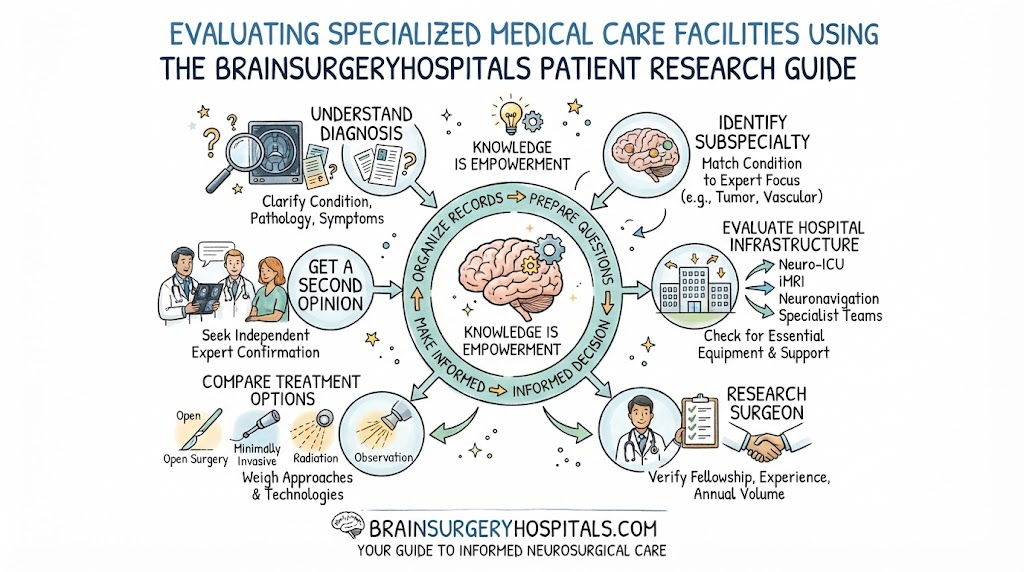
Receiving a neurological diagnosis can feel overwhelming, especially when surgical intervention emerges as a potential path forward. Patients and their families often face confusing medical terminology, complex imaging reports, and difficult decisions regarding their care. It is essential to carefully understand your condition, evaluate modern treatment modalities, compare specialized facilities, and investigate neurosurgical qualifications before committing to major interventions. Seeking a structured second opinion helps clarify diagnostic nuances and outlines safer, evidence-based surgical pathways. Utilizing dedicated educational platforms like BrainSurgeryHospitals enables individuals to independently research clinical services, prepare structured questions for consultations, and evaluate healthcare options without feeling rushed.
What Are Brain Surgery Hospitals?
Specialized brain surgery hospitals are advanced medical centers equipped with dedicated neurosurgical operating suites, neuro-intensive care units, and specialized neuro-imaging infrastructure designed specifically for cranial and central nervous system disorders. These institutions bring together coordinated multidisciplinary teams, including fellowship-trained brain surgeons, neurosurgeons, neuro-anesthesiologists, interventional neuroradiologists, and specialized clinical nurse coordinators. Because neurological subspecialties vary widely—ranging from skull-base tumor resection and vascular malformations to functional movement disorders—different centers maintain varying levels of clinical focus and technical experience. Patients should carefully identify and select healthcare institutions whose specialized neurosurgical departments routinely treat their exact anatomical condition rather than depending on general surgical facilities.
Why Choosing the Right Neurosurgery Hospital Matters
Selecting the appropriate medical facility is critical because complex cranial anatomy leaves virtually no margin for surgical error. Dedicated neurosurgery hospitals provide advanced diagnostic infrastructure, intraoperative neuro-monitoring, specialized neuro-ICU facilities, and round-the-clock intensive neurological coverage needed to prevent postoperative complications. Multidisciplinary teams collaborate seamlessly to tailor surgical plans, integrate non-surgical therapies, and coordinate structured neuro-rehabilitation programs for long-term functional recovery. Relying solely on general hospital reputation or marketing prestige can be misleading, as overall institutional standing does not guarantee specialized experience in specific neurosurgical subfields.
What Does BrainSurgeryHospitals.com Do?
BrainSurgeryHospitals.com functions as an independent, educational healthcare research directory designed to assist patients in navigating the landscape of neurosurgical care. The platform organizes complex medical information, enabling users to explore neurological conditions, diagnostic protocols, surgical methods, regional hospital capabilities, and physician backgrounds across one structured interface. It presents clear educational resources alongside attributable provider details, helping families organize records and formulate targeted questions for clinical evaluations without hosting promotional ratings or commercial rankings. The platform never offers clinical diagnoses, medical treatments, or quality guarantees, serving strictly as a research companion for informed healthcare decision-making.
How to Research Brain Surgery Hospitals
Navigating the healthcare system requires an organized, step-by-step approach to ensure you find qualified specialists and comprehensive facilities suited to your personal medical needs:
- Clarify the exact diagnosis: Obtain your complete pathology notes, diagnostic impressions, and formal imaging reports to understand the precise nature of the condition.
- Identify the relevant subspecialty: Match your specific condition with dedicated subspecialties such as neuro-oncology, cerebrovascular neurosurgery, or functional epilepsy surgery.
- Review hospital facilities: Confirm the facility maintains 24/7 dedicated neuro-intensive care units, advanced intraoperative MRI, and specialized neuro-navigation technology.
- Evaluate neurosurgeon experience: Research physician training, board certifications, subspecialty fellowship credentials, and annual procedural volumes for your specific procedure.
- Compare treatment approaches: Inquire about open microsurgical, endovascular, and minimally invasive options to understand all viable therapeutic routes.
- Seek an independent second opinion: Consult another qualified specialist to review scans, confirm the initial surgical indication, and discuss alternative treatment plans.
- Organize clinical documentation: Assemble your complete digital DICOM imaging discs, lab results, medication histories, and organized lists of clinical questions.
Common Brain Surgery and Neurosurgical Treatment Options
Neurosurgical care encompasses varied approaches depending on the diagnosis, lesion size, location, and overall patient health.
| Condition / Situation | Possible Treatment Categories | Important Considerations |
|---|---|---|
| Brain Tumors (Benign / Malignant) | Craniotomy for surgical resection, stereotactic biopsy, radiation therapy, chemotherapy | Maximizing tumor removal while safeguarding critical neurological pathways and functional speech/motor areas |
| Cerebral Aneurysms | Microsurgical clipping, endovascular coiling, flow diversion stenting | Anatomical location, aneurysm neck morphology, rupture status, and patient risk factors |
| Drug-Resistant Epilepsy | Resective surgery, laser interstitial thermal therapy (LITT), vagus nerve stimulation (VNS), responsive neurostimulation (RNS) | Detailed long-term video EEG monitoring, functional brain mapping, and structural neuro-imaging alignment |
| Hydrocephalus & Colloid Cysts | Endoscopic third ventriculostomy (ETV), ventriculoperitoneal (VP) shunt placement | Long-term shunt maintenance, natural CSF flow dynamics, and regular imaging follow-ups |
| Deep Brain Movement Disorders | Deep brain stimulation (DBS), focused ultrasound lesioning | Precise stereotactic electrode placement, comprehensive neurological evaluation, and postoperative device programming |
Brain Tumor Treatment
Modern brain tumor treatment requires highly individualized strategies determined by tumor histology, genetic markers, anatomical depth, and functional involvement. Treatment paths may combine microsurgical craniotomy for maximal safe resection, targeted needle biopsy, stereotactic radiosurgery, systemically delivered chemotherapy, or structured watchful waiting for slow-growing lesions. Multidisciplinary neuro-oncology tumor boards collaboratively assess every case to combine therapeutic modalities while minimizing cognitive and physical deficits. Protecting vital speech and motor pathways remains the primary objective, ensuring patient survival does not compromise long-term neurological function and quality of life.
Brain Aneurysm Surgery
A cerebral aneurysm represents a weakened, bulging section in an arterial wall that requires careful management to prevent or treat subarachnoid hemorrhage. When addressing brain aneurysm surgery, clinicians evaluate whether the vascular lesion is unruptured or ruptured, balancing microsurgical clipping against modern endovascular approaches like platinum coiling and flow-diverting stents. Microsurgical clipping involves placing a permanent titanium clip across the aneurysm neck via craniotomy, whereas endovascular techniques secure the vessel internally through catheter-guided access. Sudden severe headaches, vision changes, or altered consciousness demand immediate emergency medical intervention, though planned preventive treatments are carefully personalized based on aneurysm geometry, location, and patient health.
Epilepsy Surgery
When anti-seizure medications fail to control seizures, specialized epilepsy surgery offers a viable therapeutic pathway for patients with drug-resistant epilepsy. Candidates undergo extensive pre-surgical assessments, including continuous inpatient video-EEG monitoring, high-resolution functional MRI, PET scans, and neuropsychological evaluations to pinpoint the precise epileptogenic zone. Surgical techniques range from targeted focal resections and laser ablations to neuromodulatory device implants like responsive neurostimulation. Because surgical intervention is not appropriate for every seizure type, thorough evaluations by specialized comprehensive epilepsy centers ensure procedural safety and optimal seizure reduction.
Minimally Invasive Brain Surgery
Advancements in surgical technology have made minimally invasive brain surgery a standard option for selected cranial, skull-base, and ventricular conditions. Techniques such as neuro-endoscopy, endonasal transsphenoidal approaches, and stereotactic laser interstitial thermal therapy access deep lesions through small incisions or natural nasal corridors with minimal brain retraction. While these modern procedures often reduce postoperative wound discomfort and shorten hospital stays, they are not completely free of risk and require advanced surgical instrumentation. Suitability depends entirely on the tumor’s structural borders, vascular supply, underlying pathology, and the specialized technical training of the surgical team.
What Should You Compare Between Hospitals?
Evaluating prospective medical centers systematically helps families identify institutions equipped for comprehensive, safe neurosurgical care.
| Comparison Factor | Questions Patients Should Ask |
|---|---|
| Specialist Experience | How many procedures of this specific type does the neurosurgical team perform annually? |
| Diagnostic Infrastructure | Does the facility feature high-field intraoperative MRI, digital angiography, and continuous EEG monitoring? |
| Multidisciplinary Teams | Are neuro-oncologists, neuroradiologists, neuropathologists, and neuro-intensivists involved in care decisions? |
| Critical Care Support | Is there a dedicated neuro-intensive care unit staffed 24/7 by board-certified neuro-intensivists? |
| Rehabilitation Integration | Does the center provide immediate inpatient physical, occupational, and speech-language neuro-rehabilitation? |
| Second-Opinion Support | Does the institution offer structured processes for reviewing external scans and clinical records remotely? |
| Follow-Up Protocols | What continuous surveillance imaging and long-term recovery support systems are standard practice? |
How BrainSurgeryHospitals.com Can Help With Research
Receiving a complex neurological diagnosis requires access to clear, structured, and unbiased medical resources to guide your family’s next steps. BrainSurgeryHospitals.com serves as an educational bridge, allowing users to explore anatomical conditions, understand terminology, compare clinical pathways, and locate institutional directories aligned with their diagnosis. Families can review procedural descriptions, learn about necessary diagnostic testing, and identify experienced brain tumor surgery hospitals without commercial pressure or clinical sales funnels. While the platform assists patients in preparing informed questions for upcoming specialist appointments, it remains strictly an informational resource that does not replace direct clinical diagnosis, treatment planning, or professional neurosurgical consultation.
Real-Life Scenario: Researching a Brain Tumor
Consider an adult patient who experiences sudden neurological symptoms and receives an initial diagnosis of a deep-seated cranial tumor from a community hospital. Rather than hastily scheduling a procedure at a general surgical center, the patient and their family collect all digital MRI scans, pathology reports, and physician consultation notes. They use educational resources to understand the difference between gross total resection and stereotactic biopsy, research specialized neuro-oncological centers, and prepare specific questions regarding functional brain mapping. After obtaining an independent second opinion from a dedicated skull-base specialist, the patient confidently chooses an experienced multidisciplinary team equipped with intraoperative monitoring to protect speech and motor functions.
How to Use BrainSurgeryHospitals.com Responsibly
Using educational healthcare directories effectively requires an organized, objective mindset focused entirely on patient empowerment and clinical preparation. Begin by matching your confirmed clinical diagnosis with relevant informational guides, learning essential neurosurgical terminology and standard diagnostic criteria before evaluating facility profiles. Use the platform’s directories to identify centers with dedicated neurosurgical infrastructure, compile relevant medical histories, and outline structured questions for your appointments. Digital platforms should always serve as educational tools to facilitate productive conversations with medical providers, never as a replacement for hands-on clinical assessments, definitive diagnostic testing, or personalized medical care.
What, Why and How Framework
A structured decision-making framework simplifies the complex process of evaluating neurosurgical conditions, treatment approaches, and specialized clinical care teams.
| Stage | Focus Area | Core Actions and Practical Objectives |
|---|---|---|
| WHAT | Condition Clarification | Identify the precise anatomical diagnosis, pathology details, and primary surgical goals. |
| WHY | Purpose of Research | Understand why specialized expertise, advanced technology, and multidisciplinary care impact recovery. |
| HOW | Comparative Evaluation | Compare hospital infrastructure, surgical case volumes, neuro-ICU facilities, and specialist credentials. |
| REVIEW | Independent Confirmation | Seek an objective neurosurgery second opinion to confirm diagnostic accuracy and explore alternative options. |
| DECIDE | Collaborative Planning | Partner with qualified neurosurgeons to finalize an evidence-based, personalized treatment strategy. |
| FOLLOW-UP | Long-Term Care | Coordinate structured post-surgical recovery, neuro-rehabilitation, and scheduled surveillance imaging. |
Final Checklist Before Choosing a Neurosurgery Provider
Before finalizing your choice of surgical hospital and specialist, verify that each of the following critical areas has been thoroughly addressed:
- Diagnostic Confirmation: Confirm that your complete imaging series, blood panels, and biopsy reports have been comprehensively reviewed by the primary care team.
- Specialist Credentials: Verify that your lead neurosurgeon holds active board certifications, fellowship training, and extensive experience in your specific condition.
- Facility Readiness: Ensure the hospital features dedicated neurosurgical suites, intraoperative imaging technologies, and around-the-clock neuro-intensive care coverage.
- Treatment Understanding: Fully comprehend the proposed surgical plan, including expected procedural duration, tissue margins, and postoperative milestones.
- Risk vs. Benefit Analysis: Discuss potential neurological risks, surgical complications, and expected functional recovery timelines openly with your clinician.
- Exploration of Alternatives: Inquire about non-surgical therapies, stereotactic radiation, endovascular approaches, or watchful waiting options.
- Record Portability: Secure physical and digital copies of your complete medical charts, operative reports, and DICOM imaging discs for personal archives.
- Second Opinion Review: Obtain an independent secondary consultation to validate the surgical indication and explore alternative clinical approaches.
- Rehabilitation Planning: Identify physical, cognitive, and occupational neuro-rehabilitation resources available during immediate post-surgical recovery.
- Long-Term Monitoring: Clarify the ongoing schedule for postoperative follow-up appointments, medication management, and routine surveillance scans.
Real-Life Scenarios / Experiences
Evaluating complex neurosurgical conditions often involves navigating different clinical circumstances, as illustrated by these realistic care scenarios:
- Navigating an Unruptured Vascular Aneurysm: An individual discovers an unruptured cerebral aneurysm incidentally during an MRI for chronic migraines. Instead of immediately undergoing open surgery, they consult a cerebrovascular specialist who recommends a flow-diverting stent, explaining how endovascular techniques safely redirect blood flow while eliminating open craniotomy recovery time.
- Evaluating Drug-Resistant Seizures: A young adult struggling with medically refractory focal seizures consults a Comprehensive Epilepsy Center. Following comprehensive video-EEG monitoring and functional imaging, the multidisciplinary team identifies a localized cortical dysplasia, recommending targeted laser ablation (LITT) to achieve seizure freedom while preserving surrounding memory networks.
- Managing a Benign Skull-Base Meningioma: A patient diagnosed with an incidental, slow-growing skull-base meningioma seeks guidance on immediate resection versus surveillance. After consulting a skull-base neurosurgeon, they opt for structured annual high-resolution MRI monitoring, avoiding premature surgical risks while keeping intervention options open should growth occur.
Common Mistakes to Avoid
Avoiding common pitfalls during your medical research protects your safety and ensures you select the most appropriate neurosurgical care:
- Relying purely on commercial rankings: Selecting a hospital based solely on general marketing awards rather than specific subspecialty neurosurgical case volumes.
- Focusing exclusively on procedural costs: Prioritizing financial estimates over critical surgical safety standards, dedicated neuro-ICU facilities, and physician experience.
- Searching strictly by single procedure names: Overlooking comprehensive disease management programs by focusing narrowly on a single surgical method or brand name.
- Ignoring non-surgical management paths: Dismissing stereotactic radiosurgery, medical therapies, or structured observation when surgery may carry unnecessary risks.
- Failing to secure complete medical records: Arriving at specialist consultations without original DICOM imaging discs, formal radiologist reports, or medical summaries.
- Believing guaranteed surgical outcomes: Trusting promotional healthcare providers or clinics that claim complete cures or risk-free brain operations.
- Mistaking directories for clinical endorsements: Treating informational platform listings as formal medical clearances rather than objective educational tools.
- Delaying emergency care for online research: Postponing urgent clinical evaluation for acute neurological symptoms like sudden severe headaches, paralysis, or confusion.
How to Prepare for a Neurosurgery Consultation
Arriving fully prepared for your neurosurgical appointment ensures you make the most of your time with the specialist and gather clear information. Patients should bring all relevant physical records, including digital CD/DVD discs containing high-resolution MRI or CT scans, official radiologist reports, pathology slides, comprehensive medication lists, prior operative notes, and a structured symptom journal. During your consultation, ask direct questions regarding the surgeon’s annual volume with your specific condition, the primary goal of the operation, alternative non-surgical approaches, potential neurological risks, anticipated hospital length of stay, and specific postoperative neuro-rehabilitation plans.
Frequently Asked Questions
1. What is the difference between a neurologist and a neurosurgeon?
A neurologist specializes in the non-surgical medical diagnosis, management, and pharmacological treatment of nervous system disorders like migraines, neuropathy, and multiple sclerosis. A neurosurgeon undergoes specialized surgical training to perform operative interventions, biopsies, and microsurgical procedures on the brain, spine, and peripheral nerves when structural correction or surgical removal is required.
2. When should a patient seek a neurosurgery second opinion?
Patients should consider seeking an independent secondary evaluation whenever facing non-emergency cranial surgery, complex vascular diagnoses, skull-base tumors, or high-risk structural interventions. A second opinion confirms diagnostic accuracy, explores alternative minimally invasive or non-surgical options, and provides peace of mind regarding the safety and necessity of the proposed surgical plan.
3. Does a brain tumor diagnosis always require immediate open surgery?
No, a brain tumor diagnosis does not automatically require open surgical intervention. Treatment depends entirely on the tumor’s histological grade, anatomical location, growth rate, and symptoms. Many small, benign, or slow-growing lesions are managed through active surveillance imaging, stereotactic radiosurgery, targeted systemic medications, or minimally invasive needle biopsies.
4. What technologies are standard in modern brain surgery hospitals?
Advanced cranial centers feature dedicated neuro-intensive care units, high-field intraoperative MRI suites, stereotactic computer-assisted neuronavigation, functional brain mapping tools, and continuous intraoperative neuro-monitoring systems. These diagnostic and surgical technologies assist surgical teams in accurately targeting diseased tissue while preserving vital motor, sensory, and language pathways throughout the procedure.
5. How can I verify a neurosurgeon’s professional credentials?
You can verify a neurosurgeon’s credentials by checking their active board certifications through official national medical boards, reviewing their medical licensing history with state registries, and examining their clinical fellowship training backgrounds. Additionally, review their affiliated medical institutions, subspecialty research contributions, and annual procedural volumes for your specific condition.
6. What is the typical recovery period following cranial surgery?
Recovery timelines vary based on the procedure type, overall patient health, and lesion complexity. Patients undergoing minimally invasive endoscopic procedures may spend two to four days in the hospital and recover within weeks, whereas complex open craniotomies often require longer neuro-ICU monitoring, inpatient physical rehabilitation, and several months of recovery.
7. Are minimally invasive brain surgeries completely free of complications?
Minimally invasive neurosurgery reduces tissue disruption, wound pain, and hospital stays, but it is not completely risk-free. Every cranial procedure carries inherent risks of infection, cerebrospinal fluid leaks, hemorrhage, and neurological deficits. Suitability depends entirely on individual anatomy, lesion location, and the operating surgeon’s technical experience.
8. What diagnostic imaging is essential before brain surgery?
Comprehensive surgical planning requires high-resolution structural MRI with and without contrast, alongside specialized modalities like functional MRI (fMRI), diffusion tensor imaging (DTI) tractography, MR spectroscopy, or CT angiography. These detailed scans map critical vascular structures and essential cognitive, speech, and motor pathways surrounding the surgical corridor.
9. Can cerebral aneurysms be treated without opening the skull?
Yes, many cerebral aneurysms are treated through endovascular techniques that do not require an open craniotomy. Neuro-interventional specialists navigate micro-catheters through the femoral or radial artery to place platinum coils or flow-diverting stents within the aneurysm, sealing the weak vascular wall from inside the bloodstream.
10. How does a neuro-intensive care unit improve surgical safety?
A dedicated neuro-ICU provides continuous hemodynamic and neurological monitoring managed by specialized neuro-intensivists and critical care nurses. This level of care ensures early detection of cerebral edema, intracranial pressure spikes, or subtle vascular changes, reducing postoperative complications and improving overall neurological recovery after surgery.
11. What role does rehabilitation play after brain surgery?
Structured neuro-rehabilitation helps the brain adapt and recover functional abilities following surgical intervention. Multidisciplinary teams of physical, occupational, and speech-language therapists design targeted exercises to restore motor strength, cognitive processing, balance, and communication skills, helping patients regain independence and improve their long-term quality of life.
12. How does BrainSurgeryHospitals.com support healthcare research?
BrainSurgeryHospitals.com provides independent, educational information to help patients and families understand neurological conditions, compare hospital facilities, and research specialist backgrounds. The platform organizes complex medical information, outlines surgical options, and assists users in preparing structured questions for clinical consultations without offering medical diagnoses or commercial endorsements.
Conclusion
Navigating neurosurgical treatment requires an understanding of advanced hospital capabilities, specialized physician expertise, and diverse surgical methods. Taking time to systematically research multidisciplinary centers, compare minimally invasive and open surgical pathways, and seek independent second opinions empowers patients to make informed, confident healthcare decisions. Using educational platforms like BrainSurgeryHospitals to research condition categories and prepare for consultations helps families approach complex medical decisions with greater clarity. Ultimately, open collaboration with qualified medical professionals, supported by continuous learning and diligent review of clinical records, forms the true foundation of safe and effective neurological care.
