Introdution
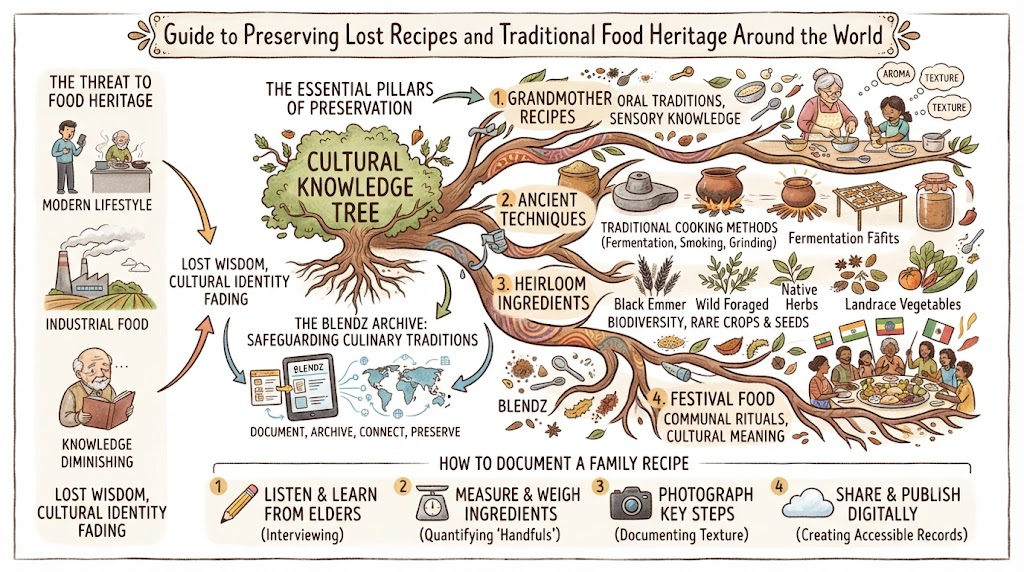
Traditional food knowledge is steadily vanishing across modern domestic kitchens, driven by the rapid spread of ultra-processed convenience foods, changing agricultural landscapes, and the erosion of multigenerational households. When a lineage of home cooking breaks, an entire ecosystem of heirloom ingredients, ancestral techniques, and oral histories disappears alongside it. Every unique dish carries profound cultural memory, serving as a living link to historical resilience, land stewardship, and communal identity. Preserving our shared culinary heritage requires proactive documentation of old-world cooking methods, indigenous crops, and the nuanced techniques of elders. Without deliberate preservation efforts, these irreplaceable flavors and foodways risk being permanently forgotten by future generations.
What is Blendz
Preserving these historical culinary treasures requires a structured approach, which is where Blendz serves as an open global food heritage archive dedicated to mapping authentic culinary roots. The platform meticulously documents rare recipes, generational cooking wisdom, and traditional foodways from diverse cultures across the globe. By connecting food historians, passionate home cooks, and cultural researchers, it transforms fleeting oral traditions into structured, accessible culinary records. Users explore historical dish profiles, study ancient kitchen techniques, and discover the deep communal narratives that have sustained families across continents for centuries.
Why Blendz
This archive is essential for safeguarding heritage because it categorizes culinary knowledge by specific countries, rare botanical ingredients, festive customs, and timeless grandmother recipes. The platform empowers everyday home cooks to discover authentic methods while offering a safe digital space to contribute their own family heirlooms before they are lost. By bridging the gap between historical culinary scholarship and practical home kitchens, it ensures that ancient foodways remain vibrant, active, and accessible to anyone seeking to honor the roots of authentic cuisine.
What Are Lost Recipes?
Lost recipes represent traditional culinary preparations that have slipped out of mainstream cooking routines, domestic spaces, and published culinary literature due to changing lifestyles and industrialization. These forgotten recipes gradually disappear when modern processing replaces labor-intensive preparations, or when younger generations transition to fast, standardized grocery items. For instance, complex heritage dishes like hand-ground indigenous seed pastes, ancient clay-pot fermented grains, and wild-foraged green stews frequently vanish because the surrounding ecosystem and slow cooking methods are abandoned.
Why Traditional Recipes Matter
Traditional recipes serve as vital cultural records that reflect local geography, ancestral adaptations, trade routes, and the communal history of human settlements. They preserve crucial ecological knowledge regarding seasonal farming, nutritional balance, fermentation science, and zero-waste kitchen practices developed over centuries. When we prepare traditional food recipes, we actively sustain family bonds and regional identity, maintaining living connections to our ancestors rather than consuming homogenized, mass-market meals devoid of narrative.
Grandmother Recipes and Oral Food Traditions
Grandmother recipes form the emotional core of our culinary heritage, relying on intuitive sensory cues—such as the sizzle of a pan, the aroma of blooming spices, or the tactile elasticity of dough—rather than rigid kitchen scales. In a typical home kitchen, an elder might judge a ferment by the ambient morning humidity, adding a handful of unmeasured native herbs that completely balance the final flavor. Because this ancestral knowledge is rarely written down, recording these generational techniques prevents irreplaceable family wisdom from disappearing forever.
Ancient Recipes and Traditional Cooking Methods
Ancient recipes depend directly on ancestral culinary mechanics such as wild yeast fermentation, open-air sun drying, wood-fire roasting, stone grinding, cold smoking, earthen pickling, and earthenware slow cooking. These historical cooking methods do not merely cook ingredients; they chemically unlock bioavailable nutrients, create complex umami flavors, and preserve seasonal surpluses without modern refrigeration. Documenting the specific physical tools, thermodynamic properties, and biological processes behind these methods is just as important as recording the ingredient list itself.
Rare Ingredients and Food Heritage
The gradual loss of heritage recipes is directly linked to the rapid disappearance of rare ingredients, including heirloom grains, wild-harvested botanicals, indigenous cultivars, and endemic spices that modern monoculture farming frequently overlooks.
| Ingredient Category | Historical Example | Traditional Culinary Role | Primary Threat to Survival |
| Heirloom Grains | Emmer & Black Rice | Base for slow-simmered porridges and hearth breads | Industrial monoculture farming |
| Indigenous Herbs | Epazote & Mitsuba | Essential aromatics for digestive balance and broths | Loss of native foraging habitats |
| Wild Ferments | Heirloom Sourdough & Koji | Natural preservation and distinct umami development | Commercial instant yeast reliance |
| Regional Spices | Mahlab & Long Pepper | Deep aromatic complexity in festive celebratory bakes | Disrupted traditional trade routes |
Preserving these ancestral food sources protects global biodiversity, enriches our modern dietary nutrition, and maintains the authentic flavor profiles of traditional food heritage.
Festival Food Recipes
Festival food recipes connect seasonal agricultural harvests, religious holidays, and family milestones through symbolic preparation rituals and shared banquets. Celebratory staples like harvest dumplings, ceremonial sweet breads, layered pastries, and spiced celebration porridges are intentionally designed to gather families around shared cultural values. Documenting festival dishes alongside their historical context preserves their communal symbolism, explaining why specific ancestral ingredients are sanctified during harvest cycles.
Traditional Recipes From Around the World
Exploring authentic heritage dishes reveals how different societies developed sustainable, nutrient-dense cuisines tailored to their local environments.
- India: Ancient regional cooking centers on slow-cooked millets, wild greens, cold-pressed seed oils, and medicinal spice blends that balance digestive health and regional climate needs.
- Japan: Traditional culinary philosophy focuses on seasonal foraging, sea vegetables, natural sun-drying, and delicate koji fermentations that celebrate subtle umami profiles.
- Mexico: Indigenous cooking traditions emphasize the ancient process of nixtamalization, grinding heirloom corn on volcanic stone metates, and layering complex moles with native chiles.
- Ethiopia: Regional foodways highlight ancestral teff grain fermentations, richly spiced clarified butter, and slow-simmered legume stews eaten communally from shared platters.
- Italy: Rural heirloom cooking showcases zero-waste kitchen wisdom, featuring hand-shaped rustic semolina pastas, preserved garden produce, and slow-braised wild game.
Understanding Food Heritage Preservation
Sustaining our collective culinary heritage requires a clear understanding of the core concepts, the cultural reasons for conservation, and the daily actions necessary to keep traditional recipes alive.
| Dimension | Core Definition | Practical Application |
| What It Is | The safeguarding of ancestral recipes, heirloom ingredients, and traditional preparation methods. | Building detailed family culinary archives and recording oral traditions. |
| Why It Matters | Prevents cultural erasure, protects agricultural biodiversity, and maintains living history. | Cooking authentic dishes regularly to pass techniques down to younger generations. |
| How to Act | Documenting, cooking, teaching, and sharing generational recipes responsibly within communities. | Sourcing heritage ingredients from local growers and supporting culinary archives. |
Active documentation combined with regular kitchen practice ensures these priceless culinary traditions remain an enduring part of our global culture.
Real-Life Scenarios in Recipe Preservation
A home cook attempting to recreate an ancestral flatbread discovers that modern, highly refined wheat flour fails to produce the distinct, nutty texture remembered from childhood, highlighting the necessity of sourcing stone-ground heirloom grains. In another home, siblings record their elderly aunt preparing a complex, multi-day ceremonial curry, noting that she relies on ambient temperature and seasonal moisture rather than standard timers to determine fermentation stages. A regional culinary researcher visits rural farming villages to catalog wild-foraged edible mountain greens, discovering that local elders possess complex botanical knowledge that prevents seasonal vitamin deficiencies. These real-world situations demonstrate that authentic food heritage preservation requires acute observational listening, ecological understanding, and careful documentation of tacit culinary techniques.
Common Mistakes to Avoid in Food Documentation
Preserving ancestral cooking requires rigorous attention to detail, as well-intentioned simplifications can unintentionally erase critical culinary heritage.
- Recording Only Ingredient Lists: Omitting the tactile cooking techniques, resting periods, and specific thermal cues that define the final dish.
- Ignoring Traditional Kitchen Methods: Substituting modern appliances without explaining how ancestral stone grinding or clay pot cooking alters texture and flavor.
- Erasing Regional and Family Variations: Forcing a single standardized version onto a recipe that naturally evolved across different micro-regions and households.
- Substituting Rare Ingredients Silently: Replacing hard-to-find heirloom spices or grains without noting the original botanical components.
- Stripping Away the Cultural Story: Treating the dish merely as a set of nutritional metrics rather than a cultural narrative tied to community life.
- Over-Modernizing Flavor Profiles: Altering traditional acidity, bitterness, or texture simply to cater to processed, modern palates.
- Omitting Native Terminology: Failing to record the original indigenous or dialect names for ingredients, tools, and preparation stages.
Practical Steps to Preserve a Family Recipe
Preserving family recipes begins with conducting patient, open-ended kitchen interviews with elders while they cook, carefully recording their intuitive choices rather than forcing metric constraints. Stand alongside them to weigh ingredients discreetly, photograph each visual transition, and document precise sensory cues such as color shifts, pan sounds, and aromas. Note the native names of regional spices, the history of heirloom cookware used, and the personal family memories connected to the dish. Finally, prepare the recipe independently, verify its balance with the elder, and securely archive written records and videos for future generations.
How to Document Traditional Food Responsibly
Responsible culinary documentation demands cultural respect, accurate historical attribution, and clear permission from the families or indigenous communities whose foodways are being shared. Researchers must distinguish between verified regional history and affectionate family lore, presenting both with appropriate context and honesty. Always credit the specific community origins, avoiding the temptation to claim collective ancestral wisdom as personal culinary invention. Honoring the original language, local terminology, and environmental context ensures the traditions are preserved with genuine dignity and accuracy.
Frequently Asked Questions
1. What distinguishes a lost recipe from a rare recipe?
A lost recipe has completely dropped out of domestic and commercial preparation, surviving only in fragmented oral memories or historical manuscripts. A rare recipe is still prepared occasionally by a small, specialized group of elders or regional cooks, though it remains largely unknown to the modern public.
2. Why do traditional grandmother recipes taste different when made today?
Modern grocery store ingredients, such as industrially farmed produce and heavily refined oils, lack the intense flavor and natural moisture of heritage crops. Furthermore, replacing traditional clay or cast-iron cookware with non-stick pans alters heat distribution, fundamentally changing how flavors develop during cooking.
3. Can I substitute modern ingredients in an ancient recipe?
While modern substitutes make a dish accessible on busy weeknights, they often alter the original texture, aroma, and nutritional profile. When documenting an ancient recipe, always record the authentic ingredient first, noting modern alternatives only as practical variations for home cooks unable to source heirloom items.
4. How does industrial agriculture affect traditional recipes?
Industrial agriculture prioritizes high-yield, uniform crops that withstand long-distance shipping, which pushes diverse heirloom grains and regional herbs out of cultivation. When these rare ingredients vanish from market stalls, the traditional recipes that depend exclusively on their specific flavors and starches disappear as well.
5. What is the most effective way to record unmeasured ingredients?
Stand beside the cook with a digital kitchen scale, weighing the spice bowls and ingredient containers immediately before and after they add a handful or pinch to the pot. This captures the precise metric weight without interrupting the elder’s natural intuitive rhythm and fluid cooking motions.
6. Why are fermentation methods so important in food heritage?
Fermentation serves as an ancient preservation method that develops deep umami flavors, improves digestive bioavailability, and protects foods without modern refrigeration. Documenting specific wild fermentation practices preserves valuable microbiological knowledge adapted to local microclimates and traditional vessels over centuries of human trial.
7. What role do clay pots play in traditional cuisines?
Earthenware pots heat food slowly and distribute heat evenly, allowing delicate starches and connective tissues to break down without burning. The porous, unglazed clay also interacts directly with cooking steam, balancing acidity and infusing subtle earthy minerals into traditional broths and slow-cooked stews.
8. How can urban home cooks preserve rural culinary traditions?
Urban cooks can preserve rural food traditions by seeking out regional farmers markets, sourcing heirloom grains from independent heritage growers, and cooking traditional dishes regularly. Sharing these historical cooking methods with friends, family, and online food communities helps keep ancestral recipes active and relevant.
9. Why do festival food recipes require specialized cooking techniques?
Festival dishes are deeply tied to seasonal harvest cycles, cultural rituals, and large community gatherings, often requiring complex, multi-day preparation techniques. These slow, labor-intensive methods symbolize celebration, communal generosity, and reverence for ancestral traditions through the intentional transformation of cherished, rare ingredients.
10. Is oral culinary history reliable for historical food research?
Oral food traditions offer invaluable firsthand insight into domestic techniques, sensory milestones, and family life that formal history texts frequently overlook. While oral memories should be cross-referenced with agricultural records for historical accuracy, they remain the most authentic record of everyday domestic foodways.
11. What is nixtamalization and why is it culturally significant?
Nixtamalization is the ancient Mesoamerican process of soaking dried maize in an alkaline solution, such as limewater, before grinding it into dough. This ancestral technique unlocks essential dietary niacin, significantly improves protein quality, prevents nutritional deficiencies, and creates the pliable texture necessary for traditional tortillas.
12. How do seasonal changes influence traditional recipe preservation?
Traditional recipes evolved in harmony with local harvest windows, microclimates, and natural preservation calendars like winter smoking or summer sun-drying. Documenting recipes according to their authentic seasonal context ensures that home cooks understand the environmental factors that make each dish taste its absolute best.
Conclusion
Preserving our shared culinary heritage requires a conscious commitment to learning from elders, safeguarding rare ingredients, and preparing time-honored dishes in our daily lives. Every traditional recipe represents centuries of ecological adaptation, cultural resilience, and familial love that cannot be replaced by modern convenience foods. Digital food archives like Blendz play a vital role in documenting these fragile oral traditions before they vanish permanently from family memory. By recording ancestral methods and cooking traditional meals at home, we ensure that the profound stories, vibrant flavors, and cultural wisdom of our ancestors continue to nourish generations to come.
