Introduction
Beyond the glare of crowded party strips and towering beachfront resorts lies a version of Goa that mass tourism rarely encounters. Wake up to the rhythmic clinking of clay teacups, the aroma of warm poi fresh from a village baker’s cycle, and the quiet rustle of swaying betel nut palms.
Choosing an authentic village homestay transforms a standard beach trip into an intimate cultural immersion. It opens the doors of ancestral Indo-Portuguese manors, introduces you to multi-generational family recipes, and anchors you directly into the slow, restorative heartbeat of genuine Goan life.
Why Goa is a must-visit city
Goa possesses an architectural and social heritage found nowhere else in South Asia. Four centuries of Portuguese governance intertwined with indigenous Konkani traditions created a unique cultural tapestry—visible in Latin quarters, ancestral mansions, and a cuisine defined by vinegar, fiery chillies, and coconut milk. Whether arriving through Manohar International Airport at Mopa (GOX), Dabolim Airport (GOI), or scenic Konkan Railway stations like Madgaon and Thivim, reaching quiet village settlements is swift and scenic.
The modern Goan homestay circuit connects travellers with warm host families across riverine islands, hinterland orchards, and heritage coastal villages. Instead of spending your days within isolated resort compounds, staying in a homestay embeds you in community-led preservation, local festivals, and village markets.
| Key Fact | Specification |
|---|---|
| Primary Homestay Hubs | Aldona, Olaulim, Fontainhas, Chandor, Curtorim, Raia |
| Best Travel Season | October to March (balmy breezes) and July to September (verdant monsoons) |
| Typical Architectural Style | Indo-Portuguese colonial, laterite stone villas, Mangalore-tiled roofs |
| Average Cost Range | ₹2,500 – ₹7,500 per night depending on heritage tier |
| Connectivity | Connected via NH-66, coastal ferries, and village back-roads |
| Culinary Focus | Authentic Saraswat Hindu curries, Christian Catholic roasts, and wood-fired bread |
Best Places or Experiences
Heritage streetscape of Fontainhas.
Riverfront backwaters in Olaulim.
Historic stone bridge in Aldona.
Centuries-old manor in Chandor.
Expansive paddy fields of Curtorim.
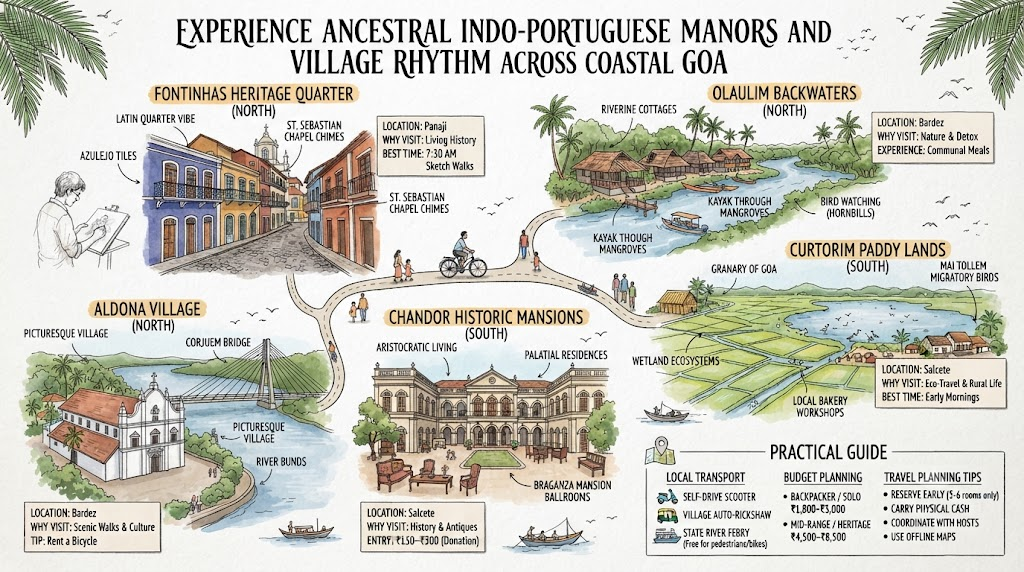
Fontainhas Heritage Quarter
Tucked beneath Altinho hill in Panaji, Fontainhas represents Asia’s only conserved Latin Quarter. The neighborhood retains its 18th-century grid layout, lined with Portuguese-era homes finished in vibrant lime washes of indigo, ochre yellow, and terracotta red. Wrought-iron balconies overlook cobblestone alleys where hand-painted azulejo ceramic tiles identify multi-generational families.
Staying in a heritage homestay here grants direct access to the creative capital while keeping modern commercial clutter at bay. You wake up to the chimes of the Chapel of Saint Sebastian and can stroll straight down to neighborhood bakeries serving fresh egg tarts before city foot traffic arrives.
- Location: Panaji, North Goa; approximately 28 km from Dabolim Airport.
- Why it is worth visiting: Living colonial heritage, quiet pedestrian lanes, and direct access to old-world Goan cafes.
- Best things to do: Join a morning architectural sketch walk, sample fresh custard tarts at Confeitaria 31 De Janeiro, and visit local art studios housed in restored residences.
- Best time to visit: 7:30 AM to 10:30 AM for quiet photography walks; November to February for pleasant weather.
- Ideal for whom: Solo travellers, architecture enthusiasts, creative writers, and couples.
- Travel tip: Several narrow alleys are restricted to motor vehicles; arrange luggage drop-offs on Rua 31 de Janeiro beforehand.
Olaulim Backwaters & Riverine Cottages
Set along the tranquil tributaries of the Mandovi River, Olaulim is an idyllic hamlet surrounded by tidal waterways and coconut plantations. The village is home to rustic, open-air homestays constructed from reclaimed laterite stone, bamboo, and earthen tiles that sit in harmony with the local landscape.
Here, days follow the movement of the tides rather than bus schedules. Hosts invite travellers to share communal meals cooked over earthenware pots, paddle through mangrove canals, and spot hornbills nesting in the fruit trees overhead.
- Location: Bardez Taluka, North Goa; roughly 11 km from Mapusa and 14 km from Panaji.
- Why it is worth visiting: Pristine mangrove backwaters, birdwatching, and genuine farm-to-table culinary hosting.
- Best things to do: Kayak through morning mangrove channels, cycle to village toddy-tapper groves, and fish from natural wooden jetties.
- Best time to visit: October through March for outdoor activities, or July for vibrant monsoon backwaters.
- Ideal for whom: Nature lovers, digital detoxers, birdwatchers, and families with young children.
- Travel tip: Network coverage can fluctuate near the riverfront; download offline maps before setting out from Mapusa.
Aldona Village & River St. Thomas Enclave
Aldona is widely recognized as one of Goa’s most picturesque historic villages. Centered around the white-washed Church of St. Thomas—built in 1596 above the Mapusa River—the village features winding avenues shaded by banyan trees and lined with heritage mansions.
Homestays in Aldona are typically restored family estates that have stood for well over a century. High timber ceilings, deep verandahs (balcões), and red-oxide flooring provide cool, quiet living areas without heavy dependence on modern air conditioning.
- Location: Bardez, North Goa; roughly 20 km northeast of Panaji.
- Why it is quick to reach: 45 minutes from Mopa International Airport via the NH-66 corridor.
- Best things to do: Walk across the century-old cable-stayed Corjuem suspension bridge, browse the weekly village farmers’ market, and birdwatch along the river bunds.
- Best time to visit: Late afternoons between 4:00 PM and 6:30 PM for golden light over the river.
- Ideal for whom: Slow-travel advocates, culture lovers, and multi-generational families.
- Travel tip: Rent a lightweight bicycle; the gentle village roads are ideal for low-speed cycling.
Chandor Historic Mansions
Located deep in South Goa, Chandor served as the ancient capital of the Kadamba dynasty under the name Chandrapur before Portuguese rule. The village is home to palatial residences such as the Fernandes House and the Braganza Pereira Mansion, which preserve historic family wings and courtyards.
Homestays operating in and around Chandor offer travellers a rare glimpse into aristocratic Goan-Portuguese living. Guests dine under crystal chandeliers, sleep in antique four-poster beds, and listen to first-hand accounts of local history from their hosts.
- Location: Salcete Taluka, South Goa; approximately 13 km east of Madgaon.
- Why it is worth visiting: Rare 17th-century aristocratic architecture, antique private collections, and layered regional history.
- Best things to do: Tour the Braganza mansion ballrooms, walk along the historic Kushavati riverbank, and attend village chapel feast days.
- Best time to visit: November through February; plan mansion visits between 10:00 AM and 2:00 PM.
- Ideal for whom: History buffs, antique collectors, and heritage travellers.
- Travel tip: Most private mansion tours rely on small voluntary donations; carry cash to support the families maintaining these estates.
Curtorim Paddy Lands & Lake Basins
Known as the “granary of South Goa,” Curtorim is an agricultural haven defined by sweeping rice fields, freshwater lakes, and ancient river irrigation systems (khazans). Village life here revolves around water bodies like Mai Tollem, which host thousands of migratory birds each winter.
Staying with an agricultural family in Curtorim connects guests with Goan rural traditions. You can walk the field ridges at sunrise, watch local farmers harvest native rice varieties, and taste traditional home-cooked dishes made with fresh local ingredients.
- Location: Salcete Taluka, South Goa; about 8 km from Madgaon Railway Station.
- Why it is worth visiting: Undisturbed wetland ecosystems, traditional farming systems, and rich bird life.
- Best things to do: Birdwatch around Mai Tollem lake with binoculars, cycle through scenic paddy fields, and attend local bakery workshops.
- Best time to visit: Early mornings from 6:30 AM to 9:00 AM, especially during the December to February migration season.
- Ideal for whom: Birdwatchers, eco-conscious travellers, and rural explorers.
- Travel tip: Bring a sturdy pair of waterproof sandals or boots if you plan to walk along muddy field bunds.
Offbeat Exploration: Hidden Gems Tourists Miss
Corjuem Fort
Situated across the river from Aldona, Corjuem Fort is a compact 18th-century laterite defense outpost. Unlike crowded coastal forts, Corjuem sees only a handful of daily visitors. Climbing its ramparts provides an uninterrupted 360-degree view of emerald river islands and dense mangrove forests.
San Jacinto Island
Connected to the mainland near Chicalim by a narrow bridge, this small island community has protected itself against commercial development. Visitors can wander past colorful ancestral cottages, climb to an abandoned 19th-century lighthouse, and enjoy expansive views across the Zuari estuary.
Macasana River Ferry Point
Tucked behind Curtorim, this quiet crossing is where flat-bottomed government ferries carry two-wheelers and pedestrians across the river. It offers a peaceful vantage point to watch local life unfold and spot kingfishers hunting over the water at dusk.
Detailed Practical Guidance for Travelers
| Destination | Standard Entry Fee | General Timings | Best Local Food Options Nearby | Recommended Nearby Attractions |
|---|---|---|---|---|
| Fontainhas | Free Public Access | Open 24 Hours (Best during daylight) | Viva Panjim (Goan Prawn Curry), Confeitaria 31 De Janeiro | Church of Our Lady of the Immaculate Conception |
| Olaulim Backwaters | Free (Guest Stays Vary) | Dawn to Dusk | Village home dining, fresh toddy-vinegar salads | Mayem Lake, Pomburpa Spring |
| Aldona Enclave | Free Public Access | 6:00 AM – 7:00 PM | Local tavern fish thalis, village podder stalls | Corjuem Fort, St. Thomas Church |
| Chandor Mansions | ₹150 – ₹300 (Voluntary donation) | 10:00 AM – 5:00 PM | Casa Antao, heritage home kitchens | Menezes Braganza House, Sanvordem River |
| Curtorim Wetlands | Free Public Access | 6:00 AM – 6:30 PM | Farmhouse rice lunches, local bakery snacks | Mai Tollem Lake, St. Alex Church |
Logistics & On-Ground Navigation
Local Transport Options
- Self-Drive Scooters & Motorbikes: Costing ₹350 – ₹500 per day, two-wheelers provide the flexibility needed to navigate winding village lanes.
- Village Auto-Rickshaws: Stationed near town church squares and markets; confirm fares before starting your journey.
- State River Ferries: Free for pedestrians and two-wheelers; these public vessels link river islands like Divar, Chorão, and Vanxim.
- Self-Drive Hatchbacks: Costing ₹1,200 – ₹1,800 per day, compact cars are ideal for moving luggage between North and South Goa homestays.
Budget Planning
- Backpacker / Solo Explorer Tier (₹1,800 – ₹3,000 per day): Traditional village guest rooms, scooter rentals, fuel, and meals at family-run tavernas.
- Mid-Range / Heritage Comfort Tier (₹4,500 – ₹8,500 per day): Private suites in restored Indo-Portuguese mansions, private vehicle hires, and curated cooking classes.
Safety and Inclusivity Tips
- For Families: Homestay properties with enclosed courtyards and home-cooked meals offer a secure, relaxed base for children.
- For Couples: Riverside cottages and heritage suites provide peaceful, private settings well away from noisy nightlife districts.
- General Village Safety: Village roads often have limited street lighting; carry a compact flashlight when walking back from dinner after dark.
Strategic Travel Planning Guardrails
Travel Planning Tips for Goa
- Reserve Village Homestays Early: Because authentic homestays operate with only 3 to 6 rooms, secure dates at least two months in advance.
- Carry Physical Cash: Small village bakeries, auto-rickshaws, and seasonal produce markets rarely accept cards or digital wallets.
- Pack Modest Clothing: When visiting village chapels, churches, and temples, ensure shoulders and knees are covered.
- Coordinate Arrivals with Hosts: Rural homestays lack 24-hour reception desks; update your host with your estimated arrival time.
- Use Offline Mapping: Mobile internet can drop in low-lying river areas and hinterlands; download regional maps to your phone.
Common Mistakes to Avoid
- Treating Homestays Like Commercial Hotels: Expecting 24-hour room service disregards the personal hospitality of family-run stays.
- Driving Heavy SUVs on Rural Paths: Narrow village roads between garden walls are best navigated in compact vehicles or on two-wheelers.
- Skipping Meals Cooked by Hosts: Missing a host-prepared dinner means passing up some of the finest authentic food in the state.
- Littering in Rural Areas: Village communities maintain their own waste systems; carry personal trash back to main town collection bins.
- Making Loud Noise Late at Night: Rural Goan neighborhoods value quiet evenings; avoid playing loud music outdoors past 9:00 PM.
Suggested Itinerary Blueprints
1. Day Quick Dash (Central Heritage Loop)
- Morning: Begin with a 7:30 AM walking tour of Fontainhas, followed by breakfast at a heritage bakery.
- Afternoon: Drive to Old Goa to view the historic basilicas, then take the short river ferry across to Divar Island.
- Evening: Watch the sunset over the Mandovi backwaters before checking into an inland heritage home.
2. Day Deep-Dive (North Goa Backwaters to Hinterlands)
- Day 1: Settle into an Aldona homestay, explore Corjuem Fort, and bicycle through surrounding villages.
- Day 2: Kayak through the mangrove channels of Olaulim, visit a local cashew plantation, and dine at a village tavern.
3. Complete Weekend Travel Plan (South Goa Heritage Circuit)
- Friday: Arrive in Curtorim, unpack in a restored farmhouse, and take an evening walk around Mai Tollem lake.
- Saturday: Explore the historic mansions of Chandor, learn to make traditional Goan curries with your host, and enjoy courtyard tea.
- Sunday: Take a morning drive to Cabo de Rama Fort, explore a secluded southern beach, and return for a sunset dinner.
Common Tourist Mistakes to Avoid
- Geographic Blunders: Booking a homestay in South Goa while planning night excursions in northern beach towns burns multiple hours on the road.
- Commercial Traps: Spending all your meals at commercial beach strips rather than seeking out regional home kitchens and village bakeries.
- Neglecting Modern/Alternative Zones: Skipping creative inland neighborhoods like Assagao and Siolim, which host quiet art studios and bookstores.
- Transport Overpayment: Agreeing to unmetered airport taxis without comparing rates against official prepaid counters or app services.
- Luxury Dining Bias: Eating exclusively at high-end hotel restaurants, which often misses out on authentic, traditional regional flavors.
Frequently Asked Questions
1. What makes a Goan homestay different from a resort?
Homestays connect you directly with local families, offering home-cooked traditional meals and historic architecture in residential villages. Resorts, by comparison, provide standardized commercial amenities along busy beachfronts, often isolating visitors from the everyday culture of the surrounding community.
2. Are homestays in Goa safe for solo female travellers?
Yes, village homestays in Goa are among the safest lodging options available. Host families reside on the property, providing personal assistance, safe local transport contacts, and helpful advice regarding neighborhoods and travel routes throughout your stay.
3. Do Goan homestays accommodate dietary preferences like vegan or vegetarian?
Most homestay hosts are happy to tailor home-cooked meals to vegetarian, vegan, or gluten-free preferences if given advance notice. Village markets supply fresh local produce, allowing families to prepare flavorful plant-based curries and vegetable dishes easily.
4. How do I get to rural homestays from the new Mopa Airport?
Prepaid taxi counters and app-based cabs operate directly outside the terminal at Mopa (GOX). Alternatively, you can ask your homestay host to arrange a trusted village taxi driver to meet you upon arrival at the gate.
5. What is the usual check-in etiquette for a Goan homestay?
Treat the residence like a friend’s family home. Let hosts know your expected arrival time in advance, take off your outdoor shoes if requested, and respect common-area quiet hours, especially during afternoon rest times and late at night.
6. Can I find high-speed internet in Goan village homestays?
Many restored village properties feature high-speed fiber broadband to accommodate remote workers. However, it is always wise to confirm upload and download speeds directly with the host if you need to take video conference calls during your visit.
7. Are children welcome at heritage homestays?
Most properties welcome families warmly, offering open lawns, fruit orchards, and home-cooked meals. Keep in mind that older heritage homes may contain valuable antiques, meaning young children should be supervised around vintage furniture and display items.
8. What meals are usually included with a homestay booking?
Fresh home-cooked breakfasts are typically included in room rates. Many hosts also offer home-cooked lunches or dinners upon request for an added cost, providing an easy and authentic way to enjoy regional Goan specialties.
9. Do I need to rent my own vehicle when staying in a village?
Renting a scooter, motorbike, or compact car is recommended when staying outside major towns. Village buses do run during daylight hours, but having your own wheels gives you the freedom to explore backwaters and nearby towns whenever you like.
10. What is the best season to experience local Goan homestay life?
November to February delivers comfortable, sunny days that are ideal for outdoor walks and birdwatching. Meanwhile, the monsoon months of July through September bring lush greenery and cool rains, showing off a slower, restorative side of the countryside.
11. How do homestays support sustainable tourism in Goa?
Homestays direct tourism revenue straight to residents and village businesses instead of multinational hospitality chains. They help fund the upkeep of historic houses and support local fishermen, organic farmers, and traditional bakers within the community.
12. What authentic souvenirs can I purchase directly from village hosts?
Guests can often buy homemade seasonal mango or lime pickles, fresh cashew nuts, and small-batch coconut vinegar directly from local families. These handmade pantry items make authentic gifts that carry the flavors of the village home with you.
Conclusion
Choosing a village homestay over a crowded coastal resort replaces generic vacation routines with authentic cultural discovery. Sitting on a sunlit veranda with your hosts, watching river waters wind past village palms, and sharing freshly prepared meals connects you with the living spirit of Goa—offering a quiet, restorative perspective on travel that stays with you long after you head home.
