Introduction
Trade the thumping basslines of crowded commercial beach strips for the soothing whisper of rustling coconut fronds and cascading streams. While mainstream coastal tourism frequently conjures visions of overcrowded resort corridors, overflowing plastic waste, and congested party strips, Goa holds an ancient, deeply rooted green soul.
Choosing sustainable sanctuaries invites you into intimate contact with the genuine rhythm of the land. Here, traditional mud-and-thatch architecture, indigenous permaculture orchards, and bird-filled mangrove forests replace steel and concrete. Eco-conscious travelers discover an authentic immersion that nurtures both the soul and the fragile ecosystems of the Konkan coast.
Why Goa is a must-visit city
Goa stands as a vital biodiversity crossroads where the sapphire waters of the Arabian Sea meet the primeval rainforests of the Western Ghats, a UNESCO-recognized biological global hotspot. Far beyond its four-hundred-year Portuguese colonial history, the state preserves sacred community forests known as Devrais, indigenous Khazan saltwater filtration farming systems, and dense river ecosystems. These natural systems foster remarkable native biodiversity found nowhere else on earth.
Accessing this ecological haven is seamless for international backpackers, mindful families, and wellness seekers alike. The dual gateway of Manohar International Airport (MOPA) in the north and Dabolim Airport (GOI) in central-south Goa connects the state to major worldwide transit hubs. Smooth four-lane highway arteries like NH-66 and rail junctions at Madgaon and Thivim offer easy transitions from bustling transit hubs to tucked-away forest reserves.
The ecological travel circuit splits into two captivating terrains: the serene coastal backwaters and secluded southern lagoons, contrasted against the mist-shrouded foothills of Chorla Ghats and Mollem National Park. Whether you seek cliffside ocean breeze retreats or dense jungle hideaways, Goa’s sustainable stays honor local ecology with refined, low-impact luxury.
| Key Fact | Regional Detail |
|---|---|
| Ecological Geography | Western Ghats Rainforests, Estuarine Backwaters, & Coastal Dunes |
| Protected Wilderness Areas | Bhagwan Mahavir Wildlife Sanctuary, Cotigao, Mhadei, & Salim Ali Bird Sanctuary |
| Best Travel Season | October to March (Pleasant coastal breezes) & July to September (Lush monsoon foliage) |
| Primary Sustainability Practices | Solar microgrids, native laterite masonry, zero-plastic zones, & permaculture dining |
| Transit Connectivity | MOPA Airport (North), Dabolim Airport (South), Madgaon (MAO) & Thivim (THVM) Railway |
| Ideal Circuit Duration | 4 to 7 Days across coastal eco-lodges and hinterland jungle retreats |
Best Places or Experiences
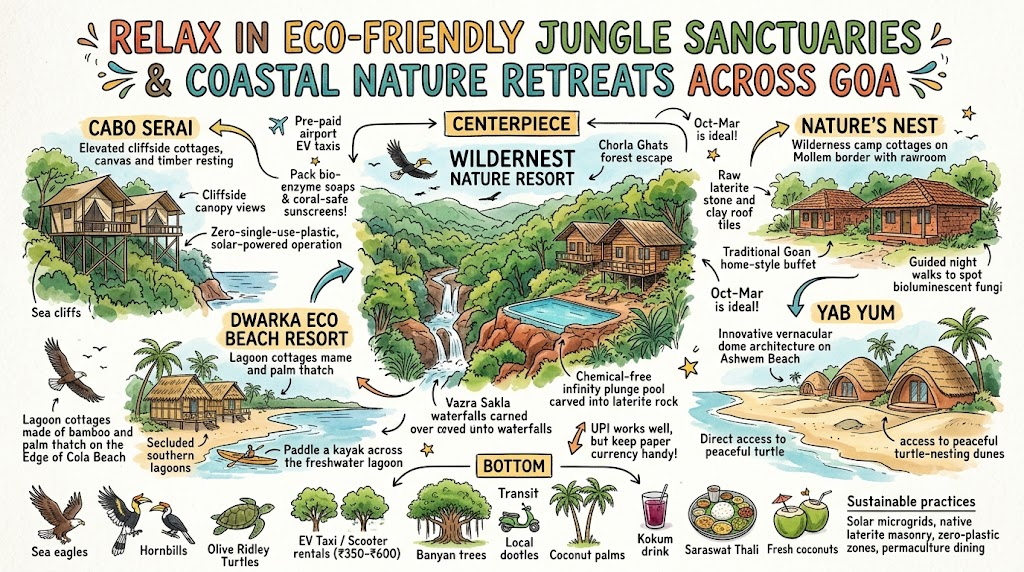
Wildernest Nature Resort forest escape.
Cabo Serai cliffside canopy view.
Dwarka Eco Beach Resort lagoon cottages.
Nature’s Nest wilderness camp cottages.
Yab Yum sustainable beachfront dome.
Wildernest Nature Resort
Perched at an elevation of 800 meters within the lush Swapnagandha Valley of the Chorla Ghats, Wildernest Nature Resort demonstrates how sustainable architecture can blend seamlessly into pristine montane rainforests. Handcrafted entirely from indigenous timber, untreated stone, and natural fibers, each cottage frames sweeping vistas across Vazra Sakla waterfalls without cutting down a single indigenous canopy tree.
The retreat operates as an active ecological conservancy, running comprehensive wildlife monitoring programs alongside Mhadei Wildlife Sanctuary. The central architectural masterpiece is a chemical-free infinity plunge pool carved directly into living laterite rock, filled with natural mountain spring water and positioned over deep misty gorges.
- Location: Chorla Ghats, Sattari District; approximately 65 km northeast of Panaji. wildernest.bestweekenddeals.com
- Why it is worth visiting: Unmatched immersion in the Western Ghats cloud forest featuring birdwatching, bio-diverse nature walks, and genuine Goan rural hospitality.
- Best things to do: Take a dawn birding walk to spot Malabar pied hornbills, swim in the natural rock infinity pool overlooking the valley, and attend an evening folk storytelling session around community hearths.
- Best time to visit: June to October for misty monsoon waterfalls, or November to February for crisp, cool mountain mornings.
- Ideal for whom: Nature enthusiasts, ornithologists, eco-conscious couples, and wellness seekers. Goibibo
- Travel tip: The high-altitude ghat roads have patchy mobile networks; pre-download your offline navigation maps before ascending from Sanquelim.
Cabo Serai
Nestled within fourteen acres of untouched coastal forest perched on the cliffs of Cabo de Rama, Cabo Serai exemplifies sustainable luxury living. Built entirely from upcycled native timber, breathable natural canvas, and regional laterite stone, the elevated cottages rest on natural stilts to leave original root systems and wildlife paths undisturbed.
The retreat’s culinary ethos is rooted in permaculture, serving meals prepared from ingredients sourced within a thirty-kilometer radius or harvested from their own organic gardens. Wake up to expansive views across the turquoise sea, where resident white-bellied sea eagles ride thermals right past private wooden sundecks.
- Location: Cabo de Rama, Canacona Taluka; roughly 30 km south of Margao.
- Why it is worth visiting: Secluded oceanfront cliff views paired with strict zero-single-use-plastic, solar-powered operation.
- Best things to do: Hike down the private forest path to pristine pebble beaches, practice open-air cliffside yoga, and enjoy solar-lit alfresco dinners under ancient banyan trees.
- Best time to visit: October to April for calm seas, dolphin sightings, and evening coastal breezes.
- Ideal for whom: Discerning couples, honeymooners, and slow-travel advocates craving private luxury.
- Travel tip: Sturdy hiking shoes with solid grip are essential for walking the cliffside forest trails leading to the shoreline.
Dwarka Eco Beach Resort
Hidden away on the edge of the secluded Cola Beach lagoon, Dwarka Eco Beach Resort offers a true sanctuary between freshwater palm estuaries and the open ocean. The resort features rustic, thatched-roof chalets constructed from coconut wood, bamboo mats, and woven palm fronds, allowing ocean breezes to cool the rooms naturally without high-draw air conditioning.
The property was planned around existing palm groves, preserving the natural estuary where freshwater mountain streams meet the Arabian Sea. Guests experience an unhurried, off-grid escape where the sounds of breaking waves and rustling leaves replace traffic and televisions.
- Location: Cola Beach, South Goa; approximately 34 km south of Margao.
- Why it is worth visiting: Rare dual-waterfront access featuring a calm freshwater lagoon set just yards away from the Arabian Sea.
- Best things to do: Paddle a kayak across the tranquil freshwater lagoon, enjoy fresh seafood curries under coconut thatch, and stargaze on quiet sands away from city light pollution.
- Best time to visit: November to March when the ocean stays calm and seasonal wooden chalets operate fully.
- Ideal for whom: Off-grid travelers, artists, solo wanderers, and romantic couples.
- Travel tip: Access requires climbing down a steep cliff staircase; pack light duffel bags instead of heavy rolling luggage.
Nature’s Nest
Situated on the western boundary of Bhagwan Mahavir Wildlife Sanctuary in Mollem, Nature’s Nest is a pioneer in responsible ecological tourism and grassroots conservation. Built with raw laterite stone and traditional clay roof tiles, its rustic cottages remain naturally cool throughout the tropical day.
The retreat runs an organic farm, harvests natural spring water, and operates an authentic kitchen powered by seasonal backyard vegetables, kokum, and native spices. Certified naturalists lead every excursion, actively contributing field observations toward regional leopard and reptile conservation projects.
- Location: Surla, Mollem border, Dharbandora; approximately 52 km east of Panaji.
- Why it is worth visiting: Direct access to protected wilderness along with expert naturalist guidance through biodiversity hotspots.
- Best things to do: Join guided night walks to discover bioluminescent fungi and endemic amphibians, go on jeep safaris to Dudhsagar Falls, and tour the on-site permaculture spice plots.
- Best time to visit: August to December for lively wildlife activity, flowing forest streams, and vibrant greenery.
- Ideal for whom: Wildlife photographers, adventure travelers, families with curious children, and birdwatchers. Nature Trails
- Travel tip: Bring along a UV flashlight for night trail walks to spot bio-fluorescent scorpions and glowing forest undergrowth.
Yab Yum Resort
Set in an organic grove of coconut and banana palms behind Ashwem Beach, Yab Yum Resort provides a peaceful coastal sanctuary along the North Goa shoreline. Its iconic accommodation consists of distinctive “domes” hand-built using local clay, straw, lava stone, and palm thatch. This traditional construction maintains an airy, temperate microclimate without industrial energy use.
Soul Travel India
The property operates a community composting system, recycles greywater into lush flowering gardens, and sources morning staples from nearby farming families. The open-air living pavilions and sandy pathways foster a quiet, grounded seaside atmosphere.
- Location: Ashwem Beach, Mandrem, Pernem Taluka; approximately 32 km north of Panaji.
- Why it is worth visiting: Innovative vernacular dome architecture paired with direct access to peaceful, turtle-nesting coastal dunes.
- Best things to do: Enjoy farm-fresh breakfasts served on your private garden veranda, take sunrise yoga classes under palm fronds, and walk the quiet sands of Ashwem beach. Soul Travel India
- Best time to visit: November to March for sunny weather, seasonal dining, and peaceful swimming.
- Ideal for whom: Eco-minded digital nomads, yoga practitioners, families, and solo wellness travelers.
- Travel tip: Book the coastal eco-domes several months ahead, as winter seasonal capacity fills rapidly.
Offbeat Exploration: Hidden Gems Tourists Miss
Tambdi Surla Riverine Trail & Temple
Deep within the forests of Mollem lies the 12th-century Mahadev Temple of Tambdi Surla, hand-carved from weather-resistant black basalt rock by Kadamba artisans. Beyond the temple structure, an unmarked forest trail runs alongside clear river pools where pristine, freshwater swimming spots stay framed by wild bamboo groves and butterfly swarms.
Galgibaga Olive Ridley Nesting Estuary
Located at the southernmost tip of Canacona, Galgibaga Beach is one of Goa’s strictly protected nesting sanctuaries for endangered Olive Ridley sea turtles. Free from permanent concrete constructions, noisy beach shacks, and bright lights, this silent shoreline bordered by casuarina groves offers an introspective coastal walk.
Savoi Spice Plantation Village Trail
Tucked into the inland hills of Ponda, this two-hundred-year-old organic farm uses zero artificial chemicals to cultivate betel nuts, cinnamon, nutmeg, and black pepper. Walking the irrigation pathways reveals ancient rainwater harvesting cisterns and sustainable Goan agricultural heritage that has endured for centuries.
Detailed Practical Guidance for Travelers
| Destination | Standard Entry Fee | General Timings | Best Local Food Options Nearby | Recommended Nearby Attractions |
|---|---|---|---|---|
| Wildernest Nature Resort | ₹7,500 – ₹11,000 (Per room/night, all-inclusive) | Check-in: 1:30 PM / Check-out: 11:30 AM | On-site Randhan Kitchen (Saraswat Thali, Pitla Bhakri) | Vazra Falls, Swapnagandha Valley Viewpoint |
| Cabo Serai | ₹14,000 – ₹22,000 (Per room/night) | Check-in: 2:00 PM / Check-out: 11:00 AM | On-site organic dining (Seafood Caldine, Kokum Salad) | Cabo de Rama Fort, Kakolem Secret Beach |
| Dwarka Eco Beach Resort | ₹8,500 – ₹13,000 (Per room/night) | Check-in: 1:00 PM / Check-out: 10:30 AM | Resort thatched kitchen (Grilled Mackerel, Veg Xacuti) | Cola Beach Freshwater Lagoon, Agonda Cliffs |
| Nature’s Nest | ₹4,200 – ₹6,800 (Per room/night) | Check-in: 12:00 PM / Check-out: 11:00 AM | Traditional Goan home-style buffet (Tambdi Bhaji, Tisriya) | Tambdi Surla Temple, Dudhsagar Safari Gate |
| Yab Yum Resort | ₹6,000 – ₹10,500 (Per room/night) | Check-in: 2:00 PM / Check-out: 11:00 AM | La Plage French bistro, local fish curry shacks | Morjim Dune Reserve, Mandrem Creek |
Logistics & On-Ground Navigation
Local Transport Options
- Self-Drive Electric Vehicles & Scooters: Electric and petrol two-wheelers rent for ₹350 to ₹600 per day. They provide quiet, fuel-efficient access to narrow village lanes and secluded forest paths.
- Pre-Paid Airport EV Taxis: Official government-regulated EV taxi counters operate at both MOPA and Dabolim airports. They offer upfront flat-rate fares without roadside price negotiations.
- Goa State KTC Buses: State-run Kadamba buses travel between major bus terminals like Mapusa, Panaji, and Margao for minimal fares (₹20 to ₹60). They offer an authentic, low-carbon way to get around.
- Chauffeur Hired Cabs: For navigating remote spots like Chorla Ghats, hiring an experienced local driver familiar with hilly terrain (₹2,500 to ₹3,800 per day) provides safe transit during heavy monsoon rains.
Budget Planning
- Budget / Backpacker Tier (₹1,800 – ₹2,800 per day): Stays in sustainable bamboo hostels or basic village homestays (₹800–₹1,400), shared public bus travel or rental scooters (₹350–₹500), and simple meals at local family-run eateries (₹600–₹900).
- Mid-Range / Comfort Eco-Tier (₹6,500 – ₹12,000 per day): Stays in verified eco-cottages or wilderness tented camps (₹4,500–₹8,500), dedicated rental vehicle transport (₹1,200–₹1,800), and farm-to-table organic restaurant dining (₹1,500–₹2,500).
Safety and Inclusivity Tips
- Families: Resorts like Nature’s Nest provide secure, educational spaces where children can safely discover wildlife alongside verified conservation experts. Pack child-safe botanical mosquito repellents for open jungle trails.
- Couples: Hidden cliffside stays such as Cabo Serai offer secluded, peaceful environments. Be sure to carry pocket flashlights when walking unpaved coastal paths after twilight.
- General Safety: Never swim in secluded coastal waters or swollen jungle rivers during monsoons when lifeguards are absent. Always drink reverse-osmosis filtered water from reusable glass bottles rather than relying on unsealed roadside water sources. Nature’s Nest Goa
Strategic Travel Planning Guardrails
Travel Planning Tips for Goa
- Align Your Timing with the Season: Choose October through March for pleasant ocean swims, or travel between July and September to experience misty Western Ghats waterfalls and verdant foliage.
- Carry Backup Cash: While UPI digital payments work well in coastal towns, remote ghats and forest checkpoints frequently lack cellular coverage. Keep ₹2,000 to ₹3,000 in paper currency handy.
- Pack Fragile-Ecosystem Gear: Pack mineral-based, coral-safe sunscreens, bio-enzyme soaps, personal water purification bottles, and lightweight cotton garments.
- Respect Sacred Groves (Devrais): Step lightly through indigenous village forests. Avoid loud portable speakers, and carry out all non-biodegradable waste.
- Pre-Book Forest Stays: Because eco-resorts intentionally limit their guest capacity to protect local habitats, reserve rooms two to four months ahead for peak winter travel.
Common Mistakes to Avoid
- Overcrowding Your Daily Schedule: Trying to combine visits to northern beaches and deep southern sanctuaries on the same afternoon wastes precious vacation time in transit traffic.
- Assuming Eco-Lodge Means Low Comfort: Do not mistake sustainable retreats for primitive camping. Most Goan eco-resorts deliver refined comfort and outstanding dining without unnecessary environmental waste.
- Renting High-Emissions Vehicles: Avoid renting heavy, overpowered vehicles for narrow village roads where light electric scooters or compact cars travel far more efficiently.
- Ignoring Local Konkan Food: Skipping small village eateries in favor of imported fast-food items misses the rich heritage of local fish curries, red rice, and kokum drinks.
- Neglecting Forest Safety Guidelines: Never leave marked resort paths in wildlife sanctuaries without a certified local guide.
Suggested Itinerary Blueprints
1-Day Quick Dash (The Inland Verdant Circuit)
- Target Audience: Time-sensitive travelers seeking an authentic forest escape away from coastal beach crowds.
- Morning: Depart Panaji at 6:00 AM toward Mollem. Enjoy breakfast along the forest edge, followed by a guided botanical walk around Nature’s Nest.
- Midday: Visit the ancient 12th-century Tambdi Surla Mahadev Temple, followed by a traditional Saraswat lunch served on fresh banana leaves.
- Late Afternoon: Drive up the foothills to the Swapnagandha Valley viewpoint for sunset tea, returning to your coastal base by late evening.
2-Day Deep-Dive (Western Ghats Cloud Sanctuary)
- Day 1: Head up into the scenic heights of Chorla Ghats. Check into Wildernest Nature Resort, swim in their natural rock infinity pool, and set out on a guided sunset ridge walk. Dine on authentic regional Chulha cuisine by the evening hearth. Goibibo
- Day 2: Rise early at 6:00 AM for guided canopy birdwatching. After a hearty breakfast of local millet bread, hike to Vazra Sakla waterfall viewpoints. Head back down the ghats by 3:00 PM, stopping by an organic spice plantation in Ponda for fresh evening tea.
Complete Weekend Travel Plan (South Coast Conscious Loop)
- Friday: Arrive at Cabo Serai in Canacona. Unwind with an open-air cliffside yoga session, followed by an evening sunset dinner overlooking the Arabian Sea.
- Saturday: Take a morning hike down to Cabo de Rama Fort and its tucked-away beach. Drive 30 minutes north to Cola Beach for an afternoon of kayaking in the freshwater lagoon at Dwarka Eco Resort, followed by a beachfront dinner under palm thatch.
- Sunday: Take a peaceful sunrise walk along the quiet shores of Galgibaga turtle beach. Enjoy a traditional Goan fish curry lunch at a family-run tavern in Palolem, before catching your evening flight out from Dabolim or MOPA.
Common Tourist Mistakes to Avoid
- Geographic Blunders: Don’t book a morning trek in Mollem National Park while staying at a beach resort in Arambol. Crossing the state east-to-west during busy morning traffic eats up more than three hours on the road.
- Commercial Traps: Don’t spend precious vacation days wandering noisy, generic souvenir strips in Calangute. Instead, visit local Friday markets in Mapusa or artisan workshops in Panaji to buy authentic terracotta pottery and handloom textiles.
- Neglecting Modern/Alternative Zones: Don’t miss out on modern cultural hubs like Aldona, Siolim, and Assagao. These inland villages showcase historic Portuguese architecture, contemporary art spaces, and innovative farm-to-table dining.
- Transport Overpayment: Avoid taking unmetered private tourist taxis without agreeing on rates first. Instead, use official GoaMiles app rates or book prepaid airport transport counters to ensure fair pricing.
- Luxury Dining Bias: Don’t limit your meals to high-end hotel buffets. Skipping neighborhood eateries means missing the true soul of Goan cuisine, like morning pão from local bakeries and homestyle thalis.
Frequently Asked Questions
1. What makes an eco-friendly resort in Goa genuinely sustainable?
Authentic eco-resorts focus on measurable environmental protection. They rely on renewable solar power, build with renewable local materials like bamboo and laterite stone, eliminate single-use plastics, and recycle greywater for organic gardens. They also hire local village staff and serve food made with seasonal, locally sourced ingredients.
2. Are eco-resorts in Goa comfortable and suitable for luxury travelers?
Yes, modern eco-resorts provide wonderful luxury through personalized service and peaceful natural settings rather than wasteful consumption. Guests enjoy private cliffside sundecks, organic open-air spa treatments, comfortable linens, and farm-to-table dining—all arranged to leave local wildlife and surrounding nature undisturbed.
3. Do eco-friendly resorts in Goa provide air conditioning in rooms?
Many jungle and coastal eco-retreats choose traditional architectural designs—such as high thatched roofs, breathable mud-plaster walls, and wide open-air verandas—that catch natural breezes without requiring high-energy air conditioning. However, premium suites often provide energy-efficient climate control when needed.
4. Which part of Goa is best for a nature-focused eco-resort stay?
South Goa (around Canacona, Netravali, and Cola) and the eastern Western Ghats (around Chorla Ghats and Mollem) are ideal for nature lovers. These areas feature quiet beaches, protected wildlife sanctuaries, and mountain forests, staying far clearer of noisy crowds than central coastal party strips.
5. How do Goan eco-resorts manage drinking water without single-use plastic bottles?
Responsible resorts use multi-stage reverse-osmosis filtration systems to purify natural spring water right on property. They provide guests with reusable copper or glass carafes and stainless steel bottles, keeping thousands of single-use plastic bottles out of Goa’s delicate coastal and forest environments.
6. Is it safe to stay at wildlife eco-resorts with young children?
Yes, properties like Nature’s Nest provide safe, family-friendly accommodations alongside certified naturalists who lead educational nature trails. Parents should follow basic safety steps, such as keeping children on marked footpaths and using botanical bug spray during evening forest walks.
7. Can I find vegan and plant-based dining options at Goan eco-resorts?
Yes, sustainable resorts excel at plant-based dining because their menus center on local organic gardens and nearby farms. Chefs prepare flavorful curries using fresh coconut milk, kokum, breadfruit, raw jackfruit, and garden vegetables, easily catering to vegan and gluten-free diets.
8. What should I pack for a sustainable stay in Goa’s forests?
Pack earth-friendly essentials: biodegradable toiletries, reef-safe mineral sunscreen, reusable water containers, and lightweight, neutral-toned cotton clothing. Bring along a reliable headlamp for unlit night paths, a light rain shell, and comfortable walking shoes with good tread for trails.
9. Are Goan eco-resorts open throughout the monsoon season?
Inland forest retreats like Wildernest and Nature’s Nest stay open through the monsoons (June to September), when the Western Ghats burst into lush greenery, flowing streams, and mist. However, temporary beach hut retreats often dismantle their cottages during these months due to strong ocean waves.
10. How do sustainable resorts in Goa support their local communities?
They recruit and train staff directly from nearby villages, ensuring tourism income directly supports local households. They also purchase fresh produce from neighborhood farmers, host local folk performances, and support regional conservation work in nearby wildlife sanctuaries.
11. How do I get to remote jungle eco-resorts from Goa’s airports?
You can take pre-paid airport electric taxis or arrange direct resort transfers from MOPA or Dabolim airports. The drive to the Western Ghats or southern cliff regions takes between 90 and 150 minutes along well-maintained state highways.
12. Do remote eco-resorts have reliable Wi-Fi for remote work?
Most eco-resorts provide reliable Wi-Fi in their central dining pavilions and community lounges. However, guest rooms are often left free of screens and routers on purpose, encouraging travelers to unplug, unwind, and connect with surrounding nature.
Conclusion
Choosing an eco-resort in Goa changes how you experience travel, turning a typical holiday into an authentic journey of reconnection. Leaving crowded resort strips behind to wake up to jungle bird calls, swim in spring-fed pools, and share meals made from local organic harvests helps preserve this remarkable coastline. By treading lightly on the land, you discover the true, timeless soul of Goa—ensuring its sacred forests, clear streams, and wild shores thrive for generations to come.
