Introduction
Step beyond the sterile shopping malls and crowded concrete beachfronts where generic souvenirs gather dust. The true bohemian soul of Goa does not reside in air-conditioned retail arcades; it breathes along sun-drenched red dirt paths under towering coconut canopies. Here, the aroma of crushed local spices mingles with ocean brine and burning cedar incense.
Goa’s iconic open-air flea markets provide an intimate glimpse into the state’s cultural identity. Born out of the legendary 1960s counterculture movement, these buzzing bazaars have evolved into multicultural melting pots. Wandering through these stalls connects you directly with generational artisans, indigenous spice traders, wandering jewelers, and visionary expat craftspeople who shape the coast’s creative pulse.
Anjuna Flea Market Stalls.
Arpora Saturday Night Market.
Mapusa Market Fresh Spices.
Arambol Sunset Beach Bazaar.
Why Goa is a must-visit city
Goa stands as a landmark of global coastal trade and bohemian culture. For over 450 years under Portuguese administration, the region served as a primary nexus for the maritime spice trade, linking Lisbon to Malacca and Cochin. This centuries-old commerce fostered an organic retail culture that transitioned effortlessly from colonial trade posts into countercultural bazaars.
Reaching and navigating this bazaar circuit is seamless for every traveler archetype. Flights connect directly into Dabolim Airport in South Goa and Manohar International Airport at Mopa in the north. The Konkan Railway connects key stations like Thivim and Madgaon directly with major metros, while the well-paved NH66 artery links northern market towns to southern heritage hamlets.
The marketplace circuit runs on a rhythmic weekly calendar. Travelers coordinate their journeys based on market days, moving from coastal headlands to forested hillsides across North and Central Goa.
| Market Profile Attribute | Regional Detail |
|---|---|
| Primary Region | North Goa coastal belt & Bardez Taluka |
| Peak Operating Season | November through April (dry, balmy winter months) |
| Circuit Rhythm | Rotating weekly schedule (Wednesdays, Fridays, Saturdays) |
| Core Goods | Brass handicrafts, spices, silver jewelry, macramé, feni |
| Primary Transit Mode | Rented automatic scooters, self-drive hatchbacks, and local buses |
| Atmospheric Signature | Live acoustic music, gypsy folk art, and street gastronomy |
Best Places or Experiences
Anjuna Wednesday Flea Market
The Anjuna Flea Market is the legendary grandfather of Goan bazaars, originating in the late 1960s when hippie travelers gathered to barter gear, guitars, and handmade clothes to fund their journeys. Spread beneath an expansive grove of swaying coconut palms along the southern lip of Anjuna Beach, this sprawling open-air institution continues to draw thousands of curious shoppers every Wednesday.
Modern Anjuna balances heritage counterculture with diverse commerce from across India. As you weave through the narrow canvas avenues, you will find Tibetan singing bowls, Kashmiri wool rugs, Rajasthani embroidered jackets, and handcrafted silver trinkets sitting alongside avant-garde resort wear cut by European designers who call Goa home.
- Location: Monster Hill Road, South Anjuna, North Goa (approx. 21 km from Panaji).
- Why it is worth visiting: It is the historical birthplace of Goan flea culture, delivering an unmatched seaside market atmosphere.
- Best things to do: Hunt for vintage brass trinkets, listen to live acoustic fusion jams near the beachfront shacks, and get an intricate natural henna tattoo.
- Best time to visit: Arrive at 8:30 AM to beat the scorching midday heat or after 4:30 PM to catch the sunset over the Arabian Sea.
- Ideal for whom: Solo backpackers, vintage collectors, photography buffs, and culture lovers.
- Travel tip: Start your negotiations at roughly 40% to 50% below the quoted asking price, but always keep negotiations courteous and smiling.
The Saturday Night Market at Arpora
Rising up the forested hillside of Arpora, this night bazaar is an electrifying fusion of a global artisan fair, world-music festival, and international food hall. Established as a curated space for international designers, it transforms an otherwise quiet inland hillside into an illuminated carnival every Saturday evening.
The market is laid out in cascading terraces. The lower tier features homegrown Indian apparel, leather shoes, and fragrant tea stalls. Climbing higher leads you into the upper designer enclosure, where international artists sell leather craft, tailored linen apparel, and custom jewelry under glowing fairy lights, while a live stage features blues, reggae, and indie bands.
- Location: Aguada-Siolim Road, Arpora, North Goa (approx. 16 km from Panaji, nestled between Baga and Anjuna).
- Why it is worth visiting: The vibrant combination of live stage performances, global dining, and curated artisan crafts.
- Best things to do: Sip fresh cocktails near the main stage, sample artisanal wood-fired pizzas, and shop for bespoke leather work from independent designers.
- Best time to visit: 7:30 PM to 11:30 PM when the musical lineup hits its peak and the evening breeze sets in.
- Ideal for whom: Night owls, couples seeking romantic energy, live music aficionados, and style enthusiasts.
- Travel tip: Parking jams on the approach roads can stall vehicles for an hour; arrive on a two-wheeler to slip into nearby bike parking bays.
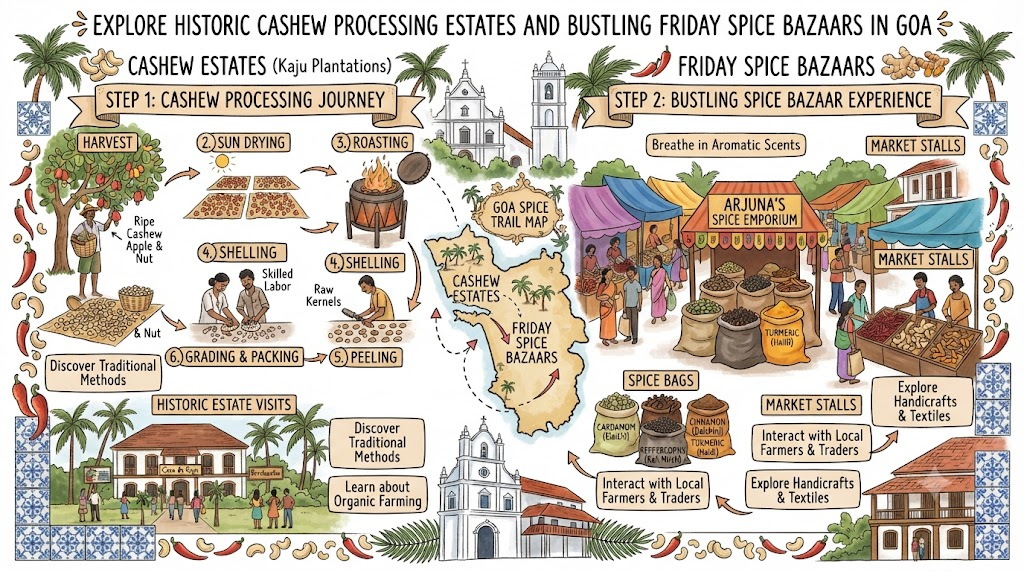
Mapusa Friday Local Market
Far removed from tourist kitsch, the Mapusa Friday Market is an authentic, centuries-old slice of agrarian and community life. Early every Friday morning, village women from across Bardez and Pernem gather in Mapusa’s municipal square, sitting behind woven baskets filled with homegrown produce.
The sights and aromas here are unmistakably Goan. Jute sacks overflow with fiery red Aldona chilies, bundles of pungent dried salted kingfish, spheres of toddy vinegar-soaked Goan pork sausages (chouriço), and dark cones of palm jaggery. Wandering this market gives you an intimate look into the flavors that define the local kitchen.
- Location: Mapusa Municipal Market area, Mapusa town (approx. 13 km north of Panaji).
- Why it is worth visiting: Authentic local immersion into the raw culinary and agricultural heritage of Goa.
- Best things to do: Purchase strings of authentic spiced Goan pork sausages, taste fresh baked poee bread from local bakers, and pick up pure cold-pressed coconut oil.
- Best time to visit: 8:00 AM to 11:00 AM for the freshest produce and manageable walking temperatures.
- Ideal for whom: Culinary enthusiasts, food writers, home chefs, and cultural documentarians.
- Travel tip: Keep small cash notes ready in ₹10, ₹20, and ₹50 denominations; local vegetable vendors rarely carry digital payment scanners.
The Sunset Drum Circle & Gypsy Market at Arambol Beach
As the afternoon sun dips low on Arambol Beach, a magical, spontaneous street bazaar comes to life directly on the soft sands. Centered around the famous Arambol drum circle, nomadic travelers, yoga practitioners, and wandering artisans lay out simple blankets to display their handcrafted wares.
The market has a distinctly communal, non-commercial feel. Macramé plant holders, crystal pendants, homemade organic balms, and hand-beaded anklets are traded against the backdrop of thumping djembe rhythms, fire dancers, and ocean waves.
- Location: Arambol Beach shoreline, Pernem Taluka, Far North Goa (approx. 36 km from Panaji).
- Why it is worth visiting: The raw, unscripted sunset community gathering and intimate, handmade crafts.
- Best things to do: Sit in the sand to listen to international drummers, buy a personalized hand-stamped brass ring, and watch fire spinners after dusk.
- Best time to visit: 5:00 PM to 7:30 PM (strictly a late-afternoon and sunset phenomenon).
- Ideal for whom: Free spirits, solo wanderers, backpackers, and creative artists.
- Travel tip: Carry a lightweight beach mat or sarong to sit on, and bring a small headlamp or flashlight for walking back through the sand after nightfall.
Mackie’s Saturday Night Bazaar at Baga River
Situated along the banks of the scenic Baga River in Marinha Dourada, Mackie’s offers a charming, family-friendly night market experience. Broad pathways lit by Chinese lanterns wind past hundreds of eco-friendly stalls crafted from bamboo, timber, and straw.
The market features an appealing mix of beachwear, antique curios, silver jewelry, and regional Indian handicrafts. The central bandstand hosts dance troupes, jazz duos, and classic rock cover bands, while riverside dining pavilions serve plates of sizzling calamari and Goan prawn balchão.
- Location: Baga Riverbank, Arpora-Baga border, North Goa (approx. 17 km from Panaji).
- Why it is worth visiting: A relaxed, spacious layout that avoids heavy bottlenecks, making it easy to stroll and shop.
- Best things to do: Dine on riverfront seafood thalis, shop for printed silk sarongs, and watch traditional Goan folk dance performances.
- Best time to visit: 6:30 PM to 10:00 PM for family dining and unhurried browsing.
- Ideal for whom: Families with young children, mature travelers, and couples looking for a relaxed evening.
- Travel tip: Wear comfortable slip-on shoes; though paths are cleared, patches of damp earth near the riverbank can be soft.
Offbeat Exploration: Hidden Gems Tourists Miss
The Friday Plant & Seed Exchange Alley at Mapusa
Tucked deep behind the main fish shed in Mapusa Market lies an unpaved lane dedicated entirely to botanical treasures. Here, elderly horticulturalists sell indigenous mango grafts (Mankurad), sapodilla saplings, ornamental ferns, and heirloom spice seeds wrapped in old Konkani newspapers. It is an aromatic green paradise hidden inside a bustling market.
The Secret Tuesday Village Bazaar of Aldona
Before Wednesday’s massive setup at Anjuna, local growers gather on Tuesday afternoons around the quiet village church square of Aldona. You will find small batches of homemade cashew feni, clay-baked terracotta pottery, and wild forest honey gathered from the foothills of the Western Ghats, all traded at simple village prices.
The Little Vagator Sunset Artisan Walkway
A winding cobblestone footway above Little Vagator (Ozran) cliff transforms into a relaxed artisan walk on winter evenings. Young local jewelers and leathercrafters line the cliff edge, selling handmade leather boots, ear cuffs, and sea-glass jewelry while indie folk artists strum guitars against the sea breeze.
Detailed Practical Guidance for Travelers
| Destination | Standard Entry Fee | General Timings | Best Local Food Options Nearby | Recommended Nearby Attractions |
|---|---|---|---|---|
| Anjuna Flea Market | Free Entry | Wednesdays: 8:00 AM – 7:00 PM | Curlies Beach Shack, German Bakery Anjuna | Anjuna Beach, Albuquerque Mansion |
| Arpora Saturday Night Market | Free Entry | Saturdays: 6:00 PM – 1:00 AM | The Greek Kouzina, Baba Au Rhum | Baga Beach, St. Michael’s Church Anjuna |
| Mapusa Friday Market | Free Entry | Fridays: 7:00 AM – 6:30 PM | Ruchira Restaurant, Cafe Xavier (Goan snacks) | St. Jerome Church, Bodgeshwar Temple |
| Arambol Sunset Beach Bazaar | Free Entry | Daily: 5:00 PM – 8:00 PM | Double Dutch Cafe, Falafel Corner | Sweet Water Lake, Arambol Banyan Tree |
| Mackie’s Saturday Bazaar | Free Entry | Saturdays: 6:00 PM – Midnight | River Creek Shack, Florentine Bar (Chicken Cafreal) | Baga Creek, Calangute Beach |
Logistics & On-Ground Navigation
Local Transport Options
- Rented Scooters & Motorcycles: The most convenient way to navigate Goa’s winding lanes. Daily rentals average ₹350 to ₹500 for an automatic scooter. Always carry your physical driving license and wear a helmet.
- Self-Drive Hatchbacks & Jeeps: Ideal for families carrying shopping bags and luggage. Prices range from ₹1,200 to ₹2,200 per day, excluding fuel.
- App-Based Taxis & GoaMiles: The state-regulated taxi app offers fixed-rate pickups from airports and rail stations, helping you avoid taxi counter markups.
- Private Taxis & Auto-Rickshaws: Convenient for point-to-point drop-offs, but they rarely use meters. Always confirm your fare with the driver before stepping in.
Budget Planning
- Backpacker / Budget Tier (₹1,500 – ₹2,500 per day): Stay in a shared hostel dorm (₹600–₹1,000), rent an automatic scooter (₹350 plus fuel), eat at street carts and local thali eateries (₹500–₹700), and keep bargaining budgets modest.
- Mid-Range / Comfort Tier (₹4,500 – ₹8,500 per day): Stay in a boutique Portuguese villa or private resort room (₹3,000–₹5,500), travel by private air-conditioned cab (₹1,800), and enjoy craft cocktails, bistro dining, and artisan crafts at night markets (₹1,500–₹2,500).
Safety and Inclusivity Tips
- For Families: Keep children close at the night markets. Arpora and Mackie’s draw large crowds between 8:30 PM and 10:30 PM, so visiting around 6:30 PM ensures relaxed walking and easier table seating.
- For Couples: Take romantic evening walks along the Baga riverbank near Mackie’s or explore the quiet craft stalls on the Arambol shoreline at sunset.
- General Safety: Keep your wallet, phone, and keys secured in a cross-body zippered bag when moving through dense market walkways. Avoid leaving valuables unattended in two-wheeler storage boxes.
Strategic Travel Planning Guardrails
Travel Planning Tips for Goa
- Coordinate by Market Days: Plan your weekly itinerary around the market schedule: Mapusa on Friday morning, Arpora on Saturday night, and Anjuna on Wednesday.
- Carry Physical Cash: While many permanent stalls accept UPI, internet connectivity can be spotty in large crowds. Keep physical cash in smaller notes handy.
- Pack Canvas Tote Bags: Avoid single-use plastic bags by carrying your own sturdy cloth totes for clothing, produce, and curios.
- Dress for Heat and Walking: Wear breathable linen or cotton garments and flat walking shoes or secured sandals. You will cover significant ground on dirt and gravel paths.
- Hydrate Regularly: High coastal humidity can lead to dehydration while walking outdoor stalls. Carry a reusable stainless steel water flask.
Common Mistakes to Avoid
- Arriving During Midday Heat at Anjuna: Browsing Anjuna between 1:00 PM and 3:30 PM can be exhausting under the harsh sun; time your visit for morning or late afternoon.
- Accepting Initial Asking Prices: Accepting the first price quoted by vendors at tourist flea markets often means paying double the going rate.
- Renting Oversized Cars for Market Days: Narrow approach roads into Arpora and Anjuna cause traffic bottlenecks; avoid large SUVs in favor of scooters or small hatchbacks.
- Ignoring Local Food for Fast Food: Do not settle for generic fries or burgers at market food courts when authentic fish thalis and fresh Goan snacks are available nearby.
- Carrying Important Documents to the Bazaars: Leave passports, flight documents, and large amounts of excess cash in your hotel room safe.
Suggested Itinerary Blueprints
1-Day Quick Dash (The Northern Market Circuit)
- Morning (8:30 AM – 11:30 AM): Ride your scooter to the Anjuna Flea Market for seaside shopping and an early iced coffee at a beach shack.
- Afternoon (12:30 PM – 3:30 PM): Escape the sun with lunch at an Assagao garden cafe, followed by a visit to St. Michael’s Church.
- Evening (6:00 PM – 10:00 PM): Head to the Arpora Saturday Night Market (or a beachside sunset market) for live music, shopping, and dinner.
2-Day Deep-Dive (From Local Harvest to Bohemian Rhythms)
- Day 1 (The Cultural Heritage Route): Start Friday morning at Mapusa Market to pick up authentic spices, sausages, and jaggery. Spend the afternoon exploring the heritage Latin Quarter of Fontainhas in Panaji, finishing with dinner along the Mandovi River.
- Day 2 (The Bohemian Coastal Route): Head north to Arambol Beach by 4:00 PM. Browse the seaside artisan blankets, join the sunset drum circle, and head to Arpora later that night for live bands and boutique shopping.
3-Day Complete Weekend Travel Plan (The Ultimate Connoisseur Loop)
- Friday: Arrive in North Goa and spend the morning exploring the colorful chaos of Mapusa Friday Market. In the afternoon, check into your boutique stay in Assagao and enjoy authentic Chicken Cafreal at Florentine in Saligao for dinner.
- Saturday: Spend a relaxed morning on the sands of Mandrem or Ashwem. By 6:30 PM, make your way to Arpora for an evening of live music, designer shopping, and global street food at the night market.
- Sunday: Take an early morning kayak tour on the Chapora River. Spend the late afternoon shopping along the cliffs of Little Vagator, ending your weekend with a sunset dinner overlooking the Arabian Sea.
Common Tourist Mistakes to Avoid
- Geographic Blunders: Booking a resort in South Goa (like Palolem or Benaulim) and attempting to commute to North Goa’s markets for an evening trip. The two-hour one-way drive in heavy traffic turns a fun night into an exhausting commute.
- Commercial Traps: Spending your precious vacation hours inside crowded retail souvenir stores along the Calangute-Baga strip. These shops often sell mass-produced imports rather than authentic handcrafted regional goods.
- Neglecting Modern/Alternative Zones: Focusing only on the beach front and missing interior villages like Assagao, Saligao, and Aldona, which house independent ceramic ateliers, design concepts, and specialty bakeries.
- Transport Overpayment: Hiring unmetered roadside tourist taxis without agreeing on a fixed rate upfront. Always cross-check pricing on the official GoaMiles app or ask your hotel concierge for standard local route rates.
- Luxury Dining Bias: Eating exclusively at high-end resort restaurants. You miss the heart of Goan food culture if you skip street-side ros omelette carts, local bakeries, and family-run seaside shacks.
Frequently Asked Questions
1. Are Goa’s famous flea markets open throughout the entire year?
No, most open-air tourist flea markets operate primarily during the dry winter travel season from November through April. During the monsoon months between June and September, heavy rains force open-air markets like Anjuna and Arpora to shut down, though the municipal Mapusa Friday Market operates year-round under sheltered sheds.
2. What is the standard etiquette for bargaining at Goan flea markets?
Bargaining is expected at seasonal tourist markets like Anjuna and Arpora. A good starting offer is 40% to 50% below the quoted price. Maintain a relaxed, friendly attitude throughout. At local commodity markets like Mapusa, prices for spices and vegetables are generally fixed and should be respected.
3. What are the best authentic edible souvenirs to buy at these markets?
The best edible souvenirs include spiced Goan chouriço (pork sausages), dark palm jaggery, raw cashews, dried kokum rinds, and homemade feni distilled from cashew apples or coconut palms. Always ask vendors for airtight vacuum packaging if you plan to fly back with sausages or spices.
4. Can I use digital payment apps like UPI or Google Pay across all stalls?
Most permanent stallholders and young designers accept UPI digital payments. However, cellular networks often become congested in packed evening market areas. It is wise to carry ₹2,000 to ₹3,000 in small physical currency notes for street snacks, parking fees, and small purchases.
5. How early should I arrive at the Arpora Saturday Night Market?
Arriving around 6:30 PM is ideal. This lets you secure easy two-wheeler or car parking, browse artisan racks before the walkways fill up, and grab a relaxed dinner table before the live musical performances draw peak crowds between 8:30 PM and 11:00 PM.
6. Is it safe to wander through night markets alone as a solo female traveler?
Yes, Goa’s night markets are lively, well-lit, and generally very safe for solo women. Market organizers employ private security teams, and local police patrol the perimeters. As with any crowded international venue, keep an eye on your personal belongings and pre-arrange your return transport.
7. Are Goa’s flea markets suitable for travelers with young children?
Mackie’s at Baga River and the early evening hours of the Arpora Night Market work well for families thanks to wide walkways and live entertainment. The Anjuna Wednesday market can get hot and crowded for toddlers midday, so early morning visits with lightweight strollers are best.
8. Can I purchase genuine antique Portuguese furniture at these markets?
While you will find charming vintage brass fixtures, old coins, and retro jewelry at Anjuna, authentic colonial-era Portuguese teak and rosewood furniture is rare at outdoor stalls. For authentic furniture, explore specialized antique warehouses in Porvorim and Panaji rather than coastal flea markets.
9. Where can I find the best parking on busy market days?
Official paid parking lots are located near the main entrances of both the Anjuna and Arpora markets, charging ₹50 for two-wheelers and ₹100 for cars. To avoid bottlenecks when leaving, park on the outer perimeter roads facing outward toward the main exit route.
10. Do vendors at these markets ship heavy handicraft purchases overseas?
Yes, several established Kashmiri rug sellers, marble craftsmen, and Tibetan art dealers at the Anjuna and Arpora markets provide tracked international courier shipping via DHL or FedEx. Always photograph the specific item and obtain a stamped, written invoice with tracking information before paying.
11. What shoes should I wear when visiting the markets?
Wear flat, comfortable walking shoes, closed sneakers, or supportive sandals with sturdy straps. Avoid thin high heels or smooth flip-flops, as market pathways consist of uneven red laterite soil, packed beach sand, and occasional loose gravel.
12. Which market offers the best selection of authentic hippie-style clothing?
The Anjuna Wednesday Flea Market and the sunset gatherings at Arambol Beach offer the widest variety of classic bohemian wear. You will find tie-dye kaftans, harem pants, hand-knitted crop tops, and flowing linen tunics sold by both local vendors and resident international artisans.
Conclusion
Choosing to explore Goa through its legendary flea markets offers a travel experience far richer than standard package tours. Between the seaside breeze of Anjuna, the live music of Arpora’s hillsides, and the earthy spices of Mapusa, these bazaars celebrate individuality, community, and craft. Taking time to wander these colorful aisles connects you directly with the creative spirit and warm hospitality that make Goa truly unforgettable.
