Introduction
While hordes of holidaymakers flock to overpriced beach shacks for diluted cocktails and generic pizzas, Goa’s real gastronomic soul thrives far from the tourist-heavy sands. When the coastal sun begins to sink, the sleepy town squares and village crossroads awaken to the clatter of hot steel ladles and the irresistible aroma of roasting spices.
Stepping up to a modest roadside food cart in Goa connects you directly to a complex culinary history where indigenous Konkani flavors merge seamlessly with Portuguese colonial techniques. Here, every hot pan of savory gravy, fresh-baked crusty bread, and spiced meat cutlet tells a centuries-old story of local resilience, coastal community pride, and authentic culinary passion.
Why Goa is a must-visit city
Goa represents one of the most culturally significant food crossroads in South Asia. Over four centuries of Portuguese influence introduced tomatoes, potatoes, chilies, vinegar-cured meats, and European baking traditions into an established coastal culture rooted in fresh coconut, kokum, tamarind, and Arabian Sea seafood. This dynamic collision produced an everyday street cuisine unlike anything found elsewhere across India.
Navigating Goa’s street food trail is accessible and rewarding for every type of traveler. Excellent four-lane national highways, active railway junctions at Madgaon and Thivim, and dual international airports at Dabolim and Mopa ensure smooth connectivity. Whether you are an independent backpacker hopping between village bakers on a scooter, a family discovering local town markets, or an intrepid foodie on a dedicated tasting tour, Goa’s culinary map welcomes all.
The state’s culinary geography spans across two distinct territories. North Goa features high-energy town squares, vibrant evening markets, and coastal roadside trucks. South Goa delivers a slower, deeply traditional dining rhythm centered around quiet village churches, municipal market corners, and peaceful beach promenades.
| Key Fact | Specification |
|---|---|
| State Culinary Capital | Panaji & Margao |
| Best Food Exploration Season | October to March (Cooler evenings, outdoor stalls fully active) |
| Primary Bread Type | Poi, Pao, Undo, and Katro (Wood-fired local breads) |
| Signature Street Dish | Ros Omelette (Fluffy omelette drowned in spicy xacuti gravy) |
| Average Cost Per Street Meal | ₹80 to ₹180 per person |
| Culinary Vibe | Spicy, tangy, vinegar-cured, and heavily coconut-infused |
Best Places or Experiences
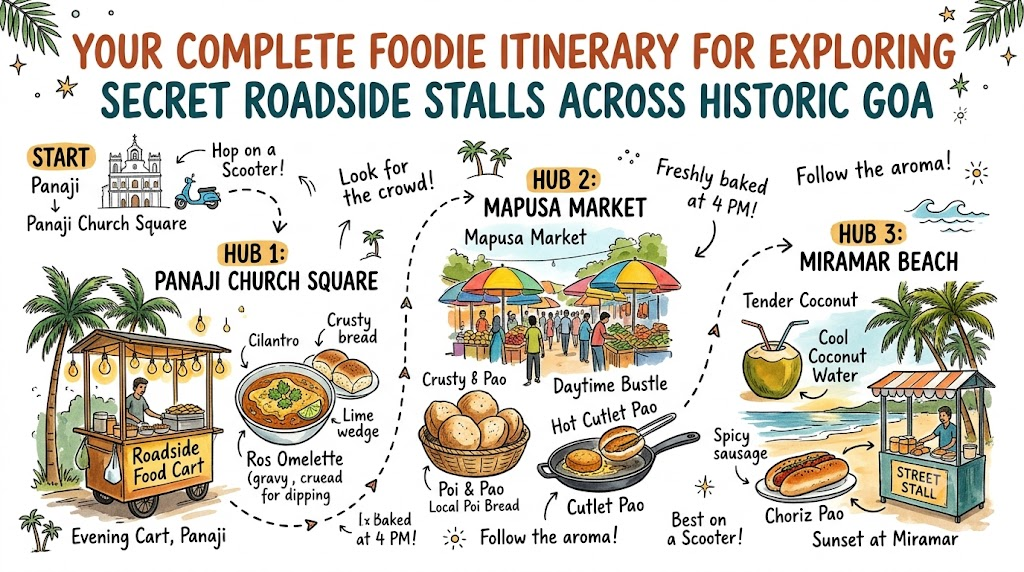
Goan roadside evening food stall.
Authentic Goan Ros Omelette.
Fresh crusty Goan Poi bread.
Vibrant food stalls at Mapusa.
Evening street carts at Miramar.
Miramar Beach Food Street
Miramar Beach transforms each evening into Panaji’s most buzzing open-air culinary promenade. Strung out under towering casuarina trees just where the Mandovi River meets the Arabian Sea, this dedicated strip brings together dozens of licensed municipal food trucks and carts serving hot snacks to workers, college students, and evening walkers alike.
The air here is thick with sea salt and the aroma of sizzling tawas. While the waters off Miramar are rough for swimming, the shoreline provides a cool backdrop for casual outdoor dining, making it the perfect sunset stop before diving into Goa’s capital nightlife.
- Location: Panaji, North Goa; roughly 3 km from the central Church Square.
- Why it is worth visiting: High density of diverse street snacks set right along a breezy coastal promenade.
- Best things to do: Feast on steaming plates of Chicken Shawarma, sip fresh tender coconut water, and watch the sun dip into the river mouth.
- Best time to visit: 5:30 PM to 9:30 PM for fresh batches and lively evening ambiance.
- Ideal for whom: Families, budget travelers, solo explorers, and casual evening snackers.
- Travel tip: Parking can get congested along the promenade between 6:30 PM and 8:00 PM; arrive on a two-wheeler for effortless access.
Mapusa Municipal Market Street Carts
Mapusa has served as the agricultural and trading heart of North Goa for generations. Beyond its famous daytime Friday trading bazaars, the peripheral lanes around the municipal market turn into an energetic street-food sanctuary every evening, frequented almost entirely by locals.
Here, mobile carts mounted on vintage cycle wheels or wooden frames serve regional specialties made fresh to order. From deep-fried vegetable chops and spicy samosas to slow-simmered pork gravies, the market square delivers an unfiltered look at authentic Goan daily life.
- Location: Mapusa Town, North Goa; approximately 13 km north of Panaji.
- Why it is worth visiting: The most authentic, local-dominated evening market scene in North Goa.
- Best things to do: Sample fresh Alheira sausages, try spicy beef or mutton cutlet pao, and buy homemade Goan red chili paste from market vendors.
- Best time to visit: 6:00 PM to 9:00 PM on weekday evenings, or during the expansive Friday morning market.
- Ideal for whom: Culinary purists, street food photographers, and adventurous eaters.
- Travel tip: Carry smaller currency notes; market vendors move rapidly and often struggle with digital UPI connectivity during peak rush hours.
Alankar Cinema Food Street, Mapusa
Situated directly outside the historic Alankar Cinema complex, this legendary roadside enclave is considered the ultimate late-night food strip in Bardez. When regular eateries shutter across North Goa, Alankar bursts into life with bright incandescent bulbs and rows of sizzling open grills.
The stalls here cater to night owls, shift workers, and travelers returning from the northern beach towns. The vendors pride themselves on speed and fire, serving spicy Indo-Chinese platters, marinated tawa meats, and deeply satisfying Goan egg dishes late into the night.
- Location: Near Alankar Cinema, Mapusa; 14 km from Panaji.
- Why it is worth visiting: Goa’s premier late-night street food hub with unbeatable value and portion sizes.
- Best things to do: Order a loaded plate of Chicken Tawa Biryani, try spicy dry chili chicken, and finish with a chilled local falooda.
- Best time to visit: 8:00 PM to 1:30 AM for peak nighttime energy.
- Ideal for whom: Late-night travelers, night owls, backpackers, and group road-trippers.
- Travel tip: The food here is unapologetically spicy; if your heat tolerance is low, explicitly ask the cook for kam teekha (mild spice).
Panaji Church Square Cart Hub
Surrounding the iconic white-washed baroque facade of Our Lady of the Immaculate Conception Church lies Panaji’s most celebrated collection of traditional gado (food cart) operators. These modest carts have occupied the paved sidewalks for decades, passed down through generations of passionate local cooks.
This is the historic birthplace of modern street-side Ros Omelette culture. Office executives in formal attire stand shoulder-to-shoulder with auto-rickshaw pilots, all dipping warm, crusty bread into generous bowls of rich, spiced coconut gravy.
- Location: Church Square, Central Panaji; walking distance from Fontainhas Latin Quarter.
- Why it is worth visiting: Historic heritage street carts serving the gold standard of Goan comfort food.
- Best things to do: Eat a piping-hot double Ros Omelette, photograph the illuminated church facade at dusk, and stroll the quiet Latin Quarter lanes afterward.
- Best time to visit: 6:00 PM to 10:30 PM for freshly made, steaming pots of curry.
- Ideal for whom: Heritage buffs, foodies, solo travelers, and couples seeking authentic flavor.
- Travel tip: Look for carts surrounded by the largest cluster of local scooters; that is your guarantee of the freshest batch of xacuti gravy.
Margao Municipal Market & Old Station Road
Margao represents the undisputed cultural capital of South Goa, and its street food culture reflects its deeply entrenched Portuguese and Christian heritage. The perimeter around the Old Railway Station and the Municipal Council garden hosts some of the state’s finest cutlet pao and beef chili carts.
Unlike the tourist-oriented beach joints nearby, Margao’s street food maintains strict traditional methods. The beef and pork are marinated in natural palm vinegar, seasoned with indigenous spices, and tucked into artisan poi straight from local village wood ovens.
- Location: Margao City Center, South Goa; 33 km south of Panaji.
- Why it is worth visiting: The heart of South Goa’s rich, vinegar-cured meat traditions and artisan breads.
- Best things to do: Eat a rava-crusted beef cutlet pao, try traditional choriz (Goan sausage) pav, and pick up fresh dodol sweets from surrounding bakeries.
- Best time to visit: 5:00 PM to 8:30 PM.
- Ideal for whom: Meat lovers, cultural food historians, and travelers exploring South Goa.
- Travel tip: Vegetarian street food options are limited in this area; ask vendors specifically for egg or potato alternatives if you do not consume meat.
Offbeat Exploration: Hidden Gems Tourists Miss
Santa Cruz Village Crossroads (St. Cruz Square)
Just 5 km south of Panaji, this quiet village square transforms every evening around 6:00 PM into an insider food hub. Local bakeries deliver fresh-baked batches of crusty katro bread directly to roadside carts that serve thick chickpea tonak and rich coconut curries.
The Chicalim Village Pork Roast Cart
Tucked away along the old Vasco-Panaji highway near Chicalim Church, an unassuming cart operates for just three hours every evening. Locals line up patiently for tender slices of vinegar-marinated slow-roasted pork tucked into fresh warm bread, often selling out before 8:00 PM.
Siolim Bridge Coconut Palm Toddy Tappers & Evening Fry Carts
Near the Chapora River crossing at Siolim, small roadside vendors fry up freshly caught river mud-crabs and small kingfish right off the fishermen’s canoes. The fish is tossed in spicy recheado masala and fried over iron skillets on the spot.
Detailed Practical Guidance for Travelers
| Destination | Standard Entry Fee | General Timings | Best Local Food Options Nearby | Recommended Nearby Attractions |
|---|---|---|---|---|
| Miramar Beach Food Street | Free | 5:00 PM – 11:00 PM | Chicken Shawarma, Pav Bhaji, Gola, Fresh Sugarcane Juice | Miramar Beach, Caranzalem Shore, Kala Academy |
| Mapusa Market Carts | Free | 6:00 PM – 10:00 PM | Pork Sausages, Vegetable Chops, Fried Fish Pao | Mapusa Friday Bazaar, Bodgeshwar Temple |
| Alankar Food Street | Free | 7:30 PM – 2:00 AM | Tawa Chicken Fry, Hakka Noodles, Chicken Biryani | St. Jerome Church, Swiss Chapel |
| Panaji Church Square | Free | 5:30 PM – 11:00 PM | Classic Ros Omelette, Beef Cutlet, Pao Bhaji | Immaculate Conception Church, Fontainhas Quarter |
| Margao Old Station Road | Free | 5:00 PM – 9:30 PM | Goan Choriz Pao, Rava Fried Beef Cutlet, Fish Cutlets | Holy Spirit Church, Monte Hill, Margao Market |
Logistics & On-Ground Navigation
Local Transport Options
- Scooter and Motorcycle Rentals: The most agile and budget-friendly way to hit tight village street food carts. Rentals range from ₹300 to ₹500 per day; always ensure your fuel tank is topped up before evening rides.
- Auto-Rickshaws & Pilots: Unique to Goa, licensed motorcycle taxis known locally as “Pilots” are cost-effective for single travelers hopping between city food spots. Standard auto-rickshaws do not run on meters, so confirm fares beforehand.
- Self-Drive Cars: Convenient for family groups navigating between North and South circuits, though parking around dense market squares like Mapusa or Margao requires patience.
- State Bus System (Kadamba): Blue-and-white local buses connect all municipal centers for under ₹40, making them ideal for budget-conscious food crawls between towns.
Budget Planning
- Backpacker / Budget Street Tier (₹500 – ₹1,000 / day): Includes 3 to 4 substantial street food tastings (₹300–₹500), local bus or scooter travel fuel (₹200–₹300), and fresh fruit juices or tender coconuts (₹100).
- Mid-Range / Comfort Culinary Tier (₹1,500 – ₹3,000 / day): Private taxi transfers or rental car fuel (₹1,000–₹1,500), premium food truck platters, evening bakery stops, artisanal souvenirs, and craft beverages (₹1,000–₹1,500).
Safety and Inclusivity Tips
- For Families: Stick to well-established municipal food strips like Miramar Beach, where open pedestrian walkways provide space for children away from moving traffic.
- For Couples: Early evening street food visits around Panaji’s Church Square offer atmospheric lighting, safe strolls through nearby Latin alleys, and high safety standards.
- General Food Safety: Frequent stalls with high customer turnover and bubbling hot curries; avoid pre-sliced raw salads and choose bottled or filtered drinking water.
Strategic Travel Planning Guardrails
Travel Planning Tips for Goa
- Match the Sunset Timing: Most Goan street food carts do not fire up until after 5:30 PM. Planning an afternoon street food tour will lead to empty stalls.
- Track the Local Bread Cycle: Traditional Goan bakers (poder) bake fresh bread twice daily—at dawn and around 3:30 PM. Evening food carts receive the freshest batch right around dusk.
- Keep Physical Currency: Although UPI scanner codes are common, mobile network signals can lag inside crowded markets. Keep ₹500 in ₹20 and ₹50 notes handy.
- Embrace the Bread Varieties: Do not just ask for “pav.” Specify whether you want soft pao, crusty whole-wheat bran poi, or dense undo.
- Mind the Spice Levels: Coastal Konkani gravies use fiery local red chilies; keep tender coconut water or sweet lassi nearby to temper the heat.
Common Mistakes to Avoid
- Judging Carts by Looks: Small, steel carts with hand-painted boards often serve far fresher, more authentic food than polished beachside resorts.
- Eating Street Food at Midday: High tropical heat spoils outdoor items quickly; avoid buying open street food sitting out under direct sunlight before evening.
- Skipping Regional Pork & Beef Specialties: Goa has a rich Christian cooking heritage; skipping these dishes means missing a defining half of Goan food culture.
- Bypassing Local Bakeries: Forgetting to step into historic Goan bakeries (padarias) for evening tea biscuits like kankonn and bolinhas is a missed opportunity.
- Over-Ordering on Your First Stop: Portions at Goan food stalls are generous; order one plate to share so you can sample four or five distinct carts in an evening.
Suggested Itinerary Blueprints
1-Day Quick Dash (The Capital & Coastal Food Trail)
- Target Audience: Short-stay travelers, transit visitors, and solo foodies.
- Route: Panaji & Miramar Promenade.
- Schedule: Begin at 4:30 PM with an espresso and freshly baked pastry at a heritage bakery in Fontainhas. Walk to Church Square at 6:00 PM for a double Ros Omelette at a heritage cart. Finish the night by 8:00 PM along Miramar Beach for savory shawarma and coastal desserts.
2-Day Deep-Dive (The Dual District Circuit)
- Day 1 (North Goa Feasts): Explore the Mapusa Municipal Market periphery at 5:30 PM for beef cutlet pao and sausage bread. Ride over to Alankar Cinema strip at 9:00 PM for sizzling tawa chicken and falooda.
- Day 2 (South Goa Heritage Tastes): Head down to Margao by late afternoon. Wander Old Station Road at 5:30 PM for traditional choriz pao, then finish with dessert and fish croquettes near Holy Spirit Church square.
Complete Weekend Travel Plan (The Master Food Loop)
- Friday (Panaji Historic Core): Arrive, settle in, and spend the evening hopping between Church Square food carts and Santa Cruz village bakeries.
- Saturday (Northern Night Markets): Spend the day relaxing, then kick off your food tour at 5:00 PM at Mapusa Market, transition to Anjuna or Vagator food trucks, and end past midnight at Alankar.
- Sunday (Southern Village Traditions): Take a scenic backroad drive south through Raia and Curtorim, landing in Margao for evening street cutlets, traditional sweets, and a stroll down Old Station Road.
Common Tourist Mistakes to Avoid
- Geographic Blunders: Don’t attempt to taste street food in Mapusa and Margao on the same evening. The 45-kilometer drive through busy city traffic leaves you exhausted and cuts into prime cart operating hours.
- Commercial Traps: Don’t spend valuable vacation time at generic, multi-cuisine shopping mall food courts in Porvorim when street squares offer unmatched regional dishes at a fraction of the cost.
- Neglecting Modern/Alternative Zones: Don’t overlook the vibrant new street-side food trucks emerging in residential neighborhoods like Assagao and Caranzalem, which offer inventive fusion tacos and craft sodas alongside classic fare.
- Transport Overpayment: Always negotiate private taxi fares before starting your journey, or rely on rented two-wheelers and official motorcycle pilots to keep your transit costs fair and predictable.
- Luxury Dining Bias: Eating exclusively at five-star hotel buffets disconnects you from the living culinary heartbeat of Goa. The soul of local gastronomy lives on roadside tawas and in village bakery baskets.
Frequently Asked Questions
1. What exactly is a Goan Ros Omelette?
A Ros Omelette consists of a freshly fried egg omelette filled with chopped onions, green chilies, and fresh coriander, served submerged in a deep ladle of spicy, aromatic chicken or chickpea xacuti gravy. It is traditionally garnished with crisp raw onions, a squeeze of fresh lime, and served alongside hot, crusty Goan bread for dipping.
2. Is it safe to eat street food across Goa?
Yes, eating street food in Goa is generally very safe, provided you follow basic traveler hygiene. Always select stalls that have high customer turnover and prepare food hot right before your eyes. Choose freshly boiled, grilled, or fried dishes over cold pre-cut salads, and stick to bottled or purified drinking water.
3. What are the best vegetarian street food options in Goa?
Goa provides plenty of satisfying vegetarian street food. Popular local choices include Mirchi Bhajji (deep-fried stuffed chili fritters), Alsande Tonak (a rich, spiced coconut curry made with local red cowpeas), Batata Vada, Chana Masala Pao, and vegetable cutlet pao, widely available at village tea shops and municipal market stalls.
4. How much does an average street food meal cost in Goa?
Street food in Goa is exceptionally affordable and budget-friendly. A hearty plate of Ros Omelette with two pieces of bread costs between ₹60 and ₹90, a meat cutlet pao averages ₹70 to ₹100, and sweet street snacks or fruit shakes range from ₹40 to ₹80, allowing an entire meal for under ₹150.
5. What is the difference between Goan Poi, Pao, and Undo?
Pao is a soft, square, fermented white-flour bread roll with a golden crust. Poi is a round, flat, whole-wheat bread roll enriched with wheat bran that forms a natural hollow pocket inside when baked. Undo is a round, crusty, hard-baked bread roll with a dense, chewy crumb designed specifically for soaking up rich gravies.
6. Where can I find the best Goan Choriz (Sausage) Pao?
The most authentic Goan Choriz Pao is found around South Goa’s Margao Municipal Market and near old church squares across Raia and Velim. Look for older village women or dedicated street carts simmering spicy, vinegar-pickled pork sausages on a cast-iron tawa with sliced onions and potatoes.
7. Do street food vendors in Goa accept digital payments like UPI?
Most street food vendors and food trucks in major towns like Panaji, Mapusa, and Margao readily accept digital UPI payments such as Google Pay and PhonePe. However, carrying ₹200 to ₹500 in physical cash is strongly recommended, as rural village vendors and crowded market stalls frequently suffer from intermittent network drops.
8. What time do street food stalls typically open and close in Goa?
Unlike northern Indian states where street food is sold all day, Goan street food stalls operate primarily in the evening. Most carts open around 5:00 PM or 5:30 PM as temperatures cool, reaching their peak rush around 7:30 PM and shutting down between 10:30 PM and 11:30 PM.
9. What is a Cutlet Pao and how is it prepared?
Cutlet Pao is a beloved Goan street burger consisting of marinated beef, chicken, or fish that is coated in semolina (rava) and pan-fried until crisp. The hot cutlet is tucked inside a freshly sliced crusty bread roll, drizzled with a spoonful of savory meat gravy, and topped with a quick cabbage-and-onion salad.
10. What drinks should I pair with spicy Goan street snacks?
To balance the bold spice levels of Goan curries and fried cutlets, pair your food with fresh tender coconut water, sweet sugarcane juice with ginger, or freshly pressed local lime soda. In traditional village taverns, locals often pair savory evening bites with a small glass of cashew or coconut feni.
11. Can I find late-night street food in Goa after midnight?
Yes, late-night dining is concentrated in specific hubs. The Alankar Cinema street food stretch in Mapusa remains active until roughly 1:30 AM or 2:00 AM, while select food trucks along the Calangute-Baga coastal belt and around the Madgaon Railway Station operate into the early morning hours.
12. Are Goan street food gravies naturally gluten-free?
While the coconut-based xacuti and tonak gravies themselves are naturally gluten-free, they are almost universally served with wheat-based breads like poi or pao. If you have gluten sensitivities, skip the bread rolls entirely and ask the vendor to serve your curry or cutlet with steamed rice or boiled potatoes instead.
Conclusion
Savoring street food across Goa delivers an authentic cultural awakening that commercial resort buffets can never match. Standing under the glow of a sidewalk food cart, soaking up warm xacuti gravy with freshly baked poi alongside local residents, you experience the true generosity, culinary heritage, and welcoming warmth that define Goan life.
