



Introduction
Beyond the neon-lit dance floors and crowded commercial shacks lies a vastly different coastal reality. Goa carries a quiet, poetic rhythm where centuries of Portuguese architecture meet lush tropical mangroves and dramatic basalt cliffs.
For creators wielding a camera, this sunshine state is a masterclass in light, texture, and cultural framing. Leaving behind the noisy beaches reveals an authentic land shaped by ancient trade routes, sleepy inland backwaters, and pristine Latin neighborhoods.
Why Goa is a must-visit city
Goa stands as a unique cultural intersection in South Asia. Four centuries of Portuguese rule blended seamlessly with indigenous Konkani traditions, creating a visual aesthetic found nowhere else in India. From baroque whitewashed churches standing against emerald paddy fields to rugged red laterite sea cliffs, every corner offers compelling photographic depth.
Navigating this coastal haven is seamless. Well-connected national highways link the northern party hubs to the tranquil southern sanctuaries, while dual airports at Dabolim and Mopa ensure smooth access. Whether you travel by local ferry, rented scooter, or private cab, moving between historical precincts and hidden coves remains simple and fast.
| Regional Attribute | Details for Photography Travelers |
| Primary Architectural Styles | Portuguese Colonial, Neo-Gothic, Indo-Baroque, Traditional Goan Sopo |
| Peak Lighting Windows | 06:30 AM – 08:30 AM (Soft Dawn), 05:30 PM – 06:45 PM (Golden Hour) |
| Top Coastal Landscape Zone | South Goa (Cabo de Rama, Palolem, Agonda) |
| Best Cultural Heritage Precinct | Fontainhas & Old Goa (Panaji District) |
| Ideal Transit Mode | Gearless Scooter / Self-Drive Hatchback |
Best Places in Goa for Photography Lovers
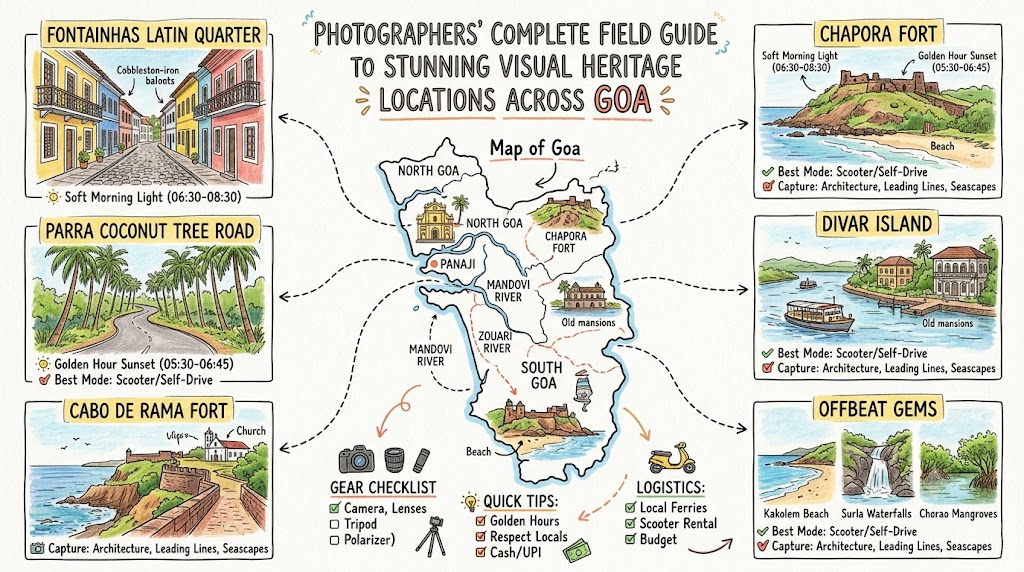
Fontainhas Latin Quarter
Nestled at the base of Altinho Hill in Panaji, Fontainhas is Asia’s only official Portuguese quarter. Walking through these narrow lanes feels like stepping directly into an Mediterranean streetscape preserved in time. Elegant wrought-iron balconies, azulejo tile plaques, and vibrant facades painted in cobalt blue, pale mustard, and terra-cotta offer endless framing possibilities.
The morning light here is exceptionally soft. As daylight filters down the narrow cobblestone alleys, reflection shots against wet pavement and contrast images against bright wooden shutters come alive. The historic neighborhood rewards slow walking and keen attention to intimate architectural details.
- Location: Panaji city center, approximately 28 km from Dabolim Airport.
- Why it is worth visiting: Unmatched colonial architecture with intact 19th-century Latin aesthetic.
- Best things to do: Capture macro shots of ceramic house number plates, frame wide streetscapes from raw balconies, and shoot candid portraits of locals outside traditional bakeries.
- Best time to visit: 06:30 AM – 08:30 AM to beat tourist crowds and heavy morning heat.
- Ideal for whom: Street photographers, architectural enthusiasts, and portrait artists.
- Travel tip: Respect local residents by keeping noise low and avoiding direct window photography without permission.
Parra Coconut Tree Road
Flanked by towering coconut palms leaning gracefully over an asphalt road, Parra Road has become one of Goa’s most iconic visual corridors. The tall palm trees create a natural leading-line perspective that stretches toward scenic green rice fields in the distance.
During early morning, a gentle layer of mist often hangs over the adjacent paddy fields. This creates atmospheric depth, perfect for landscape shots or striking portrait compositions using natural light.
- Location: Parra village, Bardez district, roughly 10 km from Panaji.
- Why it is worth visiting: Classic tropical Goan corridor offering clean leading lines and rich green contrast.
- Best things to do: Frame low-angle wide shots looking up the road, capture golden hour light through palm fronds, and film smooth slow-motion panning shots.
- Best time to visit: 06:00 AM – 07:30 AM before local traffic builds up.
- Ideal for whom: Landscape photographers, portrait creators, and travel vloggers.
- Travel tip: Watch for passing local vehicles as this remains an active village bypass road.
Cabo de Rama Fort
Perched dramatically on a soaring laterite cliff in South Goa, Cabo de Rama Fort offers sweeping panoramas across the Arabian Sea. Named after Lord Rama from Indian epic lore, this ancient fortress features crumbling stone ramparts overgrown with wild vines and a pristine whitewashed chapel inside its grounds.
The contrast between dark red laterite rock, turquoise ocean waters, and golden evening skies makes this location a photographer’s dream. Sunset here is magical as the sun drops directly behind the horizon wall.
- Location: Canacona region, South Goa, approximately 60 km south of Panaji.
- Why it is worth visiting: Dramatic cliffside ocean vantage points paired with rustic historic ruins.
- Best things to do: Capture long-exposure sea wave crashing shots, frame the whitewashed chapel against red cliffs, and compose dramatic sunset silhouettes.
- Best time to visit: 04:30 PM – 06:45 PM for optimal warm evening light.
- Ideal for whom: Seascape photographers, drone pilots, and history lovers.
- Travel tip: Wear sturdy footwear because cliffside walking paths are uneven and rocky.
Chapora Fort
Standing high above the mouth of the Chapora River, this massive 18th-century ruin offers unobstructed views across Vagator Beach and Morjim Beach. Known globally from Indian cinematic pop culture, the fort’s sweeping stone walls curve along the hilltop like an ancient spine.
Photographers appreciate the commanding elevated view of the coastline. The wide open sky creates incredible opportunities for dramatic blue-hour exposures and wide panoramic compositions.
- Location: Vagator, North Goa, roughly 20 km north of Panaji.
- Why it is worth visiting: Iconic high-altitude coastal vista overlooking river estuaries and open sea.
- Best things to do: Photograph the winding stone wall boundary, capture golden reflections over Vagator beach, and shoot twilight long-exposure frames.
- Best time to visit: 05:00 PM – 06:30 PM for sunset framing.
- Ideal for whom: Landscape photographers, group portrait creators, and sunset spotters.
- Travel tip: The brief uphill hike over loose laterite gravel requires grip-friendly shoes.
Divar Island
Reached only by river ferries operating across the Mandovi, Divar Island represents an untouched Goan countryside frozen in time. Winding country roads pass historic Indo-Portuguese mansions, pristine church squares, and vast emerald marshlands where local fishermen cast nets.
The island provides an incredible backdrop for documentary and nature photography. Early morning light across the river backwaters reveals gentle reflections, misty horizons, and active birdlife along the riverbanks.
- Location: Mandovi River Estuary, accessed via Old Goa or Ribandar ferry piers.
- Why it is worth visiting: Serene rural island environment featuring authentic village culture and undisturbed nature.
- Best things to do: Photograph vintage Goan villas, capture local river ferry crossings, and document scenic backwater sunrise light.
- Best time to visit: 06:00 AM – 09:00 AM for soft morning light and active birdlife.
- Ideal for whom: Fine-art landscape photographers, culture documentarians, and slow travelers.
- Travel tip: Ferry rides for vehicles and foot passengers are frequent and budget-friendly.
Offbeat Exploration: Hidden Gems Tourists Miss
Kakolem Beach (Tiger Beach)
Tucked beneath steep, forest-covered cliffs in South Goa, Kakolem is a secluded cove where a fresh mountain stream cascades directly onto golden sands. Reached via a steep trek down stone steps, this wild beach provides raw, untouched seascape compositions far removed from commercial crowds.
Surla Waterfalls & Western Ghats Foothills
Located in the far eastern inland interior along the Karnataka border, the misty hills of Surla offer dramatic forest canopy views. Photographers can capture cascading waterfalls tumbling down dark granite rock walls surrounded by dense rainforest foliage.
Chorao Island Mangrove Boardwalks
Part of the Dr. Salim Ali Bird Sanctuary, these tidal mangrove waterways offer moody, atmospheric framing. Rowing through dense mangrove tunnels during high tide delivers dramatic reflections and intimate wildlife photography encounters.
Detailed Practical Guidance for Travelers
| Destination | Standard Entry Fee | General Timings | Best Local Food Options Nearby | Recommended Nearby Attractions |
| Fontainhas | Free Public Access | Open 24 Hours (Best in Daylight) | Confeitaria 31 De Janeiro (Fresh Pastries) | Panaji Church, Altinho Hill Lookout |
| Parra Road | Free Public Access | Open 24 Hours | Local roadside tender coconut stalls | St. Anne’s Church, Assagao Cafes |
| Cabo de Rama | Free Public Access | 09:00 AM – 05:30 PM Daily | Cliffside shack cafes serving Goan fish thali | Kakolem Beach, Agonda Beach |
| Chapora Fort | Free Public Access | 09:30 AM – 05:30 PM Daily | Bean Me Up, Antares Beach Shack | Vagator Beach, Ozran Beach |
| Divar Island | Free (Ferry nominal) | Open 24 Hours | Piedade local village taverns & seafood joints | Our Lady of Compassion Church |
Logistics & On-Ground Navigation
Local Transport Options
- Self-Drive Scooters: Renting a gearless scooter is the most flexible choice for navigating narrow village lanes and reaching secluded photography viewpoints easily.
- Auto-Rickshaws & Taxis: Best suited for longer inter-city legs or group transfers; always negotiate fixed fares upfront or use government taxi apps.
- Local River Ferries: Connecting mainland docks to islands like Divar and Chorao, these flat-deck ferries are extremely reliable and cheap.
Budget Planning
- Backpacker Tier (₹1,500 – ₹2,500 / day): Dorm bed stay, local scooter rental, street thalis, and free public heritage site access.
- Mid-Range Comfort Tier (₹4,500 – ₹8,000 / day): Boutique heritage hotel stay, private car rentals, beachside dining, and guided cultural walking tours.
Safety and Inclusivity Tips
- For Families: Stick to well-maintained heritage zones like Panaji and Old Goa where pavements and accessible restrooms are available.
- For Couples & Solo Travelers: Exercise standard caution on secluded cliff paths after dark, and keep camera gear secure in waterproof bags during monsoon months.
Strategic Travel Planning Guardrails
Travel Planning Tips for Goa
- Optimize Light Schedules: Plan outdoor photo sessions strictly during dawn or dusk; midday tropical sun creates harsh shadows.
- Carry Digital & Cash Reserves: While UPI digital payments work well in towns, small island ferries and rural coconut vendors prefer cash.
- Pack Moisture Protection: Bring rain covers and silica gel packs to safeguard delicate camera lenses against sudden coastal humidity changes.
- Respect Heritage Etiquette: Remove hats and footwear where required when photographing active religious shrines or church interiors.
- Book Off-Season Months: Visiting during shoulder months (October or March) offers lower hotel rates and far fewer crowds in popular spots.
Common Mistakes to Avoid
- Over-packing daily itineraries with far-apart spots in North and South Goa on the same afternoon.
- Leaving expensive camera equipment exposed in hot parked vehicles during peak afternoon temperatures.
- Relying solely on taxis without booking rentals in advance during peak festive dates.
- Ignoring inland river villages in favor of staying exclusively on commercial beach strips.
- Skipping regional Konkani fish thalis to dine only at trendy international cafes.
Suggested Itinerary Blueprints
- 1-Day Quick Dash (Coastal Framing Express): Start sunrise at Parra Coconut Road, explore Fontainhas Latin Quarter by mid-morning, and catch sunset atop Chapora Fort.
- 2-Day Deep-Dive (Heritage & Horizon Split): Day 1 dedicated to Panaji city, Old Goa churches, and Divar Island backwaters. Day 2 focusing on South Goa cliffscapes including Cabo de Rama and Agonda.
- Complete Weekend Travel Plan (North to South Exposure): Friday evening in Assagao, Saturday morning in Fontainhas leading to Chapora sunset, Sunday full-day southern coastal loop ending at Cabo de Rama.
Common Tourist Mistakes to Avoid
- Geographic Blunders: Attempting to combine Northern spots like Arambol with Southern locations like Palolem on the same day causes hours of wasted travel time.
- Commercial Traps: Spending prime golden-hour shooting time inside crowded beach markets instead of positioned on scenic cliffside vantage points.
- Neglecting Modern/Alternative Zones: Missing out on inland creative districts like Assagao and Saligao which feature restored Portuguese villas converted into art spaces.
- Transport Overpayment: Failing to cross-check local taxi rates with standardized prepaid airport counter rates leading to inflated transport expenses.
- Luxury Dining Bias: Eating exclusively at high-end resorts and missing out on authentic flavor at local family-run beach shacks.
Frequently Asked Questions
1. What is the best season for landscape and street photography in Goa?
The winter period from November to February offers clear blue skies, pleasant morning temperatures, and soft lighting ideal for outdoor photography across all regions.
2. Is drone photography allowed at historic forts in Goa?
Drone flights are restricted around sensitive military zones, airports, and private heritage structures without explicit written permission from local district authorities.
3. How do photographers safely travel between North Goa and South Goa?
Renting a self-drive vehicle or hiring a dedicated day-driver allows safe transit along the NH66 highway connecting northern and southern districts smoothly.
4. What camera gear is recommended for a travel trip to Goa?
A versatile 24-70mm zoom lens covers both street portraiture and wide coastal landscapes, while a circular polarizer cuts water glare effectively.
5. Are there entry tickets required to photograph inside Fontainhas?
Fontainhas is an open public residential neighborhood with free access, though private photo shoots inside heritage homes require owner consent.
6. Which spot offers the most picturesque sunset frames in South Goa?
Cabo de Rama Fort provides elevated western horizon views over dramatic laterite cliffs and open sea, creating unmatched sunset opportunities.
7. Can I rent professional photography equipment locally in Panaji?
Yes, several rental agencies in Panaji and Margao provide DSLR bodies, prime lenses, lighting kits, and stabilizers on a daily rental basis.
8. Are local river ferries safe for carrying expensive camera bags?
Government-operated river ferries are very stable, safe, and spacious, allowing easy roll-on access for scooters, cars, and foot passengers carrying gear.
9. What should I wear while doing street photography in Goan villages?
Wear lightweight, breathable cotton clothing and comfortable walking shoes while keeping dress codes modest when entering church grounds or village temples.
10. How can I protect my digital camera gear from coastal humidity?
Store cameras in sealed bags with silica gel packets when moving between air-conditioned hotel rooms and humid outdoor coastal environments.
11. Are there good macro photography opportunities in Goan nature reserves?
Yes, spice plantations in Ponda and nature sanctuaries in Mollem feature rich biodiversity including rare frogs, reptiles, and colorful tropical insects.
12. Which location is best for astrophotography away from city light pollution?
Remote southern beaches like Galgibaga and inland locations along the Western Ghats offer dark night skies clear of urban light pollution.
Conclusion
Choosing to explore Goa through a camera lens unveils a rich tapestry of history, art, and natural beauty that casual sunseekers completely miss. Beyond the golden sands and rolling waves lies an authentic coastal world where centuries-old stone churches watch over serene backwaters and vibrant Latin neighborhoods radiate timeless charm. By slowing down to frame these quiet details, you discover the true soul of this tropical paradise—a journey that rewards your visual eye and leaves an indelible mark on your spirit.

Leave a Reply
You must be logged in to post a comment.