



Introduction
Beyond the noisy, neon-lit corridors and crowded souvenir alleys of Calangute and Baga lies an entirely different coastal rhythm. Vagator immediately commands attention with its dramatic red laterite bluffs dropping sharply into frothing Arabian Sea breaks.
Here, ancient Portuguese military ramparts stand watchful over deep palm groves and sun-bleached fishing settlements. Vagator preserves an authentic, untamed spirit where indie music heritage, cliffside cafes, and traditional coastal livelihoods coalesce into an unforgettable travel experience.
Why Vagator Goa is a must-visit city
Vagator anchors the northwestern tip of Bardez taluka, occupying a vital geographical crossroads where the Chapora River empties into the Arabian Sea. This strategic headland has witnessed centuries of maritime trade, defense conflicts, and counter-culture revolutions. From the 18th-century Portuguese fortress watching over maritime channels to the 1970s psychedelic trance movement that redefined global alternative travel, Vagator possesses a rare cultural depth.
Reaching Vagator is seamless across multiple modes of transit. The coastal hub sits just 28 km from Manohar International Airport (Mopa) and 45 km from Dabolim International Airport. Thivim Railway Station lies a brief 18 km drive to the east, while excellent arterial roads connect the town directly to Panaji and Mapusa. This makes the region exceptionally accessible for backpackers, boutique road-trippers, couples, and family holidaymakers seeking an elevated coastal retreat.
The travel circuit here effortlessly weaves rugged outdoor exploration with world-class bohemian lifestyle amenities. Visitors can spend mornings roaming historic battlements and quiet fishing coves, afternoons lingering in open-air garden cafes, and evenings soaking in sunset vistas from breezy clifftop ledges.
| Key Fact | Regional Detail |
|---|---|
| District & Taluka | North Goa, Bardez Taluka |
| Pivotal Landscape | Terraced red laterite cliffs, secluded coves, and river estuaries |
| Peak Season | November through March (Pleasant breeze, vibrant beach shacks) |
| Primary Hub Distance | 20 km north of Panaji, 9 km west of Mapusa |
| Cultural Character | Heritage ruins, alternative electronic music, cliff dining, and artisan markets |
Best Places or Experiences
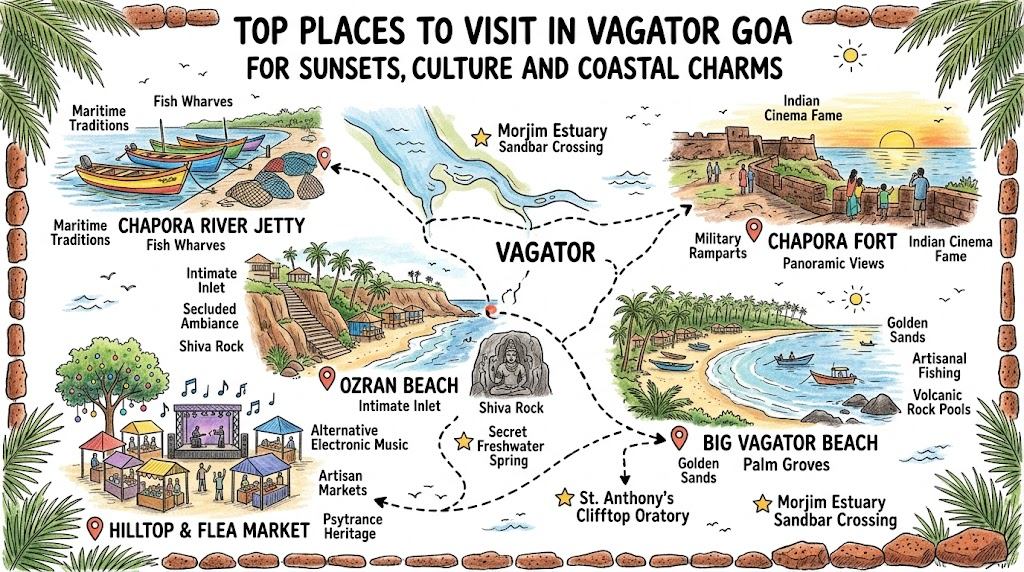
Vagator Beach and dramatic laterite cliffs.
Sunset views from Chapora Fort ramparts.
Historic rock-carved Shiva face at Ozran.
Chapora Fort
Chapora Fort stands as a formidable sentinel over North Goa’s dramatic coastline. Originally built by the Adil Shahi dynasty of Bijapur and extensively reconstructed by the Portuguese in 1717, this red laterite fortress features sweeping ramparts designed to withstand siege warfare and monitor hostile Maratha fleet movements. The fort gained widespread contemporary fame through iconic Indian cinema, but its true magic lies in its raw, weathered solitude.
Walking along the wide outer perimeter walls reveals unhindered, 360-degree panoramic views across the Chapora River mouth, Morjim’s sandspit, and the endless expanse of the Arabian Sea. The interior barracks and chapels have long returned to natural dust, yet the monumental stone perimeter stands defiant against salty winds, making it an architectural marvel of defensive coastal engineering.
- Location: Bardez Taluka, North Goa; approximately 21 km from Panaji.
- Why it is worth visiting: Iconic military architecture offering the premier panoramic sunset vantage point across the entire northern coastline.
- Best things to do: Walk the extensive laterite perimeter walls, photograph the sweeping meeting point of the river and sea, and spot white-bellied sea eagles circling the thermal updrafts.
- Best time to visit: 5:00 PM to 6:30 PM for golden hour, or 7:00 AM for undisturbed morning tranquility.
- Ideal for whom: History buffs, landscape photographers, couples, and solo travelers.
- Travel tip: Wear shoes with dependable tread, as the polished red stones along the steep downhill path can become slick underfoot.
Big Vagator Beach (North Vagator)
Big Vagator, framed between the lower western foot of Chapora Fort and a central rocky outcrop, offers a sweeping crescent of golden-white sand bordered by dense palm orchards. Unlike the continuous flat shores found in neighboring towns, Big Vagator is divided by striking natural landforms that create an atmosphere of rugged isolation.
The beach maintains an active, colorful character without descending into commercial chaos. In the early morning hours, local trawlers and traditional wooden canoes pull up on the northern edge to haul in fresh catches of mackerel and kingfish. By late afternoon, the tide pulls back to expose ancient volcanic rock pools teeming with small crabs and marine flora.
- Location: Lower Chapora Bay, 20 km from Panaji.
- Why it is worth visiting: A classic Goan coastal panorama with dramatic cliff backgrounds and an active artisanal fishing community.
- Best things to do: Explore low-tide marine life in natural tidal pools, swim in the marked gentle surf zones, and sample chilled tender coconut from local beach stalls.
- Best time to visit: October to April, ideally between 8:00 AM and 11:00 AM for clear skies and quiet sands.
- Ideal for whom: Families, casual walkers, and beach loungers who prefer open horizons.
- Travel tip: Always heed lifeguard flags; strong seasonal undertows occur near the rocky promontories at high tide.
Ozran Beach (Little Vagator & Shiva Rock)
Tucked behind a steep descent of stone steps and twisting red dirt paths, Ozran Beach is an intimate sandy inlet sheltered by steep clifftops. The shoreline is shaded by towering coconut groves that lean gracefully toward the breaking waves, providing an idyllic sanctuary away from vehicle traffic.
Ozran’s most famous artistic treasure is the Shiva Rock, an intricate bas-relief carving of Lord Shiva’s face chiseled directly into a massive seaside boulder. Created by an itinerant Western artist during the 1980s bohemian era, this seaside sculpture has become a beloved spiritual monument washed daily by tidal foam.
- Location: Southern Vagator shelf, approximately 2.5 km south of Chapora Fort.
- Why it is worth visiting: Secluded cliffside ambiance and the iconic ocean-side Shiva Rock sculpture.
- Best things to do: Locate and photograph the tide-washed Shiva Rock, relax at cliffside seaside cafes, and enjoy peaceful ocean swimming during slack tides.
- Best time to visit: 3:30 PM to 6:30 PM when the setting sun illuminates the rock face and brings ambient lounge music to life.
- Ideal for whom: Couples, creatives, backpackers, and wellness seekers.
- Travel tip: Pack light backpack gear, as descending and ascending the steep cliff steps requires hands-free balance.
HillTop Vagator & Flea Market Grounds
Perched on the high plateau between Vagator and Anjuna, HillTop is an emblematic cultural institution that helped shape the global psytrance and alternative electronic music movement. Since its humble open-air beginnings under neon-painted coconut groves decades ago, it has evolved into a premier open-air cultural performance sanctuary.
Beyond weekly music gatherings, the surrounding grounds transform into an eclectic bazaar filled with handcrafted jewelry, bohemian apparel, artisanal gourmet foods, and global buskers. The atmosphere carries a rare communal spirit that celebrates freedom of expression, creative arts, and international fellowship.
- Location: HillTop Vagator Road, Bardez; 19 km from Panaji.
- Why it is worth visiting: The undeniable historical heart of Goa’s alternative music, arts, and subculture legacy.
- Best things to do: Browse international designer flea market stalls, listen to world-class electronic soundscapes, and sample multicultural street food.
- Best time to visit: Friday afternoons and Sunday evenings during the peak winter season (December to February).
- Ideal for whom: Music aficionados, vintage fashion hunters, and cultural anthropologists.
- Travel tip: Purchase event passes online in advance during festive long weekends to bypass long ticketing queues at the gate.
Chapora River Jetty & Fish Wharves
Situated on the sheltered river side of the Chapora headland, the Chapora Fishing Jetty provides a grounded look into Goa’s maritime traditions. Wooden fishing vessels painted in vibrant hues of yellow, cobalt, and crimson dock side-by-side after days out in the deep Arabian waters.
The atmosphere here is wonderfully sensory, filled with the aroma of drying salted fish, the calling of auctioneers, and the sound of hand-woven nets being repaired by multi-generational fishing families. It offers a meaningful cultural counterweight to the resort lifestyle, connecting travelers directly with the coastal community’s lifeblood.
- Location: Chapora Village shoreline, 1.5 km northeast of Chapora Fort.
- Why it is worth visiting: Raw, unvarnished insight into Goa’s living maritime economy and fishing culture.
- Best things to do: Watch the morning fish auctions, take a private motorized wooden boat ride across to the Morjim sandbar, and capture authentic maritime photography.
- Best time to visit: 6:30 AM to 8:30 AM to catch the boats unloading their fresh ocean hauls.
- Ideal for whom: Street photographers, culinary enthusiasts, and cultural explorers.
- Travel tip: Wear closed footwear with reliable grip; the wharf surfaces can be damp and muddy during the early morning sorting hours.
Offbeat Exploration: Hidden Gems Tourists Miss
The Secret Vagator Freshwater Spring
Hidden along the forested base of the southern cliffs near Ozran lies a natural, cold freshwater spring trickling through moss-covered laterite fissures. Local elders historically utilized this pure, mineral-rich mountain water for refreshment before climbing the steep headlands. It remains a tranquil, shaded oasis where birds drink and weary walkers can cool down in total seclusion.
The Morjim Estuary Sandbar Crossing
At extreme low tide, intrepid travelers can hire a local wooden canoe from the Chapora cove to reach the temporary golden sandbars emerging in the middle of the river mouth. This isolated sand island offers extraordinary views back toward the towering cliffs of Vagator, while flocks of migratory plovers and gulls forage undisturbed in the shallow waters.
St. Anthony’s Clifftop Oratory
Perched on an isolated grassy promontory south of Big Vagator stands a whitewashed colonial wayside chapel dedicated to St. Anthony. Travelers rarely navigate this footpath, yet the solitary bench beside its stone cross offers the most quiet, windswept meditation spot in the village, accompanied only by the sound of crashing waves below.
Detailed Practical Guidance for Travelers
| Destination | Standard Entry Fee | General Timings | Best Local Food Options Nearby | Recommended Nearby Attractions |
|---|---|---|---|---|
| Chapora Fort | Free | 6:00 AM – 6:30 PM | Scarlet Cold Drinks (Fresh Juices), Mango Tree Bar | Vagator Beach, Chapora Jetty |
| Big Vagator Beach | Free | Open 24 Hours | Thalassa, Tin Tin Restaurant (Goan seafood) | Chapora Fort, Little Vagator |
| Ozran Beach | Free | Open 24 Hours | Antares Restaurant, Shiva Cafe (Israeli fare) | Shiva Rock, Anjuna Cliff Trail |
| HillTop Grounds | Free (Flea Market) / ₹1,000–₹2,500 (Gigs) | Fridays & Sundays from 4:00 PM | HillTop Street Canteen, Babka Goa (Babka & Brews) | Anjuna Flea Market, St. Michael’s Church |
| Chapora Jetty | Free | 5:30 AM – 7:00 PM | Vinayak Family Restaurant (Authentic Goan Thalis) | Morjim Beach (across river), Siolim Bridge |
Logistics & On-Ground Navigation
Local Transport Options
- Self-Drive Scooters & Motorcycles: The premier method for traversing Vagator’s winding, hilly roads. Scooters cost roughly ₹350–₹500 per day. Ensure you carry your physical driver’s license and wear a certified helmet at all times.
- Auto-Rickshaws & Pilot Taxis: Auto-rickshaws wait near main junctions like Chapora Cross. Motorcycle pilots (Goa’s unique two-wheeler taxis) provide swift, affordable single-passenger transit for short hops.
- Car Rentals: Self-drive hatchbacks (₹1,200–₹1,800/day) are comfortable for families, though parking along narrow cliffside lanes can be challenging during sunset hours.
- Local Buses: Regular state transport buses run between Mapusa Bus Terminal and Chapora Jetty via Vagator every 30 minutes for a nominal fee of ₹15 to ₹25.
Budget Planning
- Budget / Backpacker Tier (₹1,500 – ₹2,500 per day): Stay in a clean backpacker hostel dorm (₹600–₹900), ride a rented scooter (₹400 split), and enjoy hearty Goan fish curry thalis and street food (₹600–₹800).
- Mid-Range / Comfort Tier (₹4,500 – ₹8,500 per day): Stay in a boutique Portuguese cottage or cliffside resort (₹3,000–₹5,500), enjoy meals at acclaimed international restaurants (₹1,500–₹2,500), and use private taxis (₹1,000).
Safety and Inclusivity Tips
- For Families: Stick to the wider sands of Big Vagator, where terrain is flat and lifeguards are stationed regularly. Avoid navigating the steep steps of Ozran with small children or large strollers.
- For Couples: Ozran’s sunset spots and quiet garden cafes in neighboring Assagao provide romantic, peaceful spaces away from heavy party circuits.
- General Safety: Never swim after consuming alcohol or after sunset. Keep a compact flashlight handy for walking along unlit village lanes at night.
Local Safety Secret: The Arabian Sea near Chapora Fort conceals sudden underwater drops and rip currents. Always verify current surf safety with stationed lifeguards before venturing past waist depth.
Strategic Travel Planning Guardrails
Travel Planning Tips for Vagator
- Time Your Season Wisely: Visit between November and February for dry, breezy weather. Mid-monsoon visits (July to August) present stunning emerald landscapes, but ocean swimming is closed.
- Secure Bookings Early: Accommodations and scooter rentals sell out weeks ahead for the Christmas-to-New-Year festive window.
- Carry Backup Cash: While UPI QR payments are widely accepted, spotty cellular reception around the base of cliffs makes backup cash indispensable for shacks and parking attendants.
- Respect Quiet Hours: Vagator contains quiet residential villages interspersed with nightlife. Avoid revving motorcycle exhausts down village lanes past 10:00 PM.
- Equip Sun and Skin Defense: Carry broad-spectrum sunscreen, polarized sunglasses for sea glare, and herbal mosquito repellent for outdoor jungle dining.
Common Mistakes to Avoid
- Underestimating Cliff Steps: Attempting to hike down to Ozran Beach in flimsy footwear or high heels frequently results in twisted ankles on loose laterite stones.
- Ignoring Low/High Tide Schedules: Visiting the Shiva Rock during peak high spring tide means the carving will be completely submerged by rolling waves.
- Assuming Fixed Taxi Fares: Getting into an unmetered taxi without firmly negotiating and locking in the complete fare beforehand leads to inflated tourist pricing.
- Skipping Authentic Village Taverns: Limiting your meals to tourist cafes means missing out on mouthwatering, fresh local fish thalis served at neighborhood taverns.
- Leaving Belongings Unattended: Leaving phones and cameras exposed on open beach towels while swimming in the sea invites petty opportunity theft.
Suggested Itinerary Blueprints
1. Day Quick Dash (Vagator Clifftop & Heritage Express)
- Morning (8:00 AM – 11:30 AM): Enjoy breakfast at a local bakery, followed by an early exploration of Chapora Fort before the heat peaks.
- Afternoon (12:00 PM – 3:30 PM): Indulge in an authentic Goan fish curry thali at Chapora Village, followed by an afternoon coffee in a shaded Assagao garden cafe.
- Evening (4:00 PM – 7:00 PM): Head down to Ozran Beach to view the carved Shiva Rock and watch the sunset from the cliff bluffs.
2. Day Deep-Dive (Coastal Culture & Arts Circuit)
- Day 1: Dedicate the day to maritime history. Visit Chapora Fishing Jetty at 7:00 AM, hike the ramparts of Chapora Fort, lunch on fresh local seafood, and spend a relaxing afternoon on Big Vagator Beach.
- Day 2: Focus on alternative arts and coastal relaxation. Hike down to Ozran Beach for a morning swim, discover the secret freshwater spring, and spend the evening enjoying live music and the artisanal market at HillTop.
3. Complete Weekend Travel Plan (The Ultimate Vagator Escape)
- Friday: Arrive and settle into your cliffside stay. Take a leisurely evening stroll along Big Vagator, followed by a sunset dinner overlooking the breaking waves.
- Saturday: Embark on an early morning photography walk through Chapora Fort. Cross the river estuary on a local wooden boat, relax through the afternoon, and experience Vagator’s vibrant electronic music and dining culture at night.
- Sunday: Wake up to beachfront yoga at Ozran, visit the Shiva Rock at low tide, shop for handmade souvenirs at local boutiques, and finish with a quiet cliffside meal at St. Anthony’s viewpoint.
Common Tourist Mistakes to Avoid
- Geographic Blunders: Trying to explore Chapora Fort, Old Goa churches, and Palolem Beach in a single day. North and South Goa are separated by hours of heavy traffic; keep your itinerary anchored locally in Bardez.
- Commercial Traps: Spending hours in modernized shopping malls and overcrowded commercial strips when you could be browsing local open-air creative markets and family-run bakeries.
- Neglecting Modern/Alternative Zones: Forgetting to explore the tranquil, heritage-rich inner villages like Assagao and Siolim, which host wonderful art galleries, restored villas, and specialty coffee roasters just five minutes inland.
- Transport Overpayment: Paying exorbitant private taxi quotes at hotel gates instead of checking GoaMiles app rates, booking licensed pilot taxis, or renting a scooter.
- Luxury Dining Bias: Eating exclusively at high-end resort restaurants. You miss the soul of Goan cooking by skipping small roadside eateries serving piping-hot chorizo pao and fresh rava fried fish.
Frequently Asked Questions
1. What makes Vagator Beach different from Calangute or Baga?
Vagator is defined by its dramatic red laterite cliffs, secluded coves, and elevated topography, which stand in stark contrast to the flat, crowded sand strips of Baga and Calangute. The atmosphere is distinctly more relaxed, artsy, and scenic, attracting travelers who value picturesque natural landscapes, cliffside dining, and bohemian music over noisy beach commercialism and chaotic markets.
2. How do I reach the famous carved Shiva Rock at Ozran Beach?
To see the Shiva Rock, head down the steps leading to Little Vagator (Ozran Beach), turn right toward the rocky northern edge of the cove, and look for the large shoreline boulder. The sculpture is best viewed during low to mid-tide; during peak high tide, the face can be partially or fully submerged under breaking sea foam.
3. Is Chapora Fort open every day and is there an entry fee?
Chapora Fort is open to the public seven days a week from 6:00 AM to 6:30 PM, and entry is completely free of charge. Visitors only need to pay a small nominal parking fee for scooters or cars at the designated parking base before starting the ten-minute uphill walk along the paved laterite stone path.
4. Can I safely swim at Big Vagator and Ozran beaches?
Swimming is generally safe during the winter season (November to April) within designated, lifeguard-monitored zones along the central sandy areas. However, swimmers must avoid venturing near the jagged rocky headlands and river mouths where strong underwater rip currents form. Swimming is strictly prohibited during the rough monsoon season from June to September.
5. How far is Vagator from Goa’s airports?
Vagator is located approximately 28 km south of the newly developed Manohar International Airport in Mopa, taking around 45 minutes by taxi. From the older Dabolim International Airport in central Goa, Vagator is roughly 45 km north, which requires a drive of approximately 75 to 90 minutes depending on daytime highway traffic through Porvorim.
6. What is the average cost of renting a scooter in Vagator?
A standard automatic scooter typically costs between ₹350 and ₹500 per day during normal tourist months, with prices occasionally rising to ₹800 to ₹1,000 per day during the peak Christmas and New Year week. You must provide a valid driver’s license copy, and wearing an ISI-marked safety helmet is legally mandatory across all Goan roads.
7. Are there good remote work cafes and Wi-Fi options in Vagator?
Yes, Vagator and neighboring Assagao have emerged as prime co-working hubs for digital nomads and remote workers. Many garden cafes and boutique guesthouses offer high-speed fiber-optic Wi-Fi, dedicated workstation tables, reliable power generator backups, artisanal coffee bars, and quiet open-air courtyards suitable for taking business video calls.
8. What kind of nightlife can travelers expect in Vagator?
Vagator is world-renowned for its sophisticated open-air music scene, catering to electronic, deep house, techno, and psychedelic trance enthusiasts across iconic venues like HillTop. The nightlife leans heavily toward open-air dance floors, sunset clifftop cocktail lounges, and ambient beach clubs rather than the commercial indoor discotheques typical of Calangute and Baga strips.
9. What should I pack for exploring Vagator’s cliffs and beaches?
Pack breathable cotton or linen clothing, comfortable walking shoes or trail sandals with dependable grip for rocky trails, UV-blocking sunglasses, and reef-safe sunscreen. A lightweight waterproof dry-bag is invaluable for boat trips along Chapora river, alongside a pocket power bank and a small personal flashlight for walking dimly lit village paths after sunset.
10. Is Vagator suitable for family vacations with children and seniors?
Vagator is wonderful for families who appreciate natural scenery, although families traveling with elderly members or toddlers should prefer Big Vagator over Ozran. Big Vagator offers direct, relatively flat vehicle parking and beach access, whereas accessing Ozran Beach requires climbing dozens of steep, irregular stone steps that can prove taxing for travelers with limited mobility.
11. Which local Goan dishes should I try while staying in Vagator?
Make sure to sample a traditional Goan Fish Curry Thali featuring kingfish or pomfret, spicy pork or chicken Vindaloo, crab xec xec simmered in toasted coconut gravy, and rava-crusted fried calamari. For casual roadside breakfasts, order ros omelette—a fluffy egg omelette submerged in fragrant, spicy chicken or vegetarian gravy served with warm Goan pao.
12. When is the best time of year to visit Vagator?
The ideal window runs from November through February, when daytime temperatures hover around a comfortable 28°C to 31°C, accompanied by clear blue skies, refreshing evening sea breezes, and fully operational beach shacks. March to May is warmer and more humid, while June to September brings heavy monsoon rains that transform the headlands into lush green paradises.
Conclusion
Choosing Vagator over cookie-cutter tourist enclaves transforms your holiday from a superficial vacation into a rich encounter with Goa’s coastal soul. Standing upon the weathered red ramparts of Chapora as the evening breeze rustles the palms below, you discover a harmonious balance of raw nature, living history, and effortless creative freedom. It is this untamed beauty that beckons travelers back to Vagator time and time again.

Leave a Reply
You must be logged in to post a comment.