



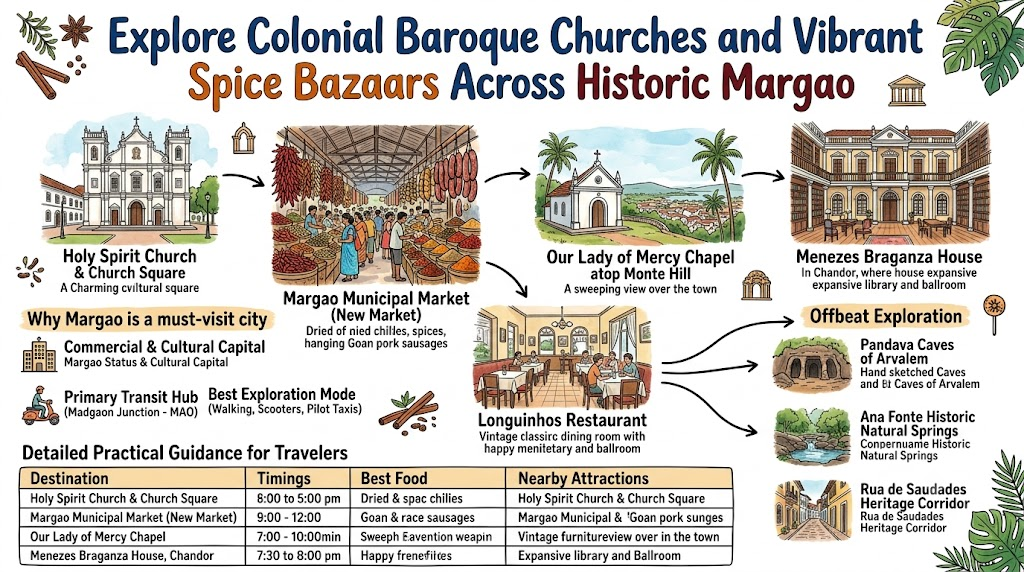
Introduction
Most travelers equate Goa with sun-bleached beach shacks, neon-lit nightlife, and the bumper-to-bumper scooter traffic of the northern coastal belt. Yet, slipping past the tourist highway reveals an older, far more soulful rhythm.
Margao (also known as Madgaon) is the commercial, historical, and cultural capital of South Goa. Instead of manufactured resort corridors, this vibrant settlement offers centuries-old banyan trees shading Portuguese-era piazzas, lively market alleyways scented with dried red chilies, and quiet colonial mansions that preserve a storied Indo-Portuguese heritage.
Why Margao is a must-visit city
Margao stands as the beating heart of Salcete taluka, anchoring South Goa’s political, literary, and culinary legacy. Long before the Portuguese landed, it was a prominent pre-colonial settlement renowned for its historic temple complexes and university center, then known as Matha Grama. When colonial forces fortified the territory in the sixteenth century, the town transformed into an administrative and cultural enclave, giving birth to a unique blend of Catholic traditions, classical architecture, and rich Saraswat culinary heritage.
Practical accessibility makes Margao the premier logistical gateway to the south. The Madgaon Junction Railway Station (MAO) is Goa’s largest rail nexus, connecting directly to Mumbai, Bangalore, and Delhi. The newly expanded NH 66 offers seamless vehicular access from both Dabolim Airport (25 km away) and Manohar International Airport at Mopa (65 km away). From backpackers seeking affordable bus transit to families touring colonial estates, the city accommodates every traveler archetype.
The local travel circuit balances heritage walks through colonial residential quarters with bustling bazaar explorations and short excursions to nearby southern beaches like Benaulim and Colva.
| Key Travel Metric | Fact & Specification |
|---|---|
| Administrative Status | Commercial & Cultural Capital of South Goa District |
| Primary Transit Hub | Madgaon Junction (MAO), KTC Central Bus Terminal |
| Best Exploration Mode | Walking (Old Quarter), Hired Scooters, Pilot Taxis |
| Culinary Signatures | Goan Pork Sausages (Chouriço), Bebinca, Fish Thali |
| Peak Visiting Months | October through March |
| Average Ideal Stay | 2 to 3 Days |
Best Places or Experiences
Holy Spirit Church & Church Square
The Holy Spirit Church stands as an imposing masterpiece of Indian baroque architecture, reigning over the historic Praca da Igreja square. First founded by Jesuit missionaries in 1564 and rebuilt in its present grandeur in 1675 after wartime destruction, the structure features a brilliant white stucco facade offset by weathered laterite stone foundations.
Inside, the church opens into soaring vaulted ceilings, gilded retables, and an ornate, multi-tiered pulpit adorned with delicate cherub and botanical carvings. Surrounding the church is a tranquil square framed by towering mango trees and stately seventeenth-century aristocratic residences, making it one of the most picturesque heritage corners in South Goa.
- Location: Old Market (Praca da Igreja), Central Margao; approximately 33 km south of the state capital, Panaji.
- Why it is worth visiting: It represents one of the finest preserved examples of seventeenth-century Mannerist-Baroque ecclesiastical architecture in western India.
- Best things to do: Admire the gold-leaf wooden altarpiece, stroll the perimeter of Church Square to view historic palatial homes, and visit during the annual Feast of the Holy Spirit.
- Best time to visit: 8:30 AM to 11:00 AM on weekdays for serene natural lighting and quiet reflection away from service hours.
- Ideal for whom: Architecture enthusiasts, heritage photographers, and cultural historians.
- Travel tip: Dress respectfully with covered shoulders and knees, and avoid visiting during active Sunday mass services if you intend to take architectural photographs.
Margao Municipal Market (New Market)
A vibrant labyrinth of covered passageways, the Margao Municipal Market—locally known simply as the New Market—is the commercial nerve center of South Goa. Established in the late nineteenth century to accommodate the town’s booming trade, this bustling bazaar pulses with sensory richness: mountains of fiery-red dried Kashmiri and Canacona chilies, pungent mounds of sea salt, freshly grated coconut, and freshly plucked cashews.
The market is especially famous for its spice lanes and the fragrant stalls of Goan pork sausages (Chouriço). Hanging in deep red, vinegary garlands, these sausages are hand-tied by local vendors using traditional palm toddy vinegar and fiery spice rubs, providing a raw, unvarnished look at daily Goan life.
- Location: Gandhi Market Road, Municipal Council Ward, Central Margao.
- Why it is worth visiting: The ultimate ground zero for authentic Goan culinary shopping, raw spices, and traditional artisan food products.
- Best things to do: Source authentic string-tied pork sausages directly from heritage meat stalls, purchase hand-molded Goan jaggery cones, and sample hot ros omelette outside the market perimeter.
- Best time to visit: 7:30 AM to 10:00 AM to see the morning seafood catch arrive, or 4:30 PM to 7:00 PM for peak evening vibrancy.
- Ideal for whom: Foodies, home chefs, street photographers, and adventurous cultural travelers.
- Travel tip: Carry small denominations of cash as most stall-holders inside the narrow covered alleys do not accept digital payments or credit cards.
Monte Hill & Our Lady of Mercy Chapel
Rising gently above the urban sprawl of South Goa, Monte Hill provides the highest geographic viewpoint within Margao. At its summit sits the simple yet elegant Chapel of Our Lady of Mercy (Capela de Nossa Senhora da Piedade), erected in the late nineteenth century as a peaceful place of devotion for the town’s residents.
The location offers a breath of fresh air and panoramic views. From the stone parapets of the chapel courtyard, visitors look out across the red-tiled roofs of Margao’s heritage quarters, the emerald canopy of coconut plantations, and the railway lines threading south toward the Arabian Sea.
- Location: Southern fringe of Margao; 2.5 km from the town center and 3.5 km from Madgaon Junction.
- Why it is worth visiting: Unobstructed 360-degree aerial views across the city skyline, surrounding paddy fields, and distant hill ranges.
- Best things to do: Watch the sunset sweep across Salcete taluka, photograph the stark white chapel against evening skies, and enjoy peaceful meditation on the windswept stone benches.
- Best time to visit: 5:00 PM to 6:30 PM for sunset golden hour.
- Ideal for whom: Solo travelers, couples, sunset chasers, and landscape photographers.
- Travel tip: The road winding up the hill is narrow with blind turns; drive carefully if operating a rental scooter, or hire an auto-rickshaw from the city stand.
Longuinhos & The Vintage Culinary Taverns
No encounter with Margao is complete without experiencing its legendary colonial-era cafe and dining institutions, anchored by the iconic Longuinhos Bar & Restaurant. Operating since 1950 along the municipal garden strip, this beloved heritage eatery preserves the leisurely culinary rituals of mid-century Goa.
The dining room features retro mosaic flooring, wood-paneled walls, and brass accents, serving as the town’s social living room where writers, lawyers, and multi-generational families gather. Margao’s historic taverns showcase classic Catholic Goan delicacies—from slow-simmered pork sorpotel and beef croquettes to delicate, multi-layered slices of freshly baked bebinca.
- Location: Luis Miranda Road, opposite the Margao Municipal Council, Central Margao.
- Why it is worth visiting: An authentic taste of twentieth-century Goan culinary culture, unchanged recipes, and classic Goan hospitality.
- Best things to do: Pair a plate of crispy beef samosas with a local chilled brew, order a traditional Goan pork vindaloo with fresh poee bread, and engage with the friendly veteran waitstaff.
- Best time to visit: 12:30 PM to 2:30 PM for a traditional lunch, or 5:00 PM for afternoon tea and freshly fried savory snacks.
- Ideal for whom: Culinary explorers, nostalgic travelers, solo food lovers, and families.
- Travel tip: Table turnover is high during peak afternoon lunch hours; arrive slightly before 1:00 PM to claim a comfortable window booth without waiting.
Menezes Braganza House (Chandor Excursion)
Located just a short drive southeast of Margao in the historic village of Chandor, the Menezes Braganza House is the grandest surviving colonial mansion in Goa. Dating back to the seventeenth century, this monumental double-winged manor showcases the wealth and political influence of the Goan landed aristocracy under Portuguese rule.
The estate spans hundreds of rooms furnished with Portuguese rosewood and mahogany antiques, hand-blown Belgian crystal chandeliers, porcelain dinner sets from Macau, and an expansive private library. Walking across the polished Italian marble and native hardwood floorboards offers an immersive look into colonial aristocratic life.
- Location: Chandor village, 14 km southeast of Margao city center.
- Why it is worth visiting: The most elaborate private heritage manor in Goa, featuring a preserved museum-grade ballroom and antique collection.
- Best things to do: Take a guided tour led by family descendants, explore the private chapel housing sacred relics, and admire rare sixteenth-century furniture pieces.
- Best time to visit: 10:00 AM to 1:00 PM or 3:00 PM to 5:00 PM.
- Ideal for whom: Antiques connoisseurs, architecture aficionados, and deep-dive history buffs.
- Travel tip: Entry operates on an informal voluntary donation basis (recommended ₹150–₹250 per guest); keep cash ready as card readers are unavailable.
Offbeat Exploration: Hidden Gems Tourists Miss
The Pre-Portuguese Pandava Caves of Arvalem
Tucked away in the nearby Aquem locality of Margao lies a series of ancient rock-cut cave dwellings carved directly into the red laterite hill face. Often attributed by local folklore to the Pandavas of the Mahabharata, these monastic sanctuaries were historically chiseled by Buddhist and early Hindu ascetics between the fifth and sixth centuries, long before European colonial influence reached the coast.
Ana Fonte Historic Natural Springs
Located near the core district park, the Ana Fonte freshwater springs once served as the primary drinking water source and social meeting ground for pre-modern Margao. Shaded by dense bamboo groves and laterite walls, this tranquil site provides a quiet spot to pause and appreciate the town’s historical reliance on natural spring tables.
Rua de Saudades Heritage Corridor
While tourists flock to Panaji’s Fontainhas, Margao’s own aristocratic residential street—the Rua de Saudades—remains peaceful and quiet. Lined with pastel-painted Portuguese villas, oyster-shell windowpanes, and lush private bougainvillea courtyards, this lane offers prime architecture viewing without crowds.
Detailed Practical Guidance for Travelers
| Destination | Standard Entry Fee | General Timings | Best Local Food Options Nearby | Recommended Nearby Attractions |
|---|---|---|---|---|
| Holy Spirit Church | Free | 7:00 AM – 12:00 PM, 4:00 PM – 7:00 PM | Martin’s Multi Cuisine, Café Tato (Praca de Igreja) | Church Square, Historic Silva Heritage House |
| Margao Municipal Market | Free | 7:00 AM – 8:30 PM (Daily) | Longuinhos, Street Ros Omelette carts | Margao Municipal Garden, Grace Church |
| Monte Hill Chapel | Free | 6:00 AM – 7:30 PM | Sharda Classic (Fish Thali at hill base) | Aquem Rock Caves, Damodar Temple |
| Longuinhos Restaurant | Free (Dining purchases apply) | 8:30 AM – 10:30 PM | In-house specialties: Beef Croquettes, Pork Sorpotel | Municipal Garden, Gomant Vidya Niketan |
| Menezes Braganza House | Donation (~₹150 – ₹250) | 9:30 AM – 5:00 PM | Palacio do Deao (Heritage Goan dining in Quepem) | Chandor Fort Ruins, Fernandes Heritage House |
Logistics & On-Ground Navigation
Local Transport Options
- Railways: Madgaon Junction (MAO) is South Goa’s primary long-distance train terminal, connecting to all major Indian metropolitan areas and local suburban shuttles.
- Auto-Rickshaws & Pilots: Hired auto-rickshaws operate from designated city stands; always negotiate the fare before setting off as meters are rarely run. A pilot (motorcycle taxi) is an authentic Goan single-passenger transit option suited for budget solo travelers.
- Scooter & Car Rentals: Self-drive automatic scooters (₹350–₹500/day) and hatchbacks (₹1,200–₹1,800/day) can be hired near the railway station or bus terminus upon showing a valid physical driver’s license.
- Kadamba State Buses: Reliable local commuter buses operate from the central KTC Bus Stand to southern coastal villages, Panaji, and Vasco da Gama for minimal fares (₹15–₹45).
Budget Planning
- Budget / Backpacker Tier (₹1,200 – ₹2,200 per day): Bed in a local guesthouse/hostel (₹600–₹1,000), rental scooter split or local buses (₹250–₹400), street eats, bakeries, and local lunch thalis (₹350–₹800).
- Mid-Range / Comfort Tier (₹4,000 – ₹7,500 per day): Private air-conditioned heritage room or boutique hotel (₹2,500–₹4,800), point-to-point auto-rickshaws or self-drive rental car (₹800–₹1,500), dining at heritage restaurants and cafes (₹700–₹1,200).
Safety and Inclusivity Tips
- For Families: Margao’s pace is pedestrian-friendly within the historic quarters; keep children close along the active market strips where motorbikes frequently navigate tight alleys.
- For Couples: The sleepy heritage avenues and elevated viewpoints like Monte Hill provide calm, romantic retreats without tourist harassment.
- General Safety: Margao is generally very safe. Normal urban awareness applies: keep wallets secure in crowded markets and avoid unlit backroads around the railway outskirts late at night.
Strategic Travel Planning Guardrails
Travel Planning Tips for Margao
- Time Around the Midday Siesta: Many heritage sites, antique shops, and smaller family stores close strictly between 1:00 PM and 4:00 PM for the traditional Goan susegad afternoon rest. Plan museum and market walks early or late.
- Carry Hard Cash: Small family cafes, street vendors, and heritage donation boxes require cash; keep ₹100 and ₹500 bills handy.
- Dress for Humidity: Margao sits a few kilometers inland from the sea breeze, making the heat feel slightly more intense. Wear breathable cottons and linen.
- Download Offline Maps: Older residential quarters feature narrow, winding roads where cellular data can drop intermittently.
- Plan Ahead for Sundays: Many local bakeries and family eateries close on Sunday afternoons; verify operating hours before heading out.
Common Mistakes to Avoid
- Skipping the Inland Heritage: Treating Margao merely as a train stop to sprint past on your way to beach resorts, missing its cultural soul.
- Renting Big SUVs for Market Trips: Margao’s older roads are tight and parking near the Municipal Market is challenging; choose scooters or walk.
- Overlooking Regional Bakery Hours: Warm traditional poee bread is baked twice daily—early morning and late afternoon. Arriving midday means missing it fresh.
- Expecting Fixed Metered Auto Taxis: Assuming auto drivers will use digital meters will lead to frustration; establish your rate up front.
- Skipping the Local Fish Thali: Relying solely on continental resort menus deprives you of experiencing authentic Saraswat and Goan Catholic home-style cooking.
Suggested Itinerary Blueprints
1. Day Quick Dash (The Heritage & Market Loop)
- Target Audience: Day-trippers based on the southern beaches or rail travelers with an 8-hour layover.
- Morning (8:30 AM – 11:30 AM): Explore the Holy Spirit Church, walk Church Square, and sip morning coffee with beef croquettes at a local cafe.
- Midday (12:00 PM – 2:00 PM): Browse the spice and sausage stalls of the Margao Municipal Market, followed by an authentic Goan fish curry thali at Sharda Classic.
- Afternoon (3:30 PM – 6:00 PM): Drive up to Monte Hill for golden hour views over the town before heading back.
2. Day Deep-Dive (Colonial Splendor to Ancient Caves)
- Day 1: Dedicate the morning to the Holy Spirit Church and the historic villas of Rua de Saudades. Enjoy lunch at Longuinhos, explore the Municipal Market’s culinary corridors, and take in the sunset from Monte Hill.
- Day 2: Take a morning drive to the ancient rock-cut Pandava Caves at Aquem, then continue southeast to Chandor to tour the Menezes Braganza House and enjoy a slow lunch in the countryside.
3. Complete Weekend Travel Plan (The Grand Salcete Cultural Circuit)
- Friday: Arrive via Madgaon Junction, settle into a restored Portuguese heritage homestay, and spend a relaxing evening enjoying ros omelettes and local brews in the city garden area.
- Saturday: Spend a full day on historic exploration: begin at Church Square, explore the covered spice alleys of the Municipal Market, and embark on an afternoon excursion to Chandor’s palatial homes.
- Sunday: Discover offbeat Margao—walk the Ana Fonte springs, visit the Arvalem/Aquem cave structures, savor a celebratory Goan feast, and take a quick 15-minute sunset scooter ride down to nearby Benaulim Beach.
Common Tourist Mistakes to Avoid
Geographic Blunders
Attempting to split your day between North Goa’s Anjuna flea markets and Margao’s heritage walks is a recipe for exhaustion. The two hubs are separated by over 45 kilometers of heavy traffic. Treat South Goa as its own dedicated travel circuit.
Commercial Traps
Spending limited holiday hours inside generic modern shopping centers along the highway instead of exploring Margao’s traditional bazaars. The real culture, local spices, and handicrafts thrive in the historic core.
Neglecting Modern/Alternative Zones
Overlooking Margao’s evolving contemporary cafe scene and art galleries. Cultural spaces like Gomant Vidya Niketan and boutique coffee roasters tucked around Aquem provide insight into modern Goan creative life.
Transport Overpayment
Hiring private day-cabs without negotiating or consulting with your hotel reception on standard fare brackets. For short inner-city hops, opt for local pilot motorcycle taxis or reliable auto-rickshaws after agreeing on a price.
Luxury Dining Bias
Eating exclusively at high-end hotel buffets. Margao’s culinary heartbeat lives in its street-side cart culture—especially night stalls serving spicy ros omelette (fluffy eggs smothered in rich chicken xacuti gravy)—and time-honored local family taverns.
Frequently Asked Questions
1. What is Margao primarily famous for?
Margao is recognized as the cultural and commercial capital of South Goa. It is celebrated for its historic Indo-Portuguese architecture, the 17th-century Holy Spirit Church, grand heritage mansions, and the vibrant Margao Municipal Market, renowned across the state for authentic Goan pork sausages, cashew nuts, and regional spices.
2. How far is Margao from the closest airport?
Margao is situated approximately 25 kilometers (a 40-minute drive) from Goa’s Dabolim International Airport (GOI). If you are arriving via the newer Manohar International Airport at Mopa (GOX) in the far north, the road distance is roughly 65 kilometers, which takes around 90 minutes by highway taxi.
3. Is Margao worth visiting if I only want a beach vacation?
Yes, because Margao sits just 6 to 10 kilometers inland from South Goa’s most peaceful coastlines, including Colva, Benaulim, and Betalbatim. Staying in or visiting Margao allows you to combine easy access to peaceful beaches with deep cultural heritage walks and superior local dining options.
4. What is the best way to travel around Margao city?
Walking is the best way to explore historic clusters like Church Square and the Municipal Market. For journeys across town, up Monte Hill, or into surrounding villages like Chandor, renting an automatic scooter or hiring traditional auto-rickshaws and motorcycle pilots is the most practical and efficient option.
5. Are the heritage homes in and around Margao open to visitors?
Select aristocratic homes, such as the renowned Menezes Braganza House in nearby Chandor and the Fernandes House, are open to visitors throughout the week. Access is typically hosted by family descendants, and visitors are encouraged to leave a modest cash contribution to support ongoing heritage conservation.
6. What is the best authentic dish to eat in Margao?
You should try the Goan Fish Curry Thali featuring fresh catch from the local fish market, as well as Goan pork sausages (chouriço), pork sorpotel, and beef croquettes. In the evening, visit local street carts to enjoy a piping hot ros omelette served with crusty poee bread.
7. Is Margao safe for solo and female travelers?
Margao is considered very safe for both solo travelers and women. The local population is welcoming, and the town maintains a relaxed, community-centered atmosphere. Standard precautions apply: avoid poorly illuminated suburban stretches late at night and agree on taxi or auto-rickshaw fares before departure.
8. Do shops and businesses in Margao close during the afternoon?
Yes, many traditional family-owned shops, local pharmacies, and smaller market vendors practice the traditional Goan susegad siesta, closing between 1:00 PM and 4:00 PM. Modern supermarkets and restaurants remain open, but plan your specialty shopping and market exploration for the morning or evening hours.
9. How do I travel from Margao to Panaji using public transit?
Frequent and affordable air-conditioned and non-air-conditioned Kadamba shuttle buses run directly between the Margao KTC Bus Terminal and the Panaji Bus Stand. Buses depart every 15 to 20 minutes throughout the day, take roughly 45 to 60 minutes, and cost between ₹40 and ₹80 per passenger.
10. Can I buy authentic Goan pork sausages in the Margao market to travel with?
Yes, the sausage sellers in the Margao New Market routinely vacuum-seal and package cured sausages for domestic travel. Let the vendor know you plan to transport them so they select drier, cured batches and wrap them securely in airtight plastic packaging to prevent moisture and odor leaks.
11. What is the difference between Old Market and New Market in Margao?
The Old Market (Praca da Igreja) is the quiet, historic colonial quarter surrounding the Holy Spirit Church, characterized by heritage villas and broad squares. The New Market is the bustling commercial bazaar complex built in the late 19th century near the Municipal Garden, serving as the city’s active trade hub.
12. When is the best time of year to explore Margao on foot?
The winter months from November to February offer the most pleasant weather, with lower humidity and mild morning temperatures ideal for walking tours. If visiting between March and May, schedule outdoor walks before 10:00 AM or after 4:30 PM to avoid the intense midday sun.
Conclusion
Margao is not a destination to rush through on your way to somewhere else; it is a place to be experienced slowly and intentionally. Standing in the quiet shadow of Holy Spirit Church, picking through fragrant spice stalls in the bustling market, or catching the sea breeze atop Monte Hill reveals the authentic heart of Goa. Choosing this path trades the predictable tourist track for an enduring connection to history, character, and authentic coastal culture.

Leave a Reply
You must be logged in to post a comment.